In the kitchen
Is Raw Milk Safe to Drink? Why Fresh Milk Should Be Boiled
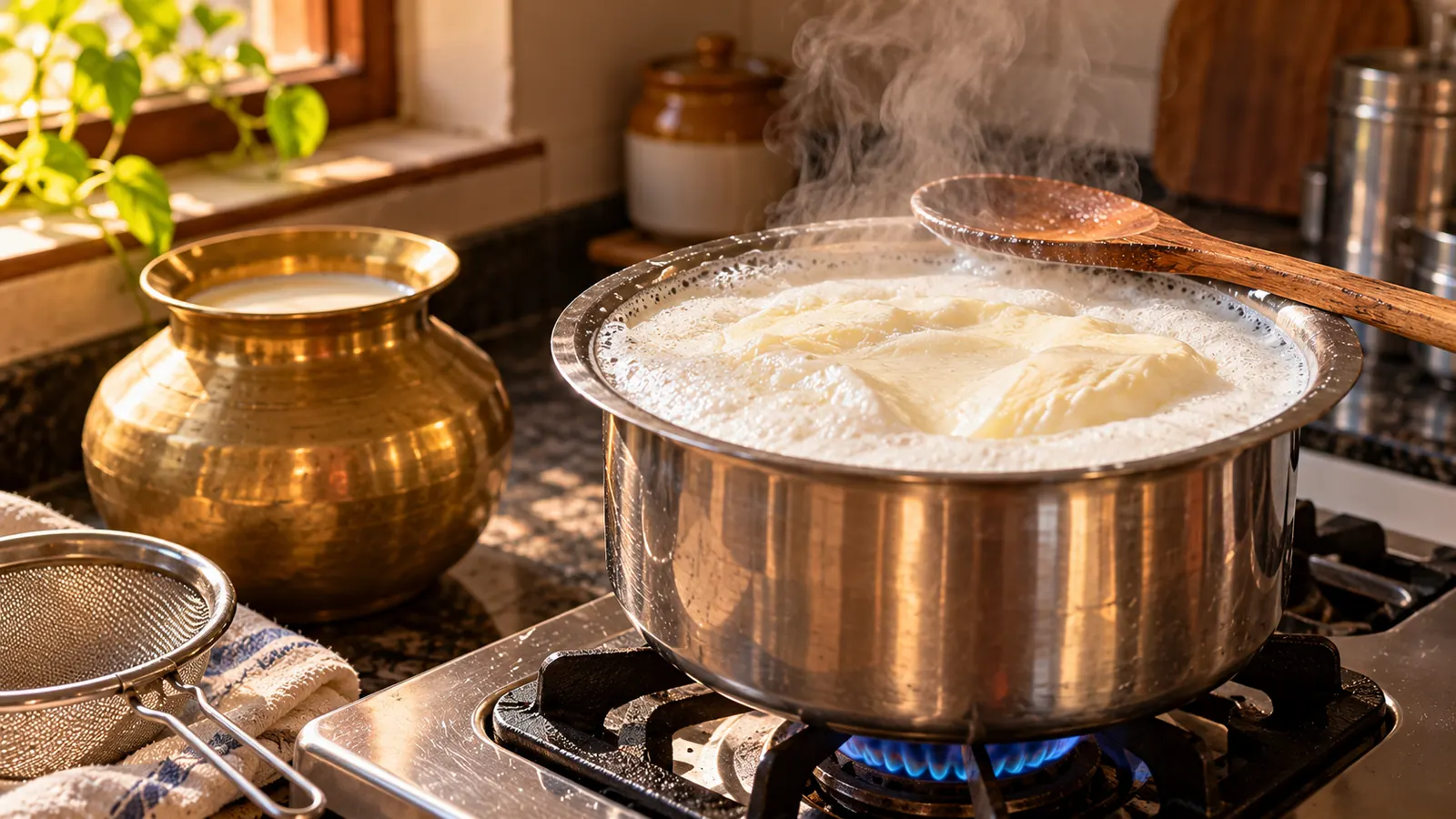
Dairy milk reaches you raw. Why boiling it once makes it safe, how long to boil it, and what boiling does - and does not - take away.
· 4 min read

In the kitchen
By Naresh Kumar · · Updated · 5 min read
Does ghee need a fridge? Does it expire? Why it melts in summer, why it smells off when it does go, and the one habit that keeps a jar good for months.
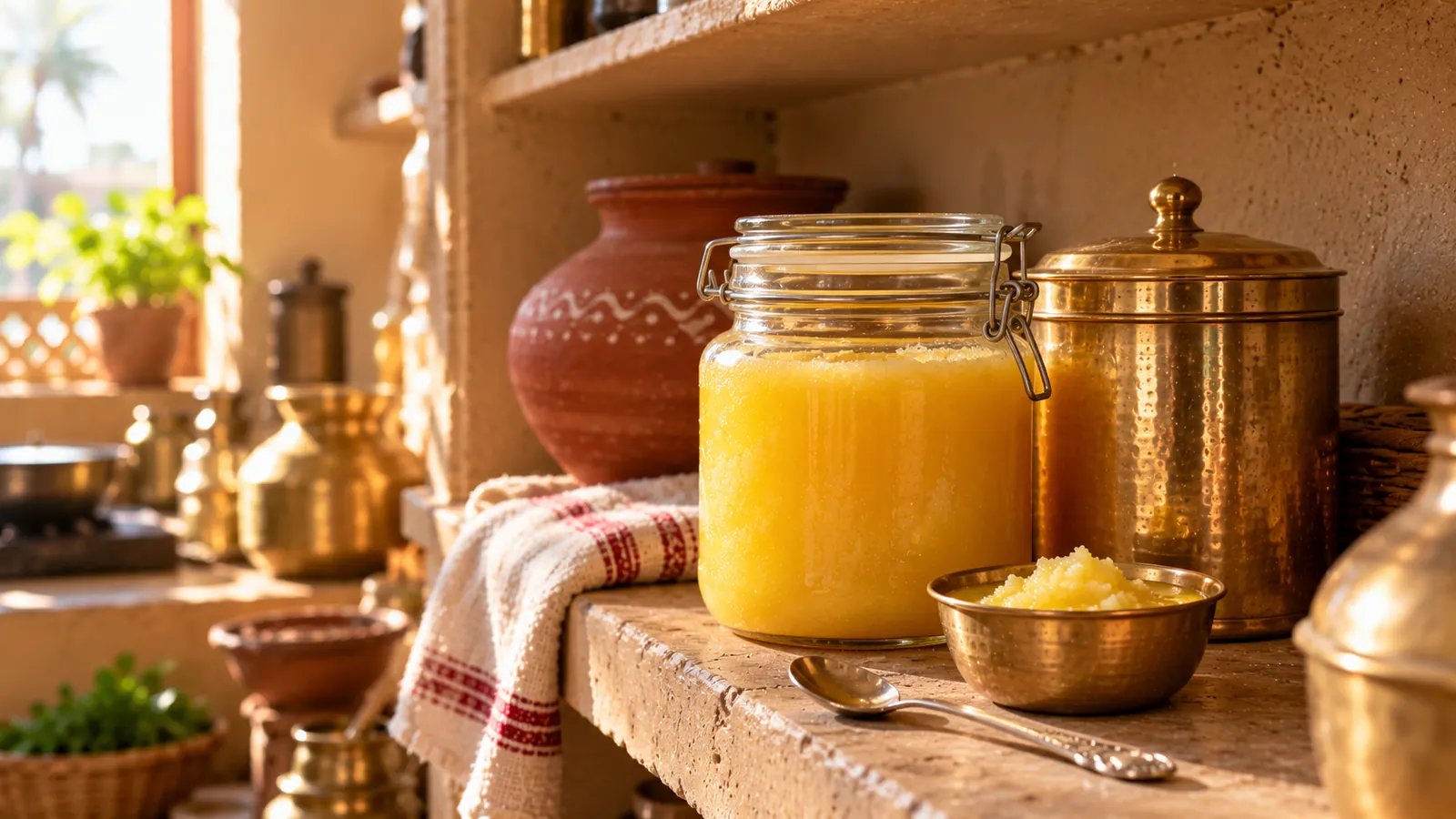
Ghee is one of the few foods in an Indian kitchen that genuinely does not need a fridge. That is not a claim on a label - it is what ghee is. Butter is fat, water and milk solids; making ghee drives off the water and strains out the solids, and what is left is almost pure fat. Bacteria and mould need water to grow, so with the water gone there is very little for them to work with.
That is also why almost every way ghee goes wrong comes back to the same thing: water getting back in.
No. A cool, dry shelf away from the stove and out of direct sunlight is enough for a jar in daily use. The fridge does no harm - it will keep a jar good for longer - but it sets ghee hard, and most kitchens find that more trouble than it is worth for a jar they are using every day.
If you buy in bulk, a sensible middle way is to keep a small working jar on the shelf and the rest sealed in the fridge, topping up the small one as it empties. The big jar then gets opened rarely, which is what keeps it fresh.
A wet spoon, a spoon that has been in dal, or a jar left open over a steaming pot - each one puts a little water into the ghee, and that water is where spoilage starts. Use a clean, dry spoon every single time and keep the lid on. This does more for how long your ghee lasts than anything else on this page.
Ghee starts to soften at around body temperature, so through a Jalore May a jar on the kitchen shelf will often be partly or fully liquid. That is not a sign of anything wrong, and it does not mean the ghee has been mixed with oil. Let it cool and it will set again, often with a different grain than before - again, normal. We explain why grain is not a test of purity in how to check pure ghee at home.
What summer heat does do is speed up the slow change below, so in the hottest months keep the jar in the coolest, darkest spot you have. A jar of ghee sent by courier in summer may also arrive liquid, and one sent in winter may arrive solid. Both are fine.
Yes, slowly - but not the way milk does. Kept dry, ghee does not usually go off through bacteria. It goes off through oxidation: the fat reacts with air and light over months and turns rancid. Heat and light speed that up; a sealed jar in a cool, dark place slows it down.
Packaged ghee usually carries a best-before of around nine months to a year. As a practical rule for a jar in daily use on a shelf, try to finish it within about three months of opening. In the fridge it keeps well beyond that.
You may hear of purana ghee - deliberately aged ghee kept for years. It has a place in traditional medicine, but for cooking, fresher ghee simply tastes better.
About as long as bought ghee, if it was made properly. The deciding step is the cooking: ghee taken off the heat while the butter is still crackling has water left in it, and that water is what spoils it early. Cook until the crackling stops and the solids at the bottom turn golden brown, then strain it into a dry jar - the method is in how to make ghee from malai. After that the same rule applies: finish an open jar on the shelf within about three months, and keep a larger batch sealed in the fridge, where it lasts for many months.
Good ghee smells nutty and rich when warmed. Trust your nose; it is a better test than the date on the lid.
Glass or steel, with a lid that closes properly. Avoid thin plastic for long storage - ghee picks up smells easily, and plastic lets in more air than glass. Keep it well away from strong-smelling spices for the same reason.
Our desi cow ghee and buffalo ghee come in 1 litre glass jars (905 g), made in small batches from our own animals' milk. We deliver in Jalore City and ship ghee by courier anywhere in India.
We describe what we do and what is in the product. Nothing here is medical or nutritional advice, and dairy is not a treatment for anything - if you have a health question, ask a doctor rather than a dairy.
In the kitchen
Dairy milk reaches you raw. Why boiling it once makes it safe, how long to boil it, and what boiling does - and does not - take away.
· 4 min read
In the kitchen
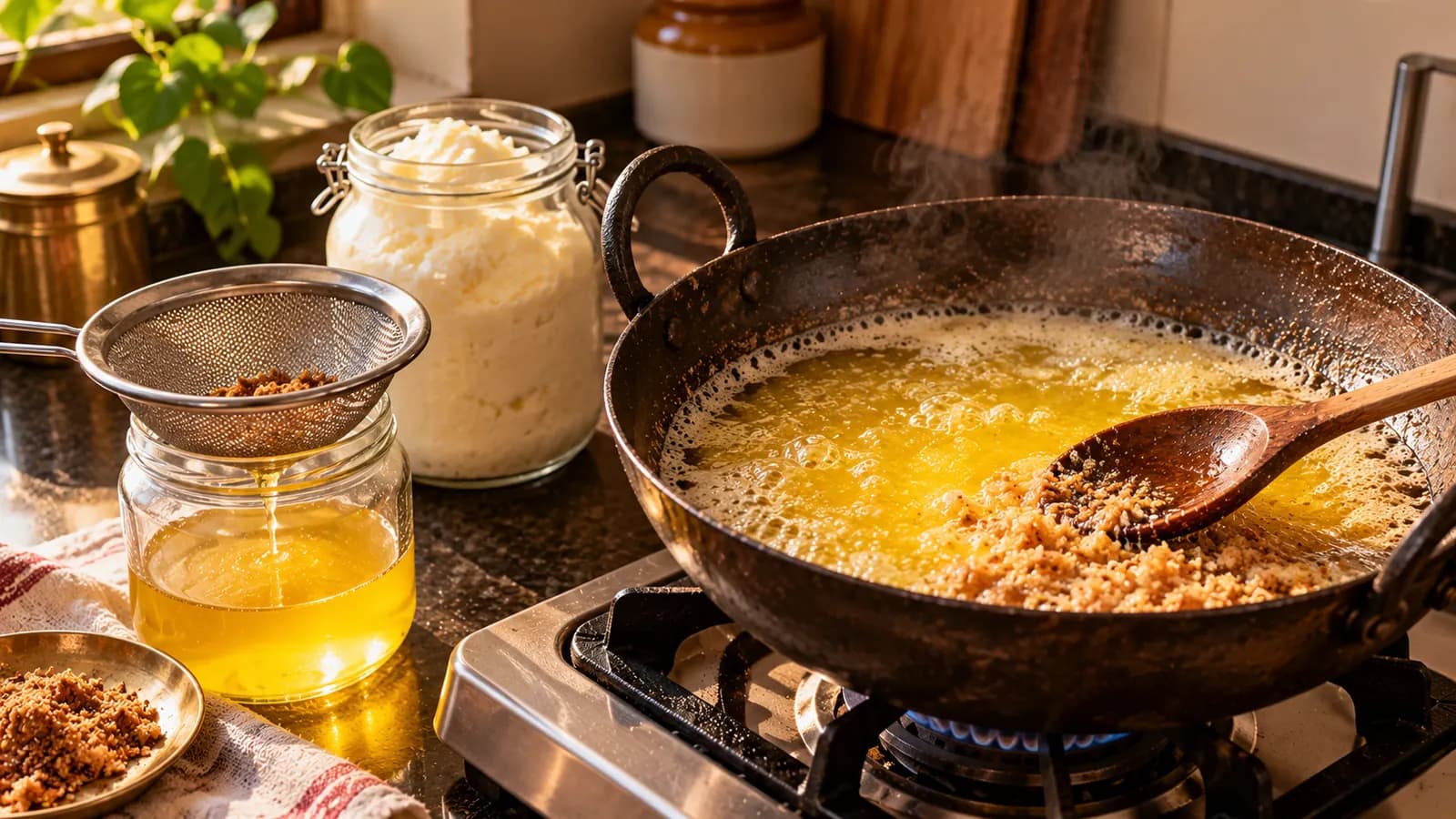
How to collect malai without it spoiling, turn it into butter, and cook that butter into clear, nutty ghee - with the signs that tell you when to stop.
· 4 min read
In the kitchen
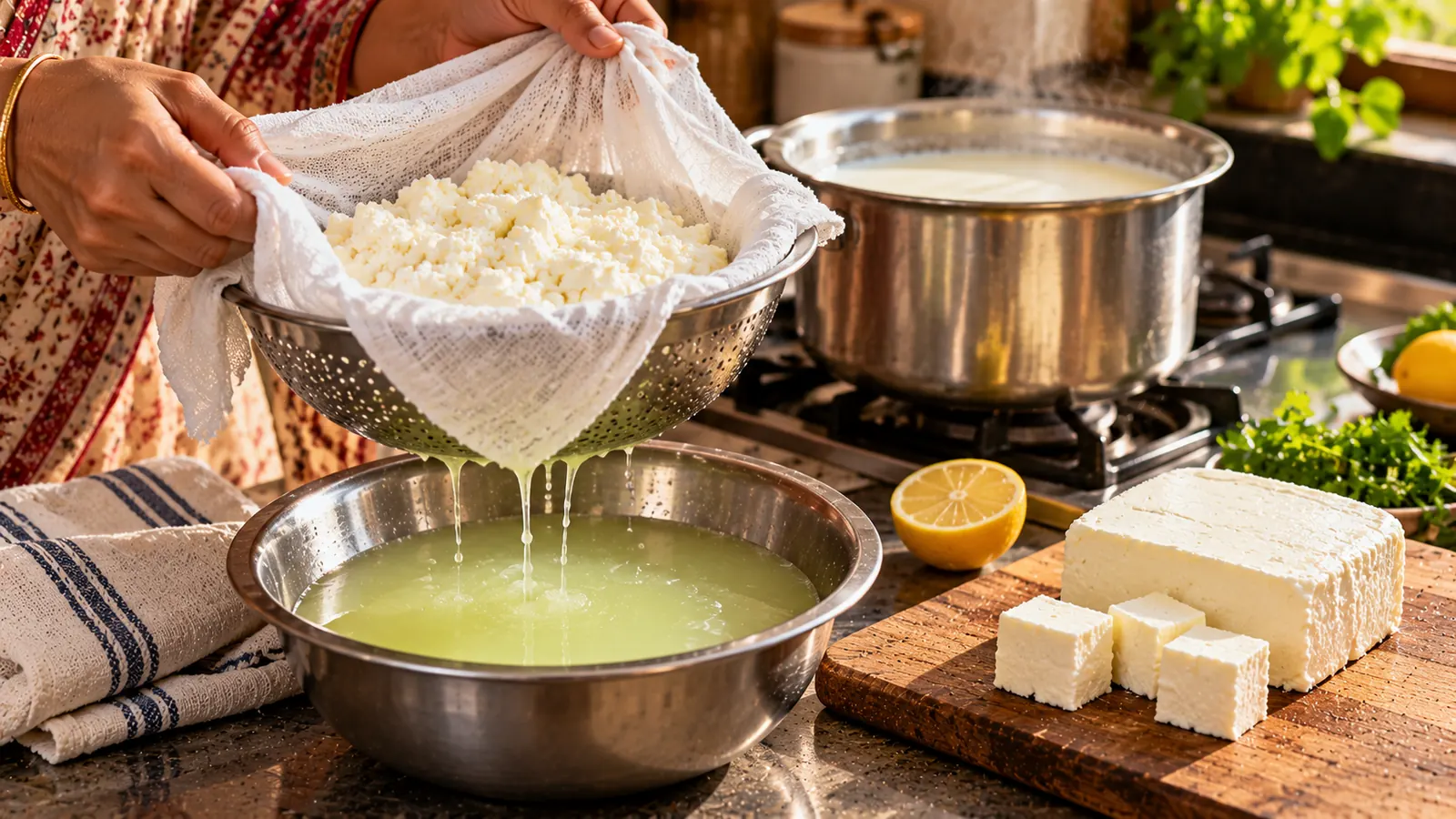
Soft paneer from a litre of full-cream milk in under an hour: which acid to use, how much paneer to expect, and why it turns rubbery or crumbly.
· 3 min read