In the kitchen
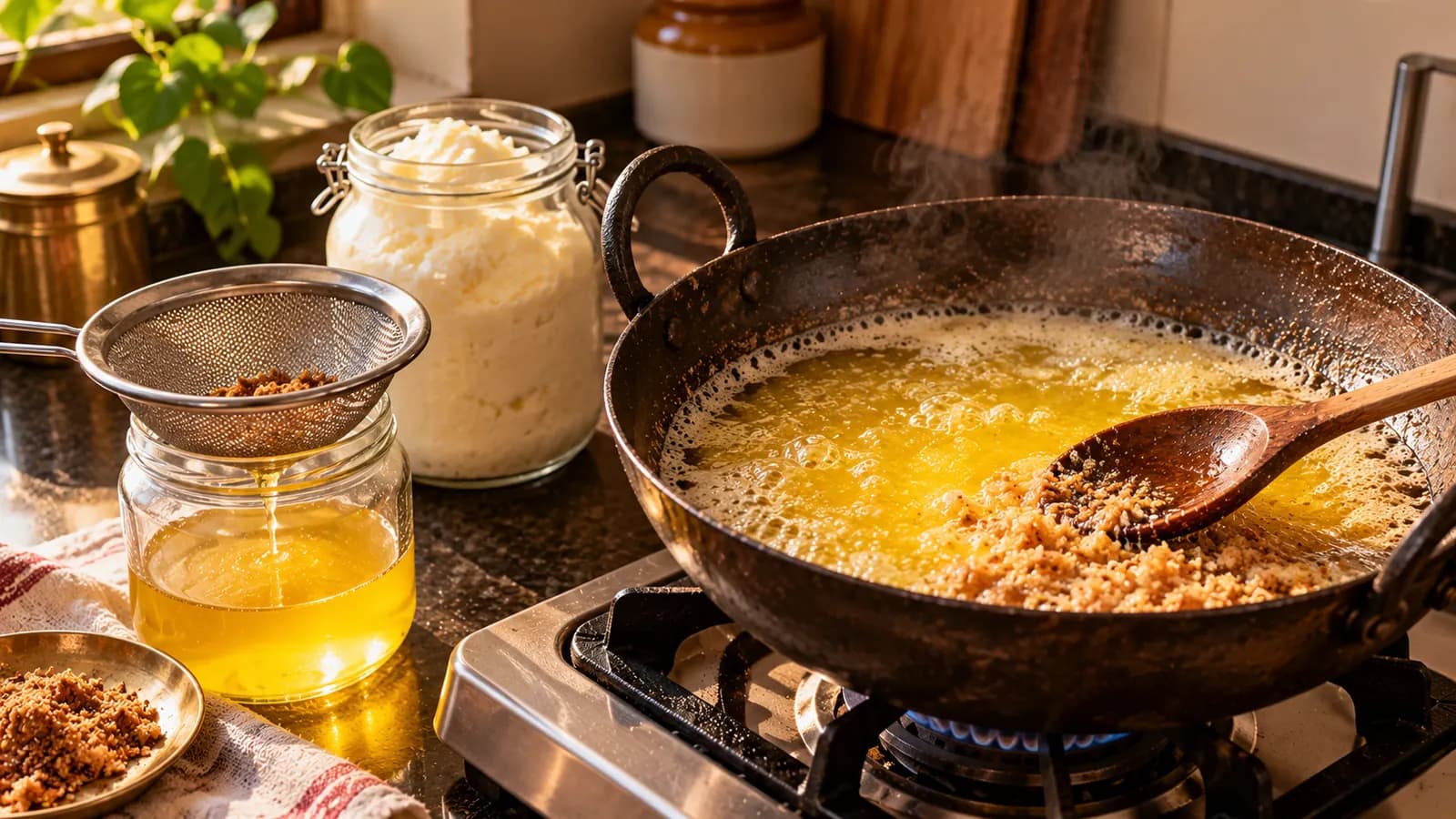
How to Make Ghee From Malai at Home, Step by Step
How to collect malai without it spoiling, turn it into butter, and cook that butter into clear, nutty ghee - with the signs that tell you when to stop.
· 4 min read
In the kitchen
By Naresh Kumar · · Updated · 4 min read
Dairy milk reaches you raw. Why boiling it once makes it safe, how long to boil it, and what boiling does - and does not - take away.
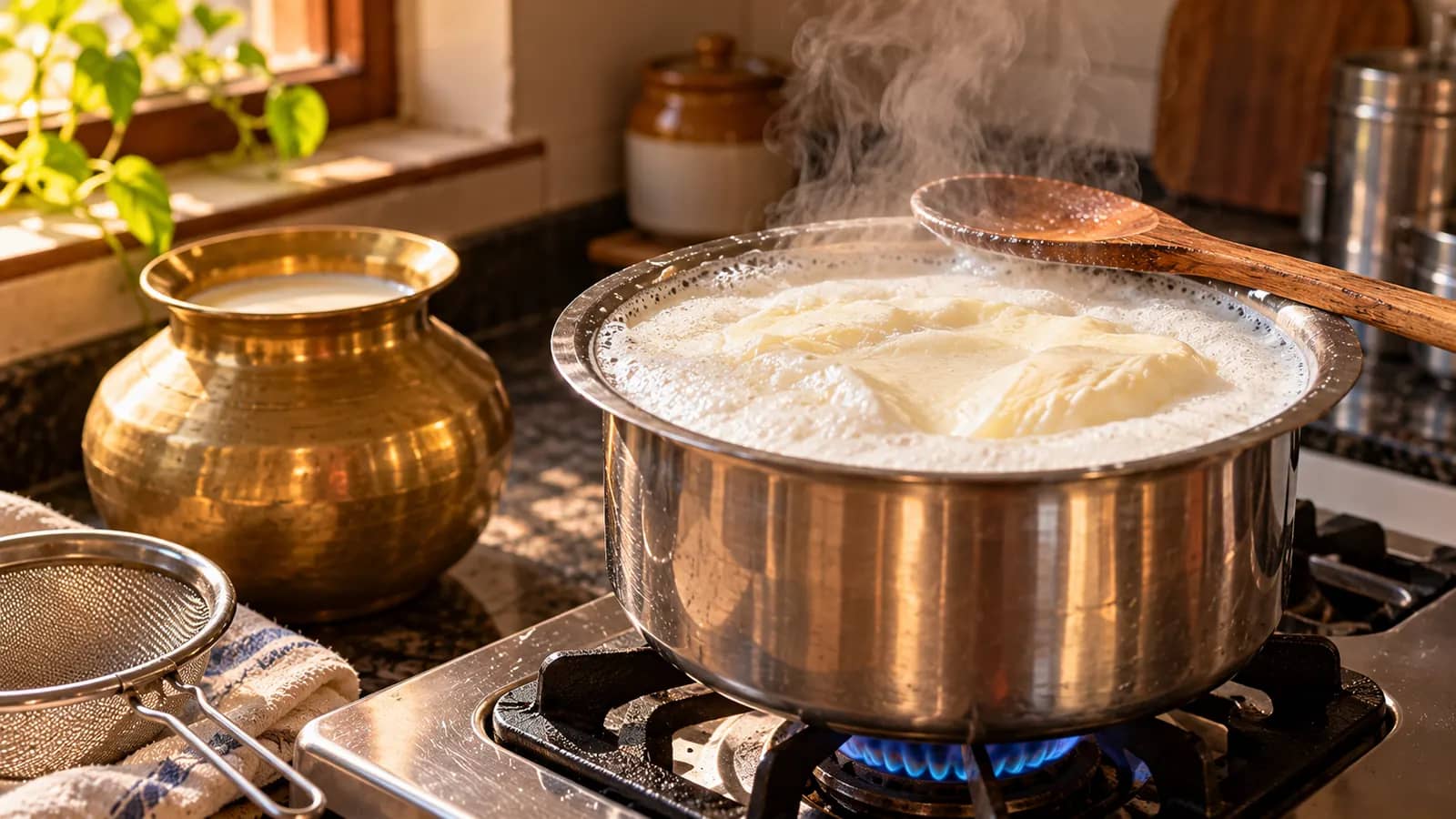
Milk from a local dairy - ours included - reaches you raw. It has not been through a pasteurising plant, which is part of why it tastes the way it does. It also means one step is left to you: boil it once when it arrives. Here is why that step matters, and why it costs you very little.
Milk leaves a healthy animal very clean, and does not stay that way for long. Between the udder, the hands, the bucket and the air, bacteria get in - and milk is warm, wet and full of food for them. Most are harmless. A few, such as E. coli, Salmonella, Listeria and the bacteria behind brucellosis and bovine TB, are not, and you cannot see, smell or taste them.
Boiling deals with bacteria. It does nothing about water or anything else added to milk - for that, see how to check pure milk at home.
This is not a sign of a dirty dairy. Clean milking lowers the risk; it cannot make it zero. That is why food safety authorities everywhere advise heating raw milk before drinking it, and why Indian kitchens have boiled milk as a matter of habit for as long as anyone remembers.
Small children, pregnant women, older people and anyone who is unwell are the most at risk, so for them it is not optional.
Once is enough. You do not need to boil it again every time you pour a glass; warm only what you are about to use. What else helps it keep in a Jalore summer is in keeping fresh milk from turning.
Boiling reduces some heat-sensitive vitamins, a few of the B vitamins among them, by a modest amount. It does not touch the protein, the fat, the calcium or the minerals, which are most of the reason milk is worth drinking. You will hear that raw milk is healthier because of the enzymes or 'good bacteria' it carries; the evidence for that is thin, and it does not outweigh the risk.
Boiling also changes the milk a little in ways you will notice. It forms malai as it cools - which is worth collecting for ghee - and it sets thicker dahi, because heat changes the proteins so they hold together better.
Boiled, then chilled. A cold drink is exactly where people are tempted to skip the boil, and it is the same raw milk with the same risk - blending it with fruit or sugar does nothing to the bacteria. Boil the milk when it arrives, cool it, keep it in the fridge, and use that for anything served cold. It tastes no different once it is cold.
Pouch milk is pasteurised at the plant, so it does not strictly need boiling as long as it has been kept cold all the way to you; many homes boil it anyway, and that does no harm. Long-life milk in cartons has been heated even further and can be drunk straight from the carton. Raw milk from a dairy is the one that genuinely needs it.
Our buffalo and cow milk comes from our own animals, milked on the farm and sent out on the same round - which is exactly why it reaches you raw, and why we ask you to boil it once when it arrives. Not sure whether to take buffalo or cow? Read cow milk vs buffalo milk.
We describe what we do and what is in the product. Nothing here is medical or nutritional advice, and dairy is not a treatment for anything - if you have a health question, ask a doctor rather than a dairy.
In the kitchen
How to collect malai without it spoiling, turn it into butter, and cook that butter into clear, nutty ghee - with the signs that tell you when to stop.
· 4 min read
In the kitchen
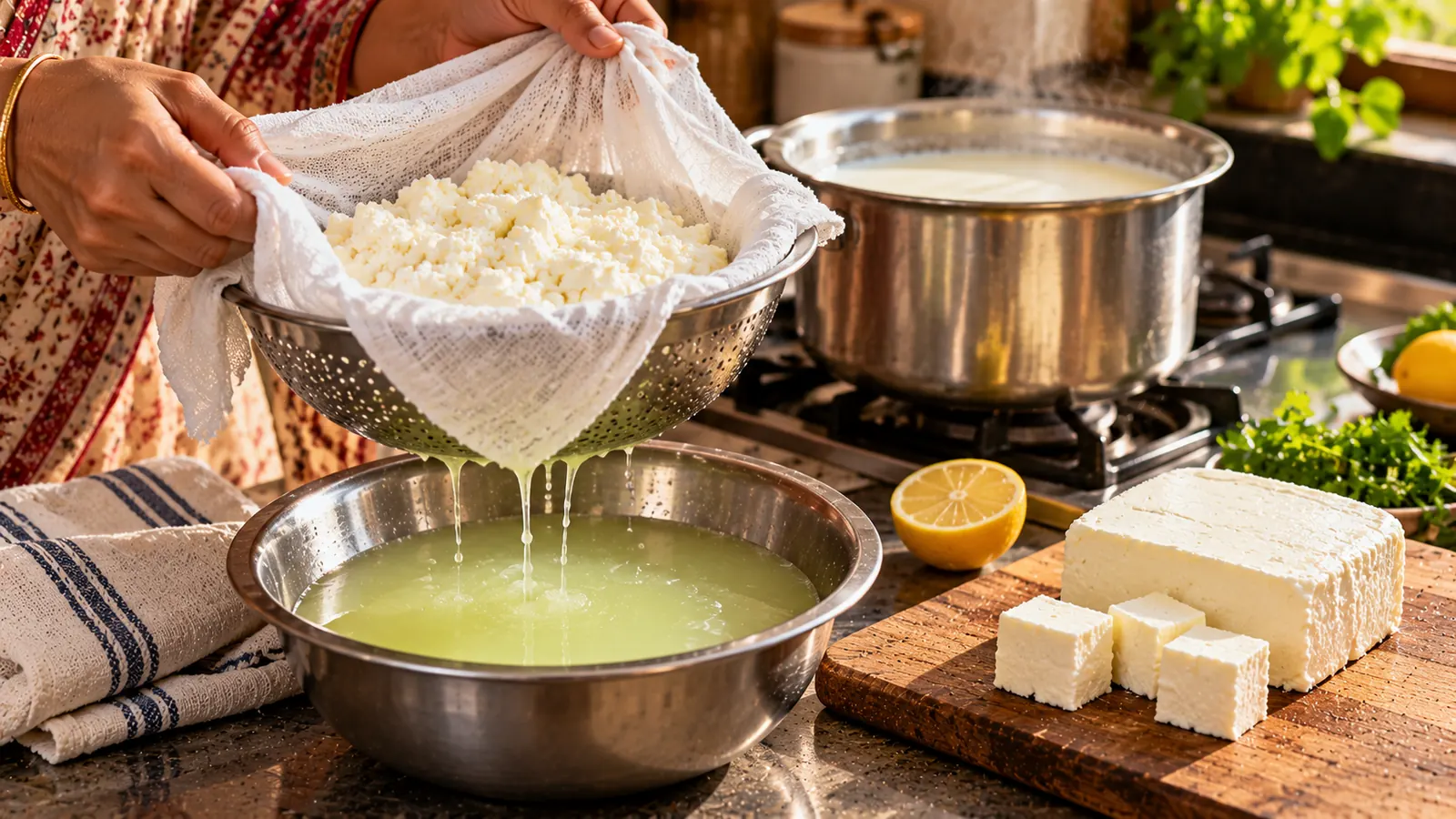
Soft paneer from a litre of full-cream milk in under an hour: which acid to use, how much paneer to expect, and why it turns rubbery or crumbly.
· 3 min read
In the kitchen
Three home tests from FSSAI's own guide - for water, starch and detergent - the popular checks that prove nothing, and what only a lab can tell you.
· 3 min read