In the kitchen
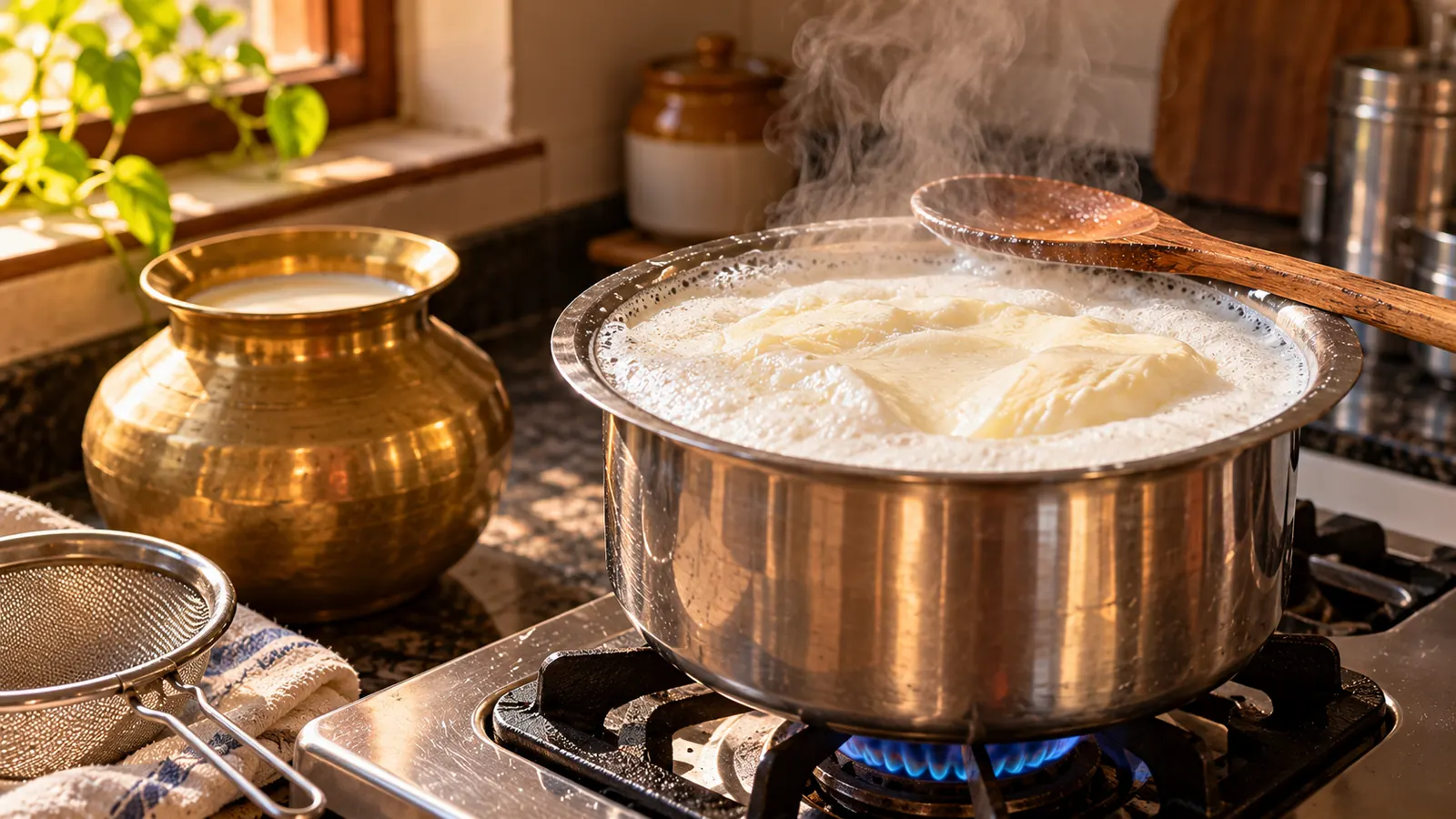
Is Raw Milk Safe to Drink? Why Fresh Milk Should Be Boiled
Dairy milk reaches you raw. Why boiling it once makes it safe, how long to boil it, and what boiling does - and does not - take away.
· 4 min read

In the kitchen
By Naresh Kumar · · 4 min read
How to collect malai without it spoiling, turn it into butter, and cook that butter into clear, nutty ghee - with the signs that tell you when to stop.
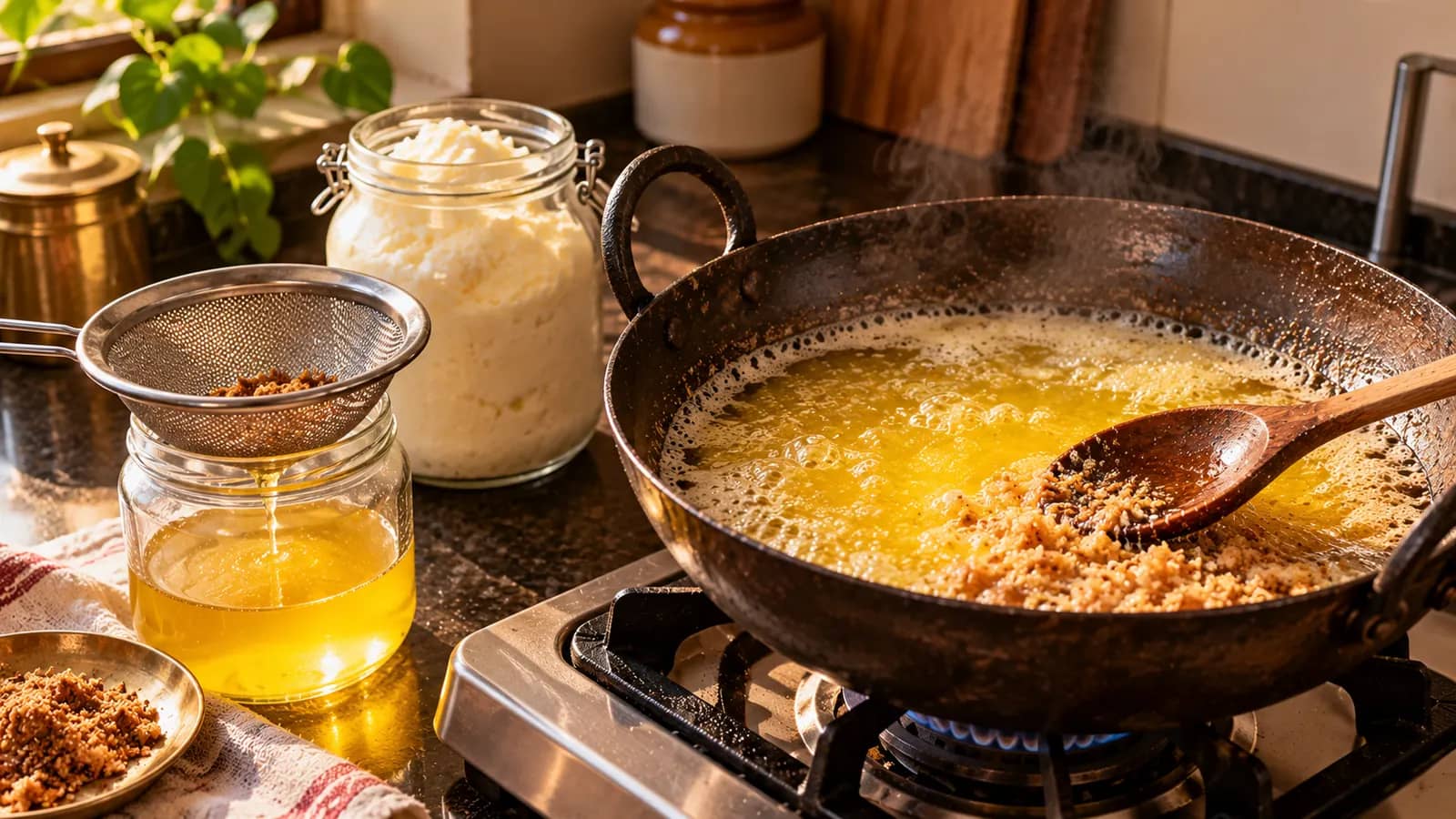
If you boil full-cream milk every day, you are already making the raw material for ghee: the layer of malai that sets on top as it cools. Collected for a week or two, it is enough for a jar. Here is how to do it so the ghee comes out clear and nutty rather than cloudy or burnt.
Let the boiled milk cool, lift the malai off with a spoon, and keep it in a clean, dry steel or glass box. The freezer is the right place for it if you are collecting over more than a few days; in the fridge, use it within about a week. If any batch smells off or shows mould, throw that batch away rather than mixing it in - one bad lot spoils the jar.
Buffalo milk gives a much thicker layer than cow milk, because it carries nearly twice the fat. We explain why in cow milk vs buffalo milk.
When you have enough - half a kilo to a kilo is a good batch - let the malai come to room temperature, stir in a spoonful of fresh dahi, cover it and leave it overnight. In a Rajasthan summer six to eight hours is plenty. This is what gives home ghee its slightly sour-sweet, nutty smell; skip it and the ghee will be cleaner but flatter. The difference between the two routes is in how desi ghee is made.
Put the malai in a deep vessel or a mixer jar, add a glass of cold water - ice water in summer - and churn. With a madhani it takes a while; in a mixer, run it in short bursts. Stop when yellowish butter separates and floats on a thin, watery liquid. If it refuses to split, it is too warm: add more ice and keep going.
The liquid left behind is fresh chach. Drink it, or use it for kadhi.
Gather the butter and rinse it in cold water two or three times, pressing it with a spoon, until the water runs nearly clear. Leftover buttermilk in the butter is what burns at the bottom of the pan and what makes ghee go off sooner.
Melt the butter in a heavy-bottomed kadhai on a low flame and leave it to work. It goes through stages you can see and hear:
Turn the flame off at golden-brown. The pan keeps cooking for a minute after, and the line between golden and burnt is short. Too early, and water is still in it - the ghee will look cloudy and spoil. Too late, and it tastes scorched.
Let it cool for a few minutes, then pour it through a fine steel strainer or a muslin cloth into a clean, completely dry glass jar. Leave the lid off until it has cooled, so steam does not condense back into it. After that, a dry spoon every time is the whole of the storage advice - more in how to store ghee.
The browned solids left in the strainer are khurchan. Most houses here eat them with a little sugar or on a roti, and nobody wastes them.
Yes. Heating malai directly in the kadhai also gives ghee, and plenty of kitchens do it that way. It takes longer, it catches on the bottom more easily, and you get more solids and a slightly different taste. Churning first is more work and gives the cleaner result.
Home-collected malai still holds a lot of milk and water, so expect roughly a third to a half of its weight as ghee. Why the numbers vary so much - and how many litres of milk sit behind one jar - is in how much ghee from 1 litre of milk.
It is a fortnight of collecting and an hour at the stove. If that is not how you want to spend it, we make desi cow ghee and buffalo ghee on the farm from our own milk, and ship it across India.
We describe what we do and what is in the product. Nothing here is medical or nutritional advice, and dairy is not a treatment for anything - if you have a health question, ask a doctor rather than a dairy.
In the kitchen
Dairy milk reaches you raw. Why boiling it once makes it safe, how long to boil it, and what boiling does - and does not - take away.
· 4 min read
In the kitchen
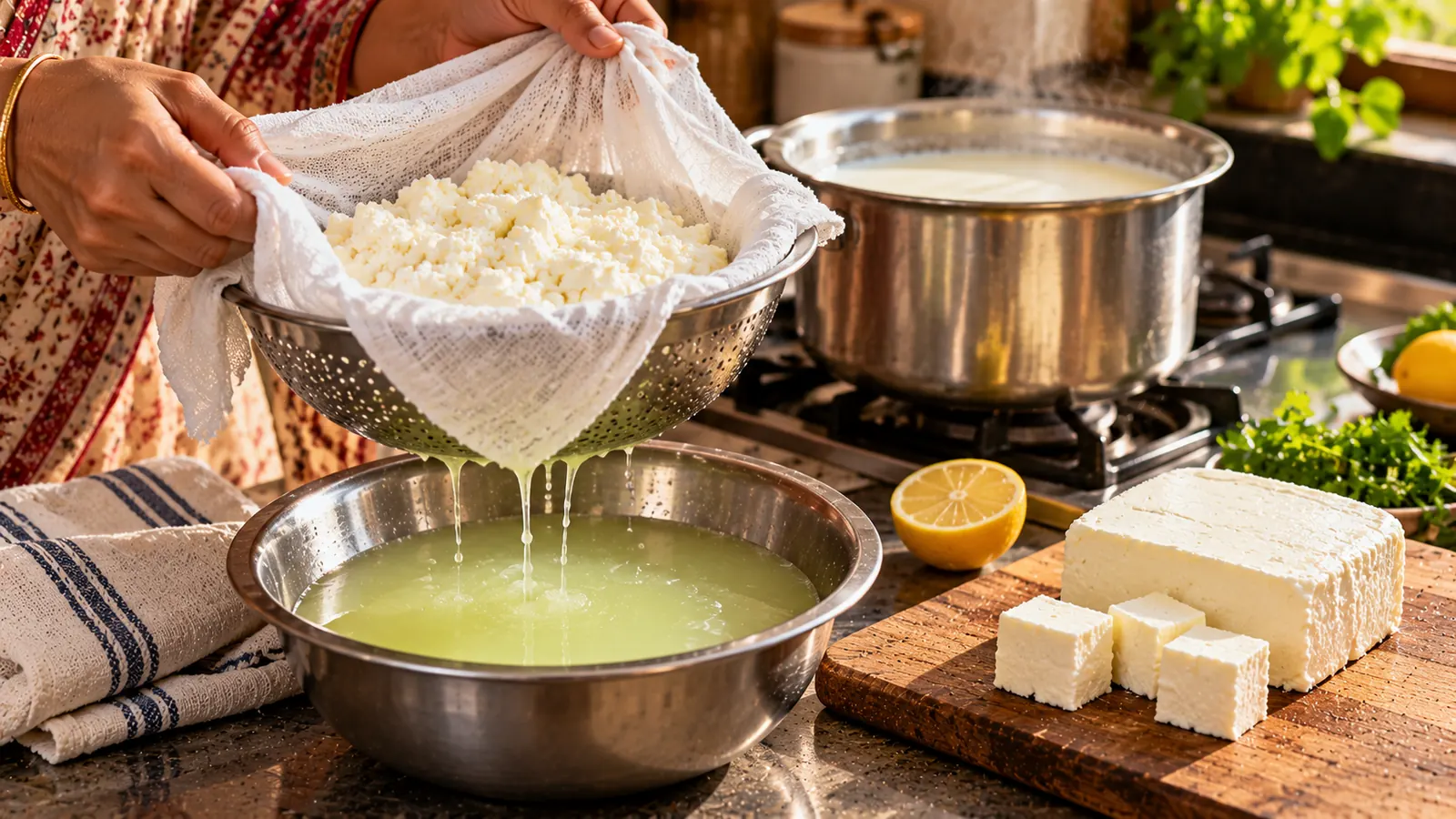
Soft paneer from a litre of full-cream milk in under an hour: which acid to use, how much paneer to expect, and why it turns rubbery or crumbly.
· 3 min read
In the kitchen
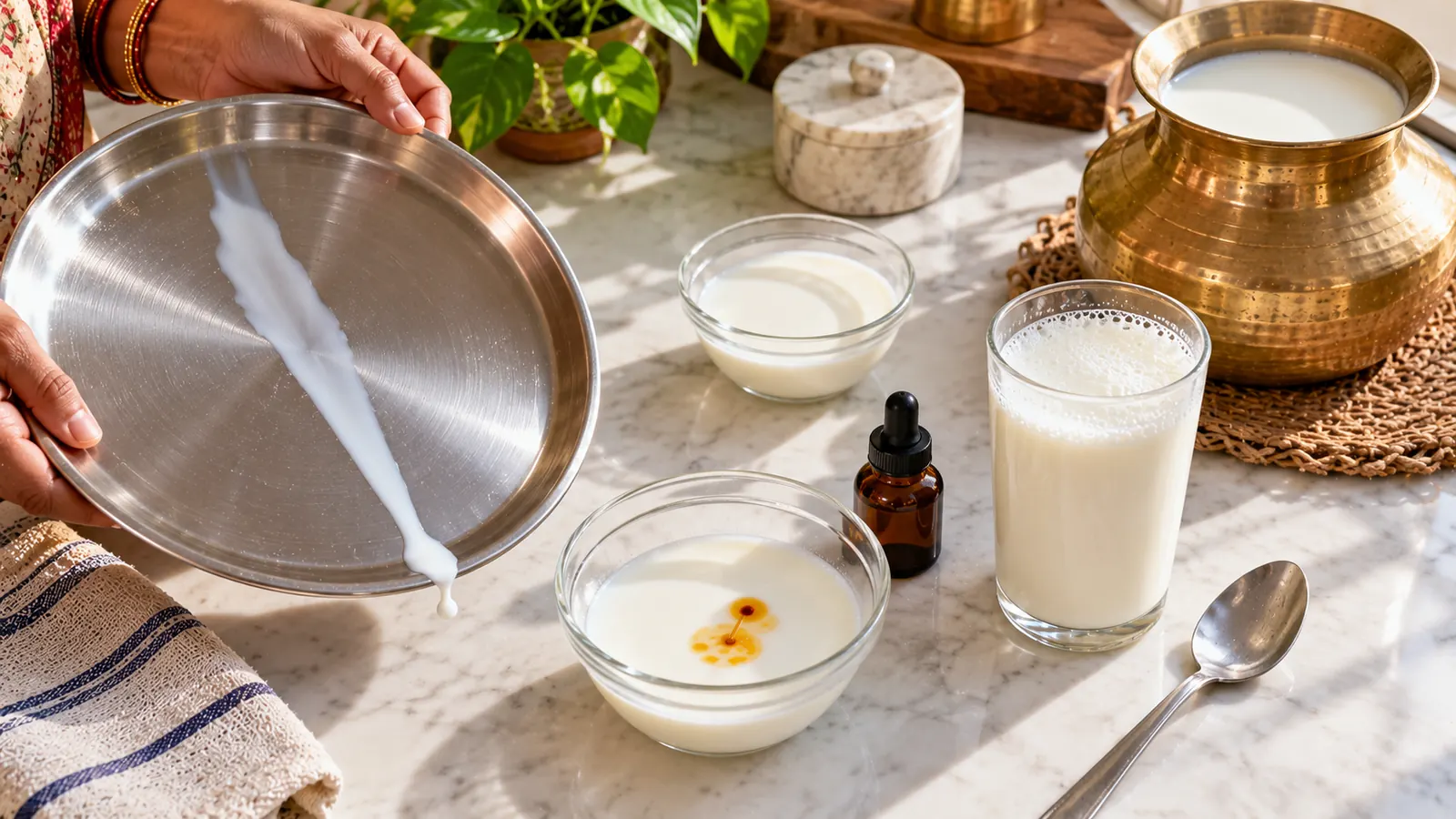
Three home tests from FSSAI's own guide - for water, starch and detergent - the popular checks that prove nothing, and what only a lab can tell you.
· 3 min read