In the kitchen
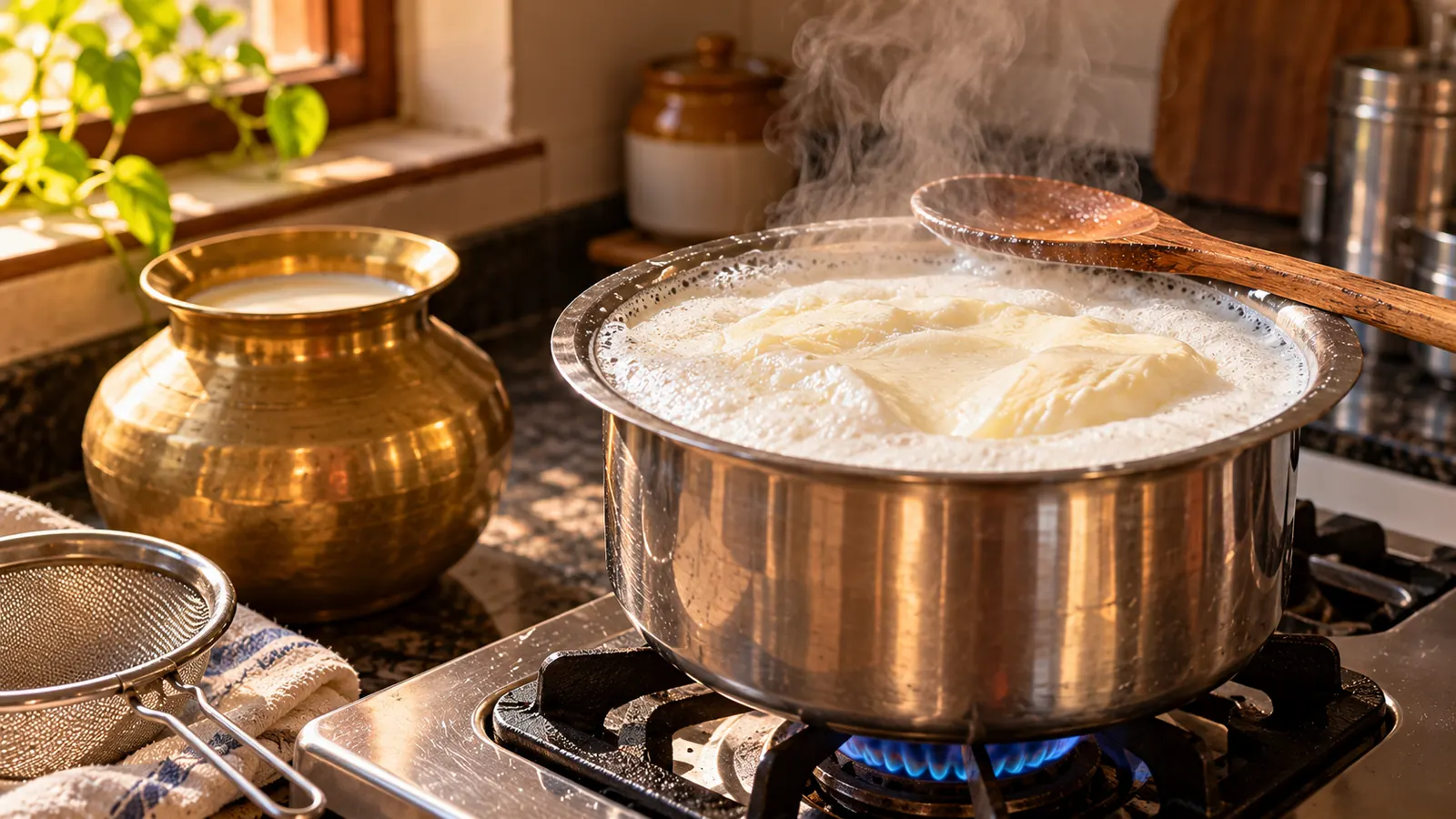
Is Raw Milk Safe to Drink? Why Fresh Milk Should Be Boiled
Dairy milk reaches you raw. Why boiling it once makes it safe, how long to boil it, and what boiling does - and does not - take away.
· 4 min read
In the kitchen
By Naresh Kumar · · Updated · 3 min read
Soft paneer from a litre of full-cream milk in under an hour: which acid to use, how much paneer to expect, and why it turns rubbery or crumbly.
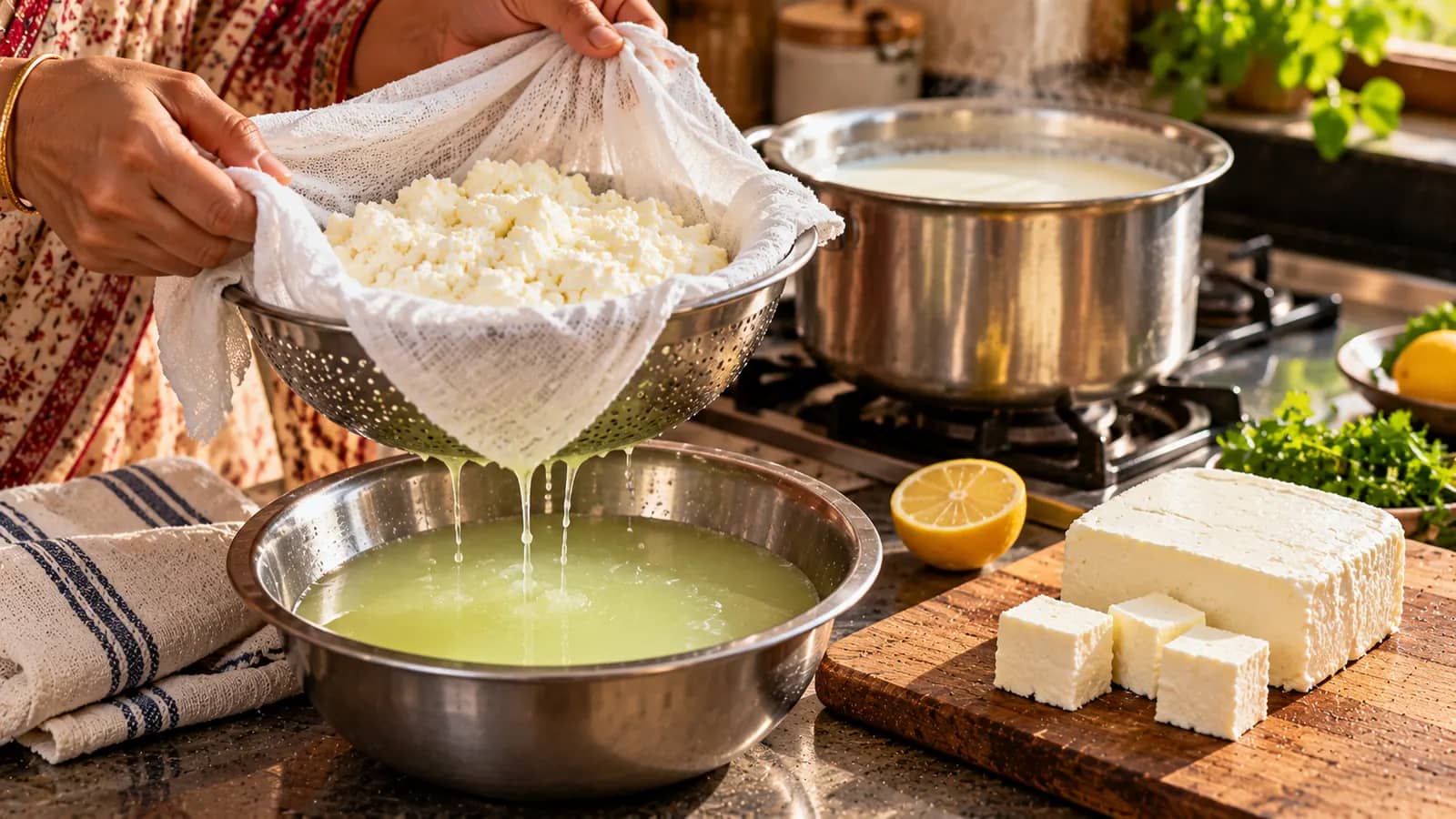
Paneer is milk, heat and a little acid. That is the whole recipe, and it takes under an hour. What separates soft, sweet paneer from the rubbery kind is not a secret ingredient but three things: the milk you start with, how hot it is when the acid goes in, and knowing when to stop.
From 1 litre of full-cream buffalo milk, roughly 200 grams. From cow milk, roughly 150 to 180 grams. Toned or skimmed milk gives noticeably less, and a drier paneer, because a good part of what makes paneer is the fat - the reason buffalo milk does so well here is the same reason it sets the thickest dahi.
Yes. The method is exactly the same, and full-cream cow milk makes good paneer. It gives a little less from the same litre, because cow milk carries less fat and protein than buffalo milk, and the block is lighter and more delicate. Press it gently and for less time, since pressing too hard is what makes it crumble.
Paneer made at home has nothing in it to make it last. Keep it in a covered box of water in the fridge, change the water every day, and use it within two to three days.
The greenish whey left behind is good for kneading atta, for cooking dal or rice, and for the next batch of paneer. Keep a cup of it in the fridge for a day or two and it becomes the acid next time.
Milk that is just starting to turn sour can go straight into paneer too, as long as it smells sour rather than bad - more on that in keeping fresh milk from turning. We do not make paneer ourselves, but our fresh buffalo and cow milk is what you would want to make it from, delivered every morning across Jalore City.
We describe what we do and what is in the product. Nothing here is medical or nutritional advice, and dairy is not a treatment for anything - if you have a health question, ask a doctor rather than a dairy.
In the kitchen
Dairy milk reaches you raw. Why boiling it once makes it safe, how long to boil it, and what boiling does - and does not - take away.
· 4 min read
In the kitchen
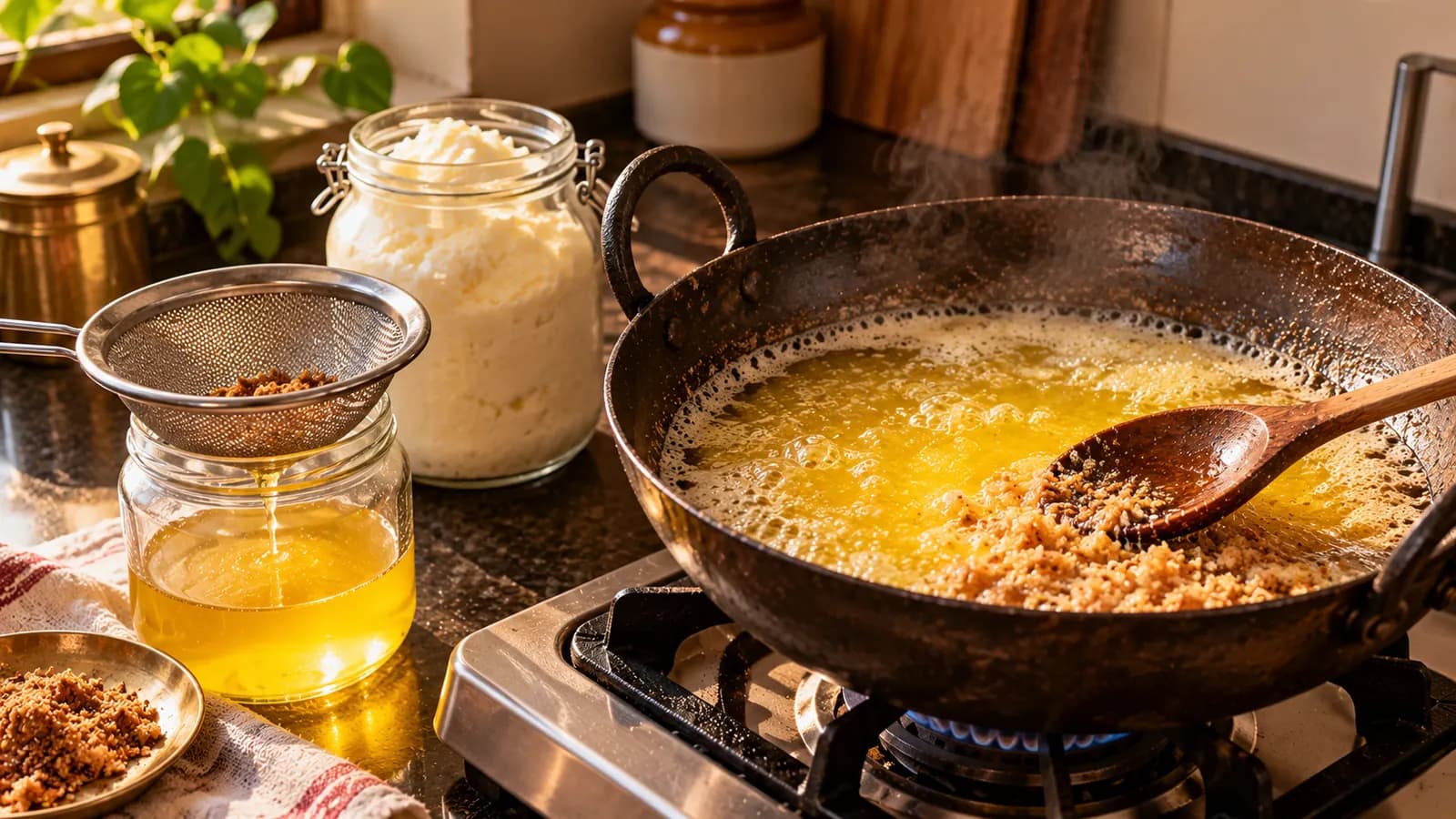
How to collect malai without it spoiling, turn it into butter, and cook that butter into clear, nutty ghee - with the signs that tell you when to stop.
· 4 min read
In the kitchen
Three home tests from FSSAI's own guide - for water, starch and detergent - the popular checks that prove nothing, and what only a lab can tell you.
· 3 min read