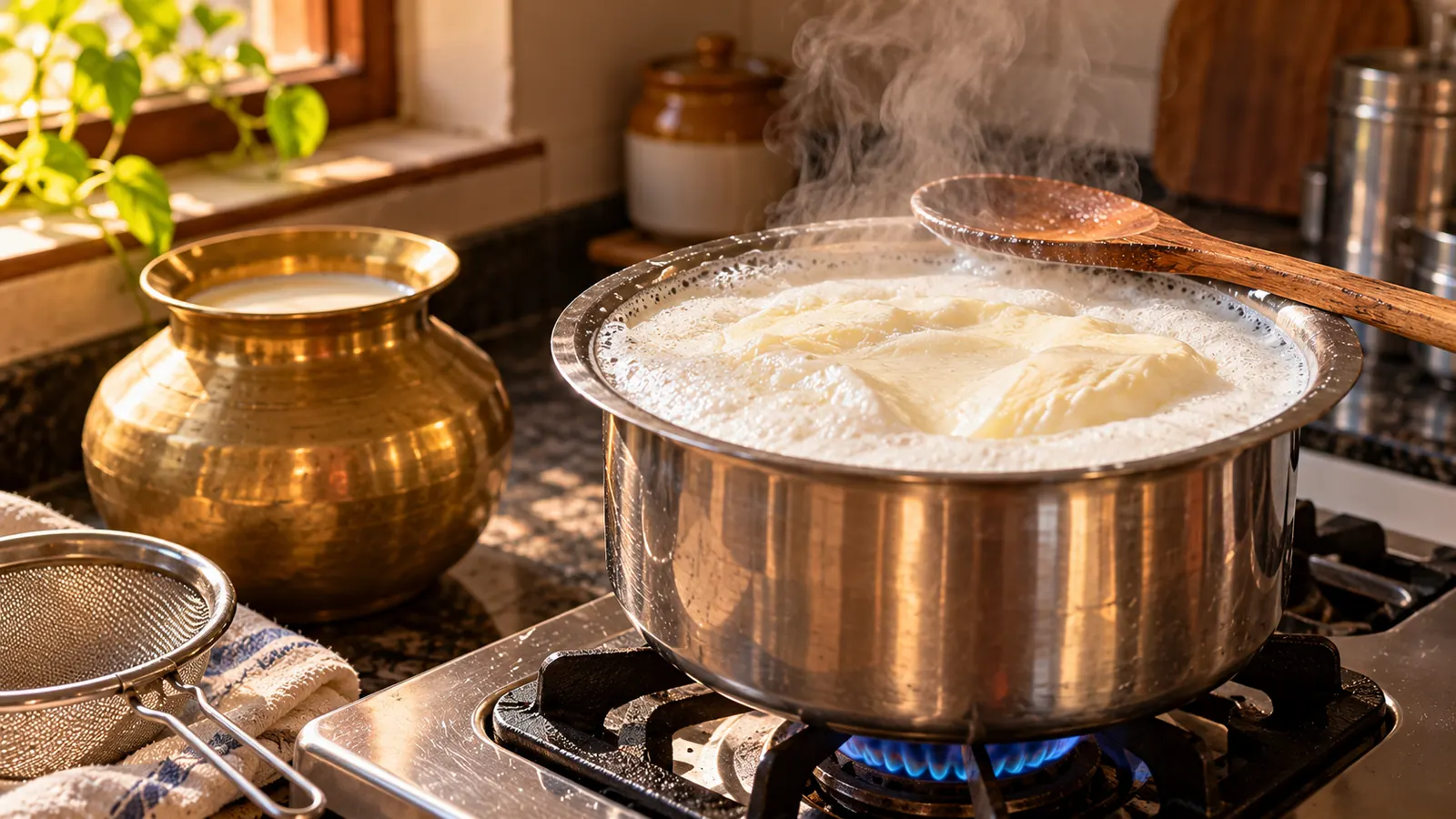
In the kitchen
Is Raw Milk Safe to Drink? Why Fresh Milk Should Be Boiled
Dairy milk reaches you raw. Why boiling it once makes it safe, how long to boil it, and what boiling does - and does not - take away.
· 4 min read

In the kitchen
By Naresh Kumar · · Updated · 3 min read
How to check if ghee is pure or adulterated in your own kitchen: the home tests that work, the popular ones that do not, and when to send it to a lab.
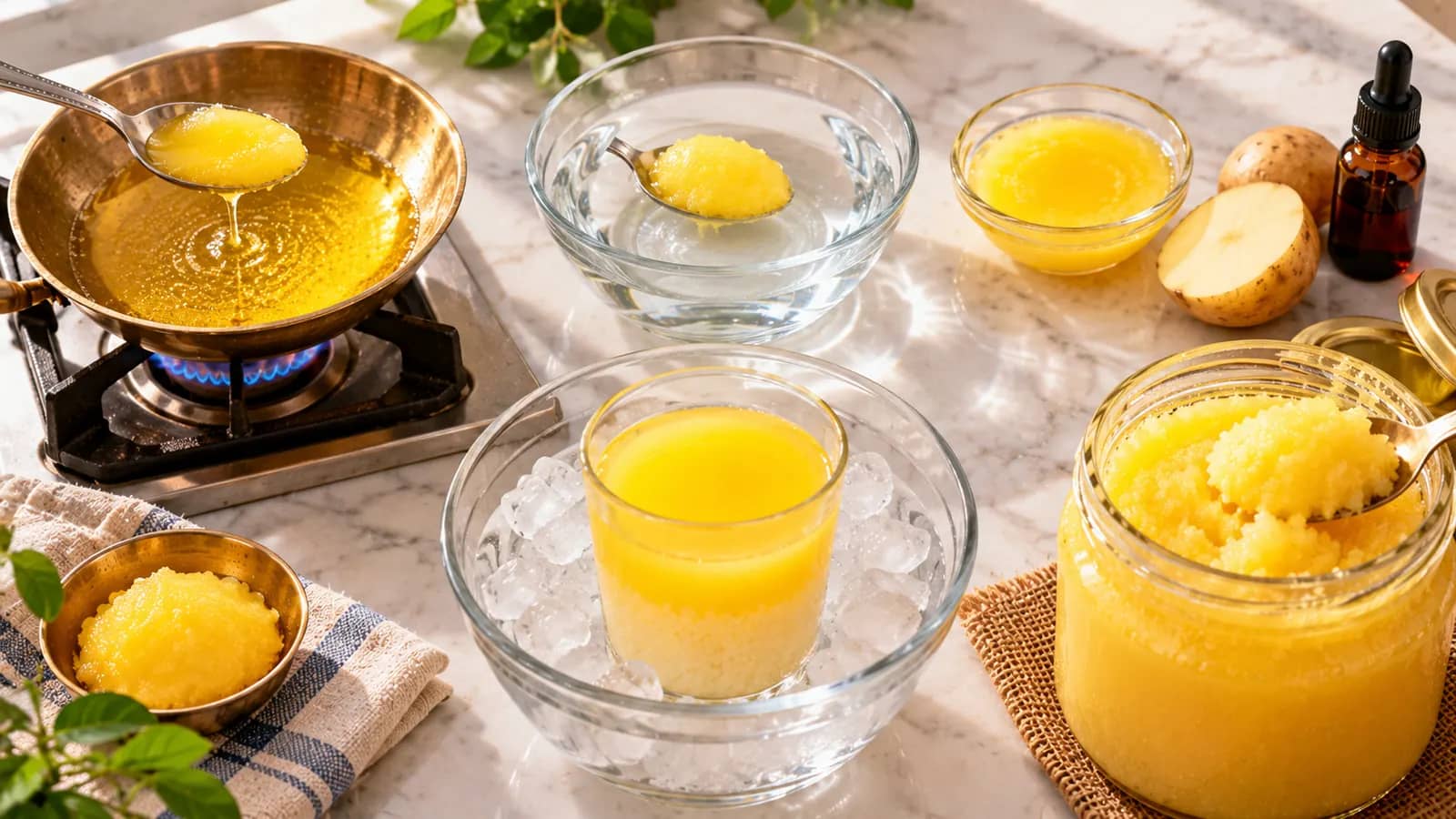
Ghee is expensive to make honestly, which is exactly why it gets mixed with cheaper things. Some of that you can catch in your own kitchen with a spoon and a pan. Some of it you cannot, whatever a video promises. Here is which is which.
The iodine test, for starch. Melt a teaspoon of ghee, put a little in a small bowl, and add two or three drops of tincture of iodine from any chemist. If it turns blue or purple, there is starch in it. Pure ghee just takes on the brown of the iodine. This is one of the home checks in FSSAI's own guide to detecting adulteration, and it is the most reliable test on this list.
The pan test. Heat a spoonful in a pan on a low flame. Good ghee melts quickly and completely, turns clear and golden, and smells nutty. Ghee that is slow to melt, leaves a residue, foams oddly, or smells of oil is worth being suspicious of.
The palm test. Rub a little on your palm. Ghee starts to melt at about body temperature; vanaspati holds out noticeably longer. It is a rough signal rather than proof, but a quick one.
The set test. Melt some ghee in a glass jar standing in hot water, then leave it in the fridge. Different fats set at different temperatures, so a mixed ghee can set in visible layers, while a pure one sets more evenly.
It takes well over a dozen litres of buffalo milk, and more than twenty litres of cow milk, to make a kilo of ghee. Work out what that much milk costs in your town. If a kilo of 'pure desi ghee' is selling for less than the milk it would take to make it, the arithmetic has already told you what the tests are trying to. We work it through in how much ghee from 1 litre of milk.
The standard test for vanaspati uses hydrochloric acid, which has no place in a kitchen. If you have real doubts about a ghee, send it to a food testing lab or report it to FSSAI, rather than trying to prove it at home.
The simplest check of all is to know who made it. Ours has one ingredient - milk from our own animals - and we are happy to show you where it is made. See our desi cow ghee and our buffalo ghee, ordered from anywhere in India, or visit the farm.
We describe what we do and what is in the product. Nothing here is medical or nutritional advice, and dairy is not a treatment for anything - if you have a health question, ask a doctor rather than a dairy.
In the kitchen
Dairy milk reaches you raw. Why boiling it once makes it safe, how long to boil it, and what boiling does - and does not - take away.
· 4 min read
In the kitchen
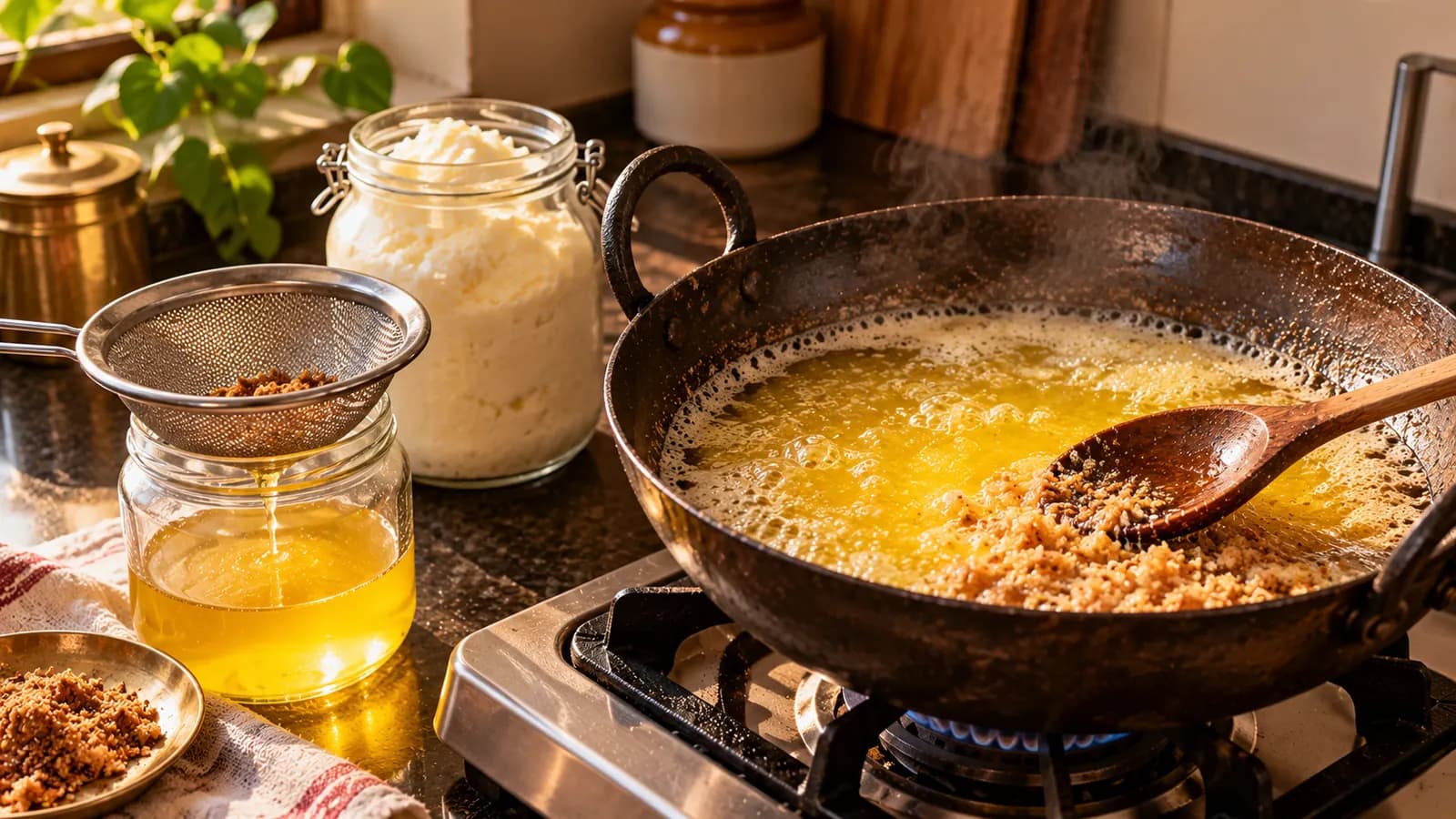
How to collect malai without it spoiling, turn it into butter, and cook that butter into clear, nutty ghee - with the signs that tell you when to stop.
· 4 min read
In the kitchen
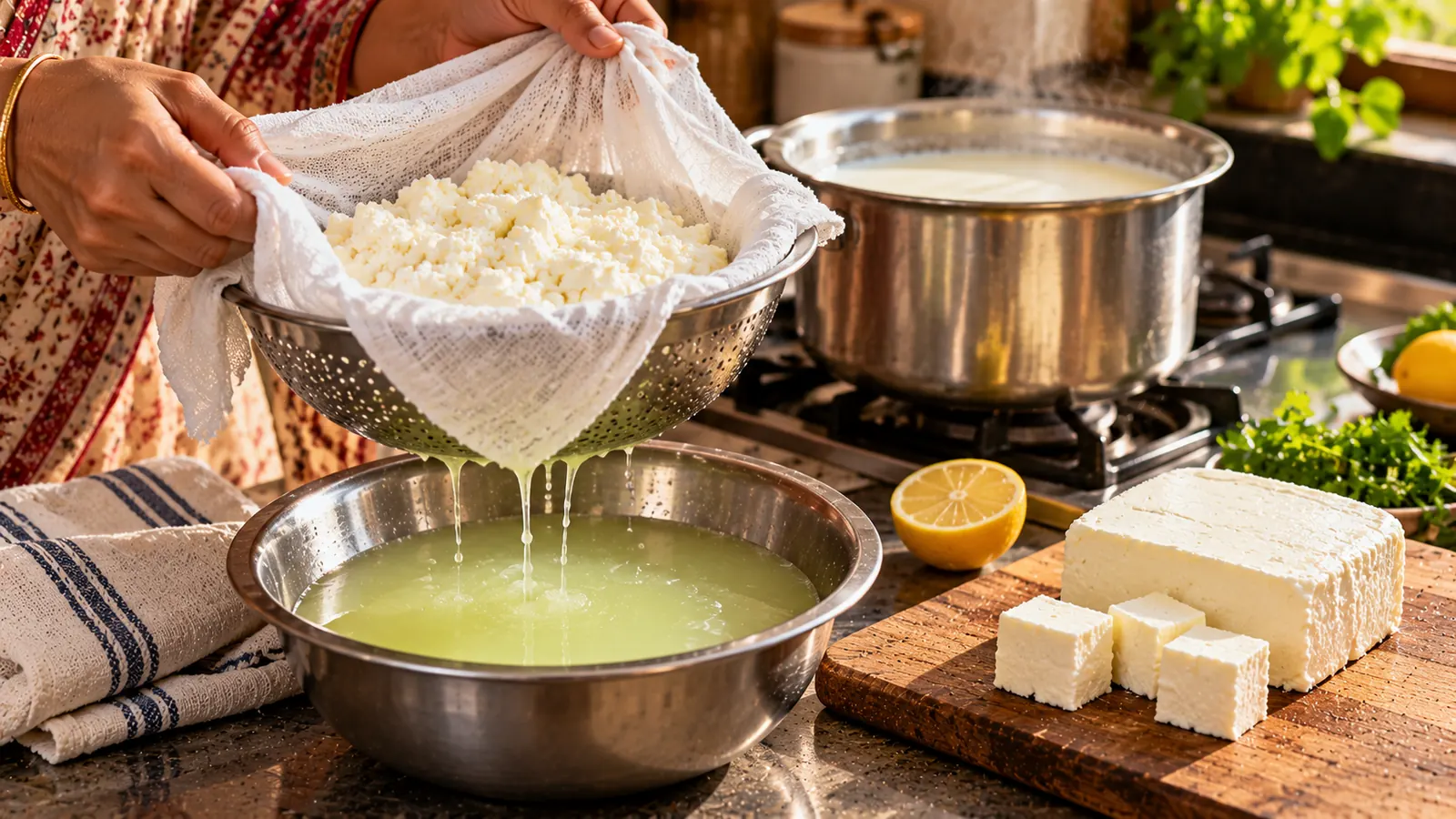
Soft paneer from a litre of full-cream milk in under an hour: which acid to use, how much paneer to expect, and why it turns rubbery or crumbly.
· 3 min read