Tradition
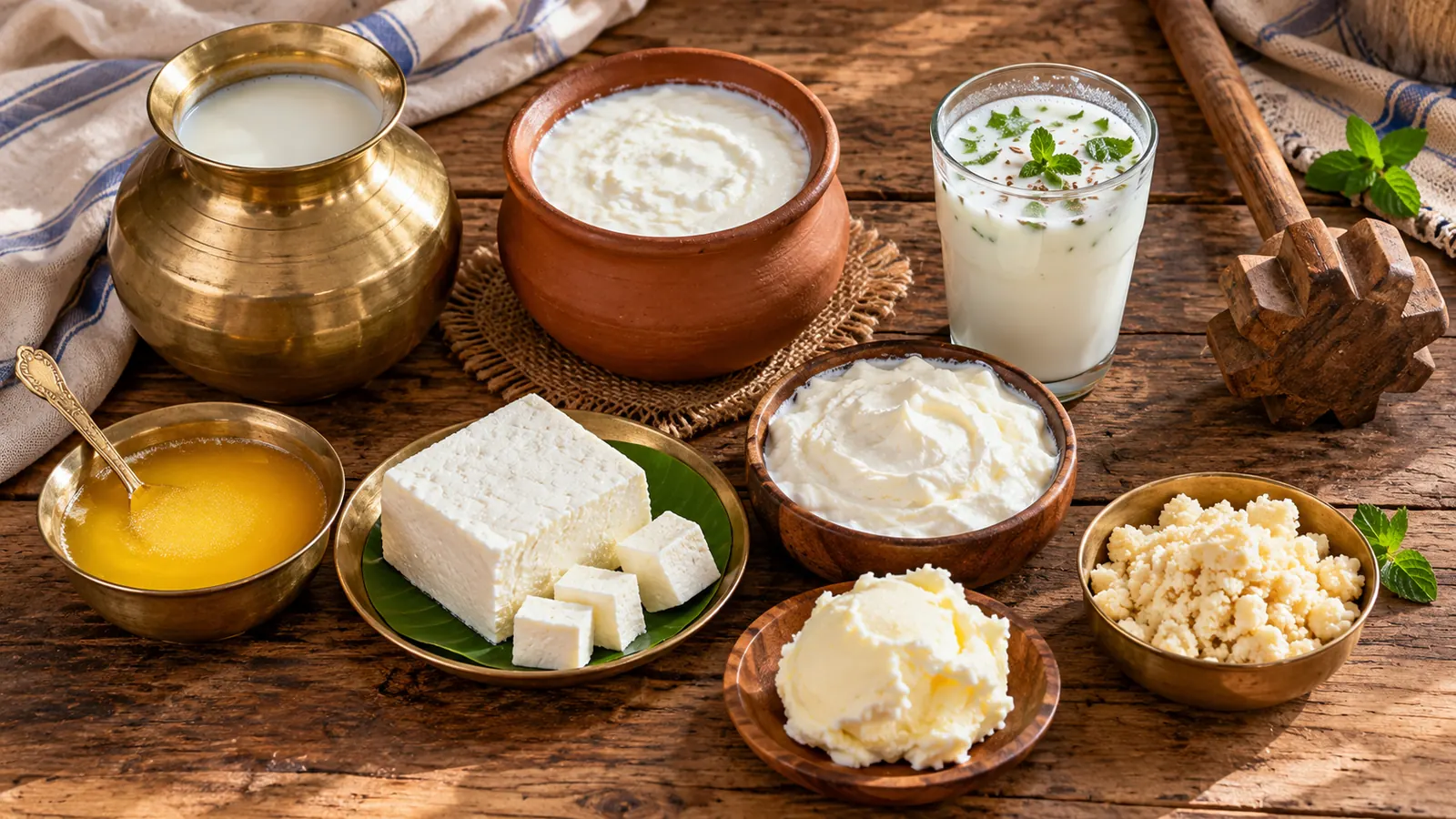
Dairy Words in Hindi and English: A Kitchen Glossary
Malai, jamaan, chach, khurchan, nagaa, khees, raab - the dairy words Indian kitchens use daily, what each means in English, and where the two do not line up.
· 5 min read
Tradition
By Naresh Kumar · · Updated · 3 min read
What is chach (chaas, or buttermilk in English), and how is it different from lassi? How each is made, how they differ, and when to drink which.
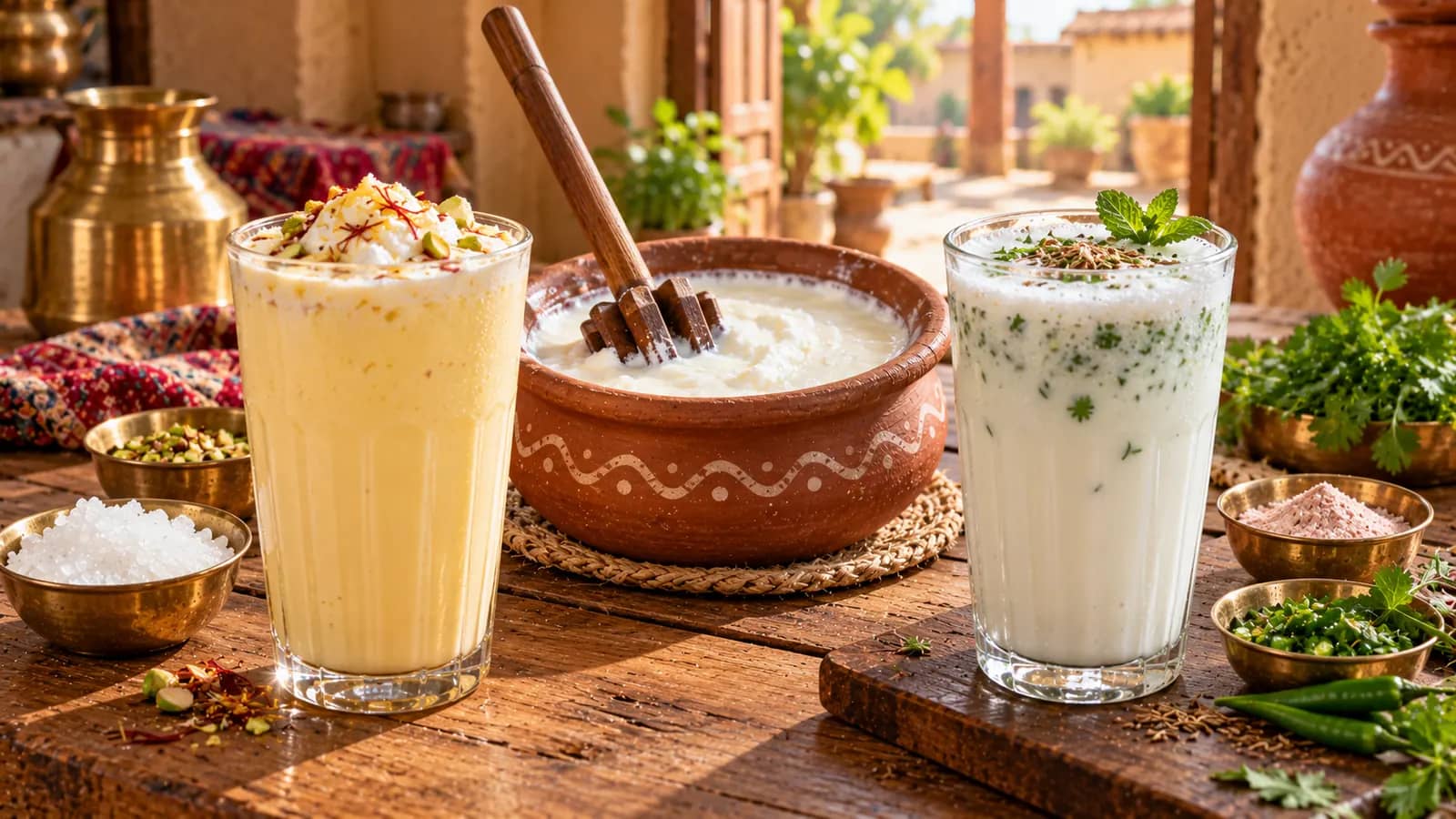
Lassi and chach are both made from dahi, and outside north-west India the names are sometimes used for the same thing. In a Rajasthani kitchen they are not interchangeable. One is a rich drink you have instead of a snack; the other is a thin, salted one you drink by the glass all day in summer.
Chach - also spelt chaas, chaach or chhachh, and called buttermilk in English - is dahi that has been churned until the butter separates, with the butter taken out and the rest thinned with water and salted. It is not the same as the cultured buttermilk sold in Western shops, though the two are close cousins. In much of Uttar Pradesh and Bihar it is called mattha; more words like these are in our dairy glossary.
No, though outside north-west India the names do get swapped. Both start as dahi, but lassi keeps everything the dahi had and stays thick, while chach has its butter churned out and is thinned well with water. If it is thick, it is lassi; if it is thin and salted, it is chach.
Lassi keeps everything the dahi had. It is whisked or blended until smooth, with just enough water to make it drinkable, and then sweetened with sugar or salted. Nothing is taken out, which is why it is thick enough to coat the glass.
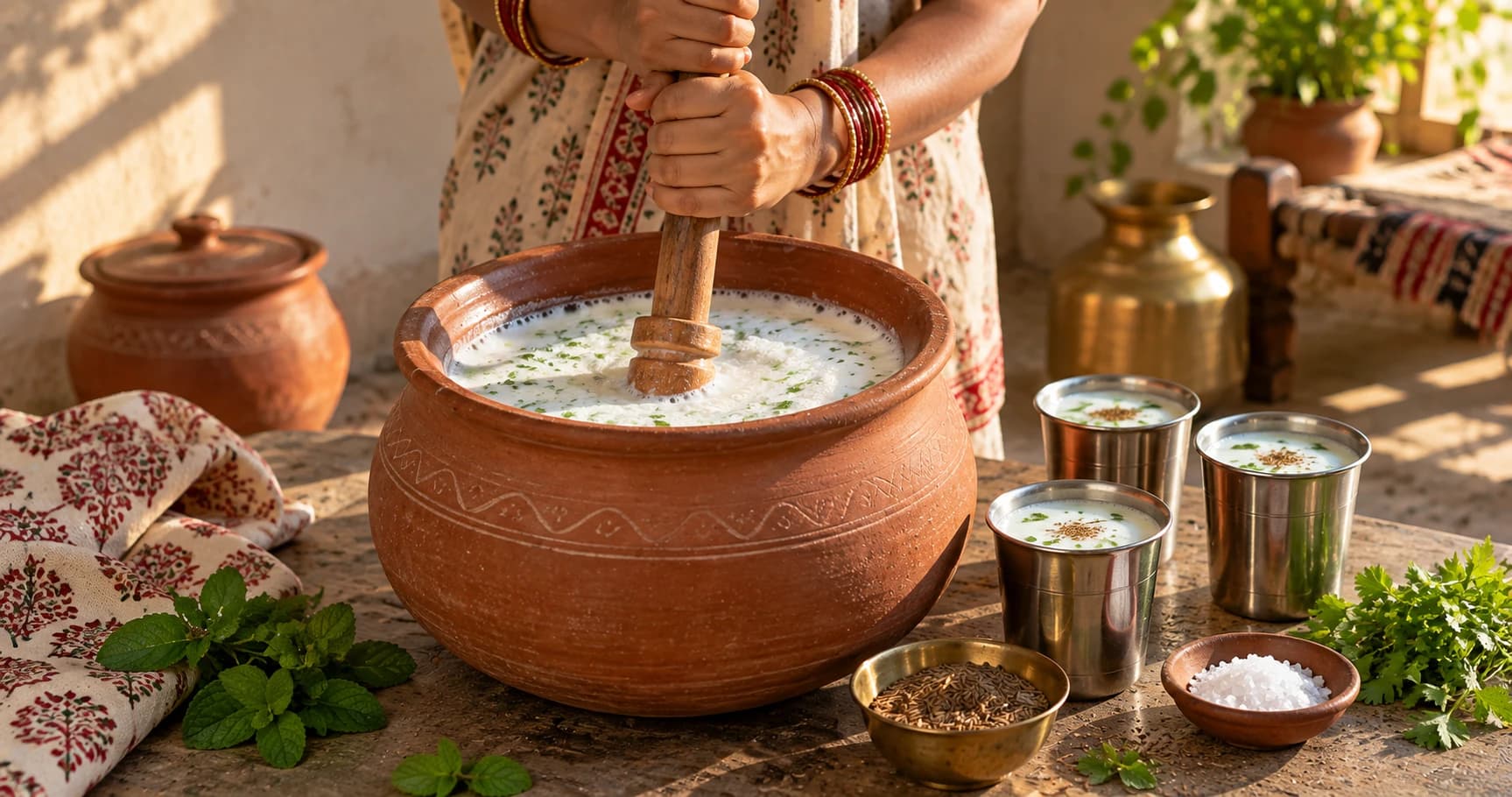
Chach goes the other way. The dahi is churned - traditionally with a wooden madhani in a matka - until the butter separates and floats, and the butter is lifted off. What remains is thinned with a good deal of water and seasoned with salt, roasted jeera and whatever else that house likes. We wrote about why it took hold here in chach benefits.
Because lassi keeps the butter and uses more dahi per glass, it carries more fat, more protein and many more calories - and a sweet lassi adds sugar on top. A glass can stand in for a light meal.
Chach has had most of the fat churned out and is mostly water, so a glass is light and low in calories. It carries less protein than lassi for the same reason: there is simply less dahi in it.
Neither, in general. It depends on when you are drinking it:
In between sits salted lassi, sometimes called namkeen lassi - thick like lassi but seasoned like chach. If a recipe or a menu is unclear, the test is simple: if the butter is still in it and it is thick, it is lassi; if the butter has been churned out and it is thin, it is chach.
We make chach every morning from the dahi set the same day, and send it out on the same round across Jalore City. We do not make lassi - but our dahi makes a very good one at home.
We describe what we do and what is in the product. Nothing here is medical or nutritional advice, and dairy is not a treatment for anything - if you have a health question, ask a doctor rather than a dairy.
Tradition
Malai, jamaan, chach, khurchan, nagaa, khees, raab - the dairy words Indian kitchens use daily, what each means in English, and where the two do not line up.
· 5 min read
Tradition
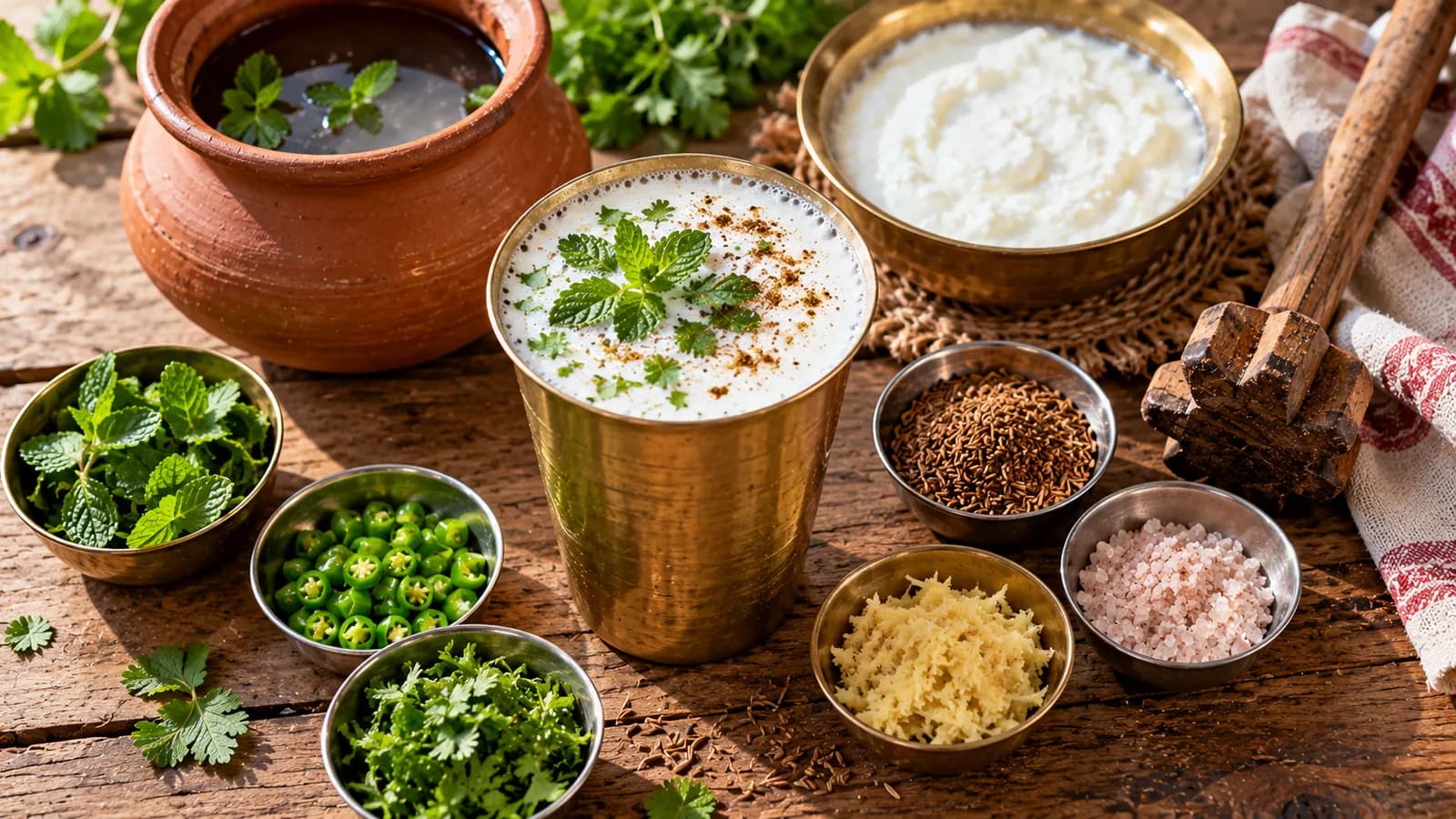
Chach the Rajasthani way: how much water to dahi, how to churn it, roasted jeera and kala namak, and the one thing you must never do to it.
· 3 min read
Tradition
What chach actually does for you in the heat, why it took hold in Rajasthan when it did not everywhere, and why it has to be drunk the same day it is made.
· 3 min read