Dairy Words in Hindi and English: A Kitchen Glossary
Malai, jamaan, chach, khurchan, nagaa, khees, raab - the dairy words Indian kitchens use daily, what each means in English, and where the two do not line up.
Half the confusion about dairy in India is vocabulary. Chach is translated as buttermilk, which it only partly is. Malai is called cream, which it is not quite. And some of the most useful words - nagaa, khurchan, jamaan - have no English word at all. Here are the ones we use every day, with the Hindi, what each means, and where the translation falls short.
From the animal
Doodh (दूध) - milk. Here it nearly always means buffalo or cow milk, and which one matters; see cow milk vs buffalo milk.
Bhains ka doodh (भैंस का दूध) - buffalo milk. Thick and flat white, with nearly twice the fat of cow milk - which is why it gives more malai, thicker dahi and more ghee.
Gaay ka doodh (गाय का दूध) - cow milk. Lighter, with a faint cream-yellow tint from the beta-carotene in green fodder.
Kachcha doodh (कच्चा दूध) - raw milk, not yet boiled or pasteurised. Milk from a dairy reaches you this way, which is why it should be boiled once.
Khees (खीस) - the first thick, yellowish milk after an animal calves; colostrum in English, kharvas in Maharashtra. It sets into a soft pudding when heated, and is traditionally shared rather than sold.
Byaat (ब्यात) - the calving, and the milking season that follows it. Milk changes over the byaat - it carries more fat later in the season than just after calving.
In the pot
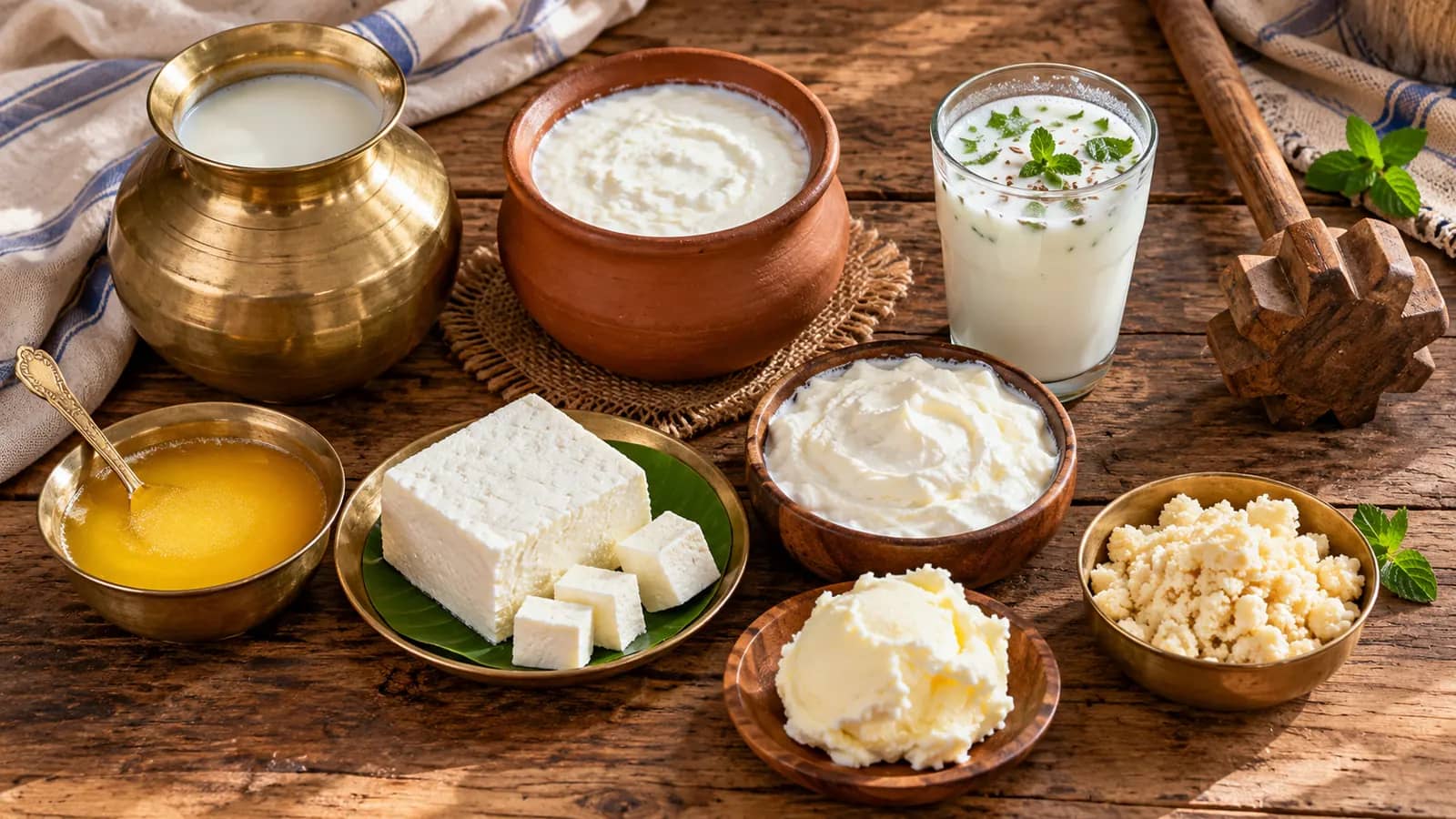
Malai (मलाई) - the thick layer that forms on milk as it cools after boiling. It is richer than it looks but is not the same as machine-separated cream, because it holds a good deal of milk and has been cooked. It is what home ghee is made from: how to make ghee from malai.
Khoya or mawa (खोया / मावा) - milk simmered for hours, stirred constantly, until almost all the water is gone and a soft solid is left. The base of most mithai.
Rabri (रबड़ी) - milk reduced slowly with its malai pulled into layers, sweetened. Not to be confused with Rajasthan's raab, below.
Chhena (छेना) - the soft curds you get when hot milk is split with an acid, before pressing. Pressed into a block, it becomes paneer (पनीर): how to make paneer at home.
From dahi
Dahi (दही) - milk set with a culture; curd or yogurt in English, though Indian dahi is usually set at home and eaten fresher and milder than most yogurt sold abroad.
Jamaan (जामन) - the spoonful of yesterday's dahi used to set today's. No exact English word - 'starter' is closest. Why it sometimes fails: why your dahi won't set.
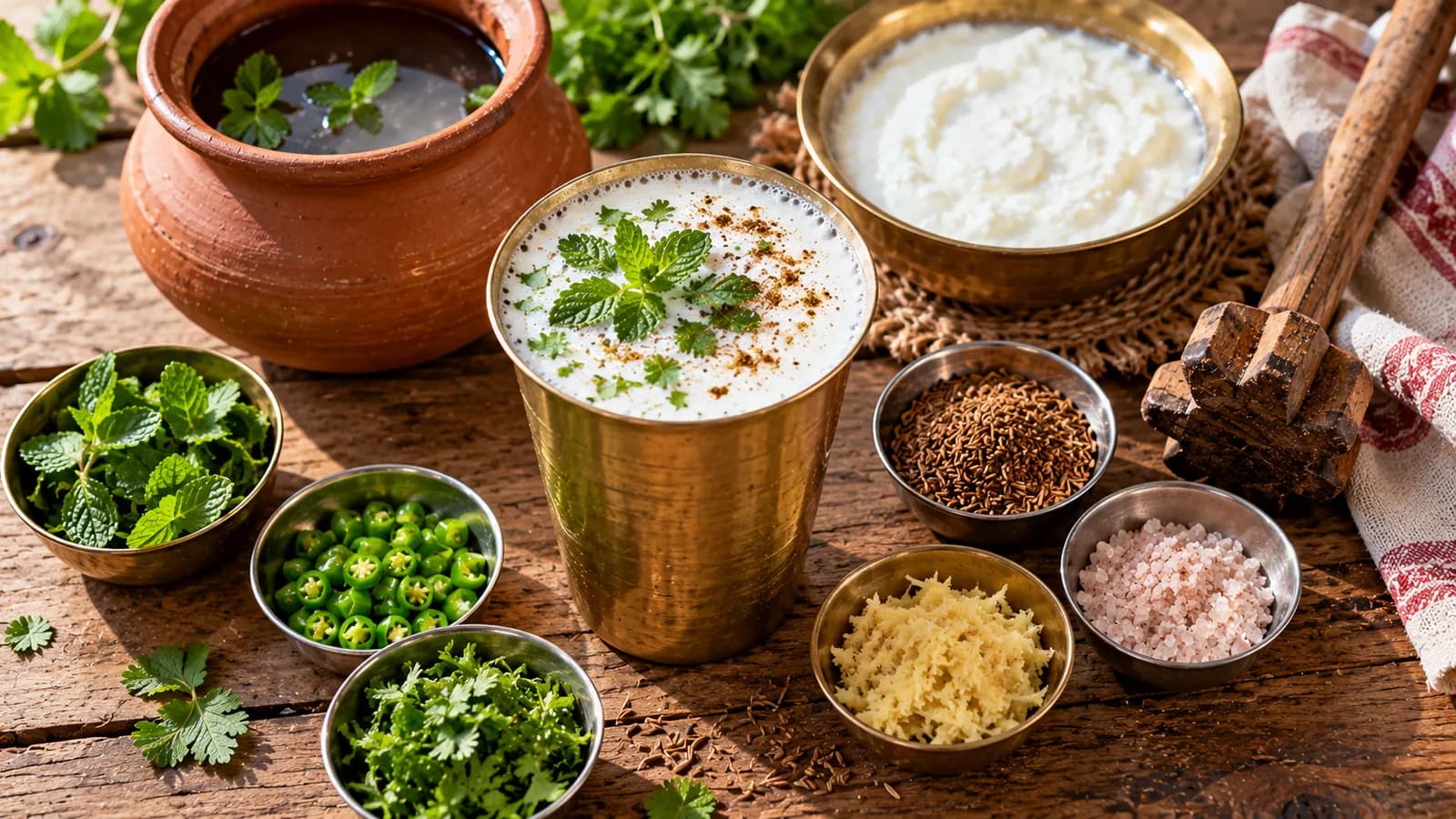
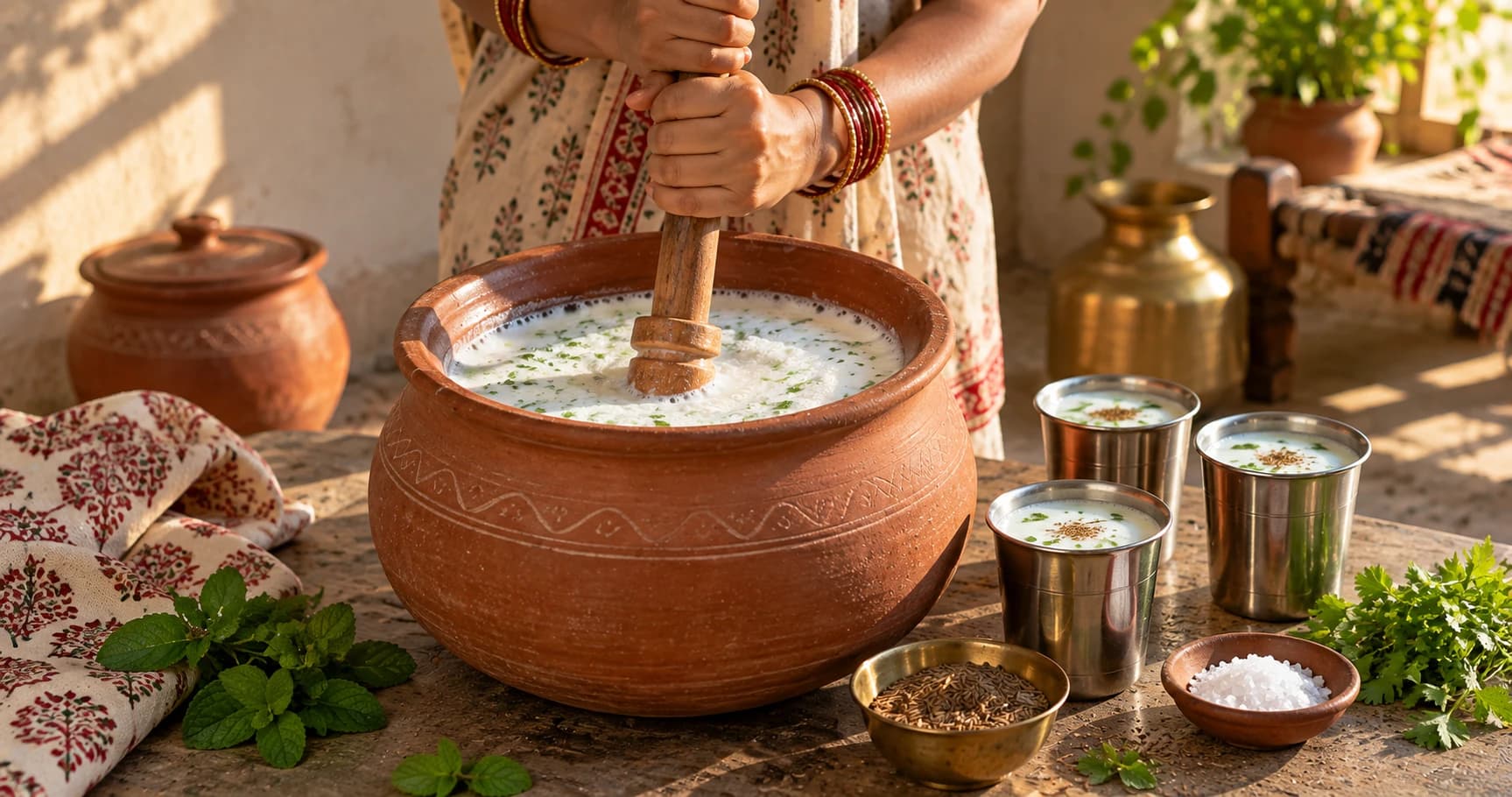
Chach, chaas or chhachh (छाछ) - dahi churned, with the butter lifted out, then thinned with water and salted. Buttermilk in English, though it is not the cultured buttermilk sold in Western shops. Called mattha (मट्ठा) in much of Uttar Pradesh and Bihar. How to make it: how to make chach at home.
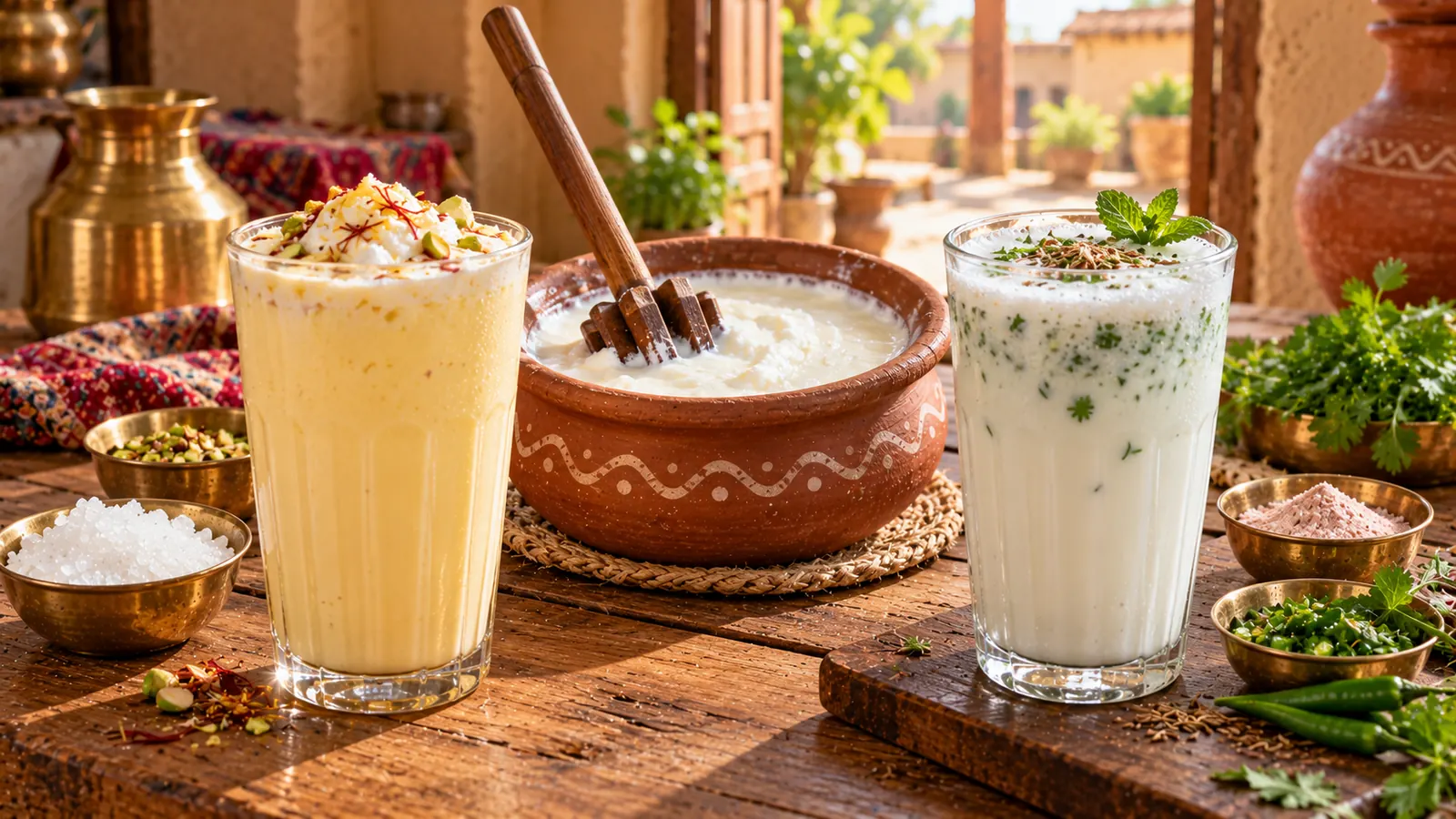
Lassi (लस्सी) - dahi whisked with little water, thick, often sweet, with nothing taken out. The difference is in lassi vs chach.
Raab (राब) - a Rajasthani summer staple: bajra or makki atta cooked slowly in chach and water until it thickens, drunk warm or cool. The flour is what lets chach be heated here without splitting, the same job besan does in kadhi (कढ़ी).
From butter to ghee
Madhani (मथानी) - the wooden churner turned between the palms, or pulled with a cord, to churn dahi or malai.
Matka (मटका) - the clay pot chach is churned and kept in; the clay keeps it cool by evaporation.
Makhan (मक्खन) - butter, churned from dahi or malai. Homemade white butter, unsalted, is often called safed makhan to tell it apart from the yellow, salted kind sold in packs.
Ghee (घी) - butter cooked slowly until its water is gone and its milk solids have browned, then strained. Clarified butter is the usual translation, but clarified butter is often pulled off before the solids brown, so it lacks ghee's nutty flavour. More in how desi ghee is made.
Khurchan (खुरचन) - the browned milk solids left in the pan, and in the strainer, after ghee is made. Eaten with sugar or on a roti in most houses here; never thrown away.
Danedar (दानेदार) - grainy, the texture some ghee sets with as it cools. A real physical property, but not proof of purity: see how to check pure ghee at home.
The milk bill
Doodhwala (दूधवाला) - whoever brings the milk to the door.
Hisab (हिसाब) - the month's account with the doodhwala, settled at month-end. You can work yours out with our milk bill calculator.
Nagaa (नागा) - a day the milk did not come or was not taken. The word every hisab turns on, and the one most often forgotten by the thirtieth.
On a packet
Full cream - milk with its fat left in, standardised to about 6 per cent fat.
Toned - milk with fat removed and solids made up, to about 3 per cent fat. Double toned is about 1.5 per cent.
Fat and SNF - the two numbers dairies and collection centres pay farmers on: the fat, and the solids-not-fat (protein, lactose and minerals). The fat percentage is also what decides how much ghee a litre will give - worked out in how much ghee from 1 litre of milk.
A word we leave out
You will notice some popular dairy words are missing from our own product pages. That is deliberate: we only use a method name or a label where we can stand behind exactly what it means. If you want to know how something of ours is made, ask us - or come and see.
We describe what we do and what is in the product. Nothing here is medical or nutritional advice, and dairy is not a treatment for anything - if you have a health question, ask a doctor rather than a dairy.
What chach actually does for you in the heat, why it took hold in Rajasthan when it did not everywhere, and why it has to be drunk the same day it is made.