Tradition
Dairy Words in Hindi and English: A Kitchen Glossary
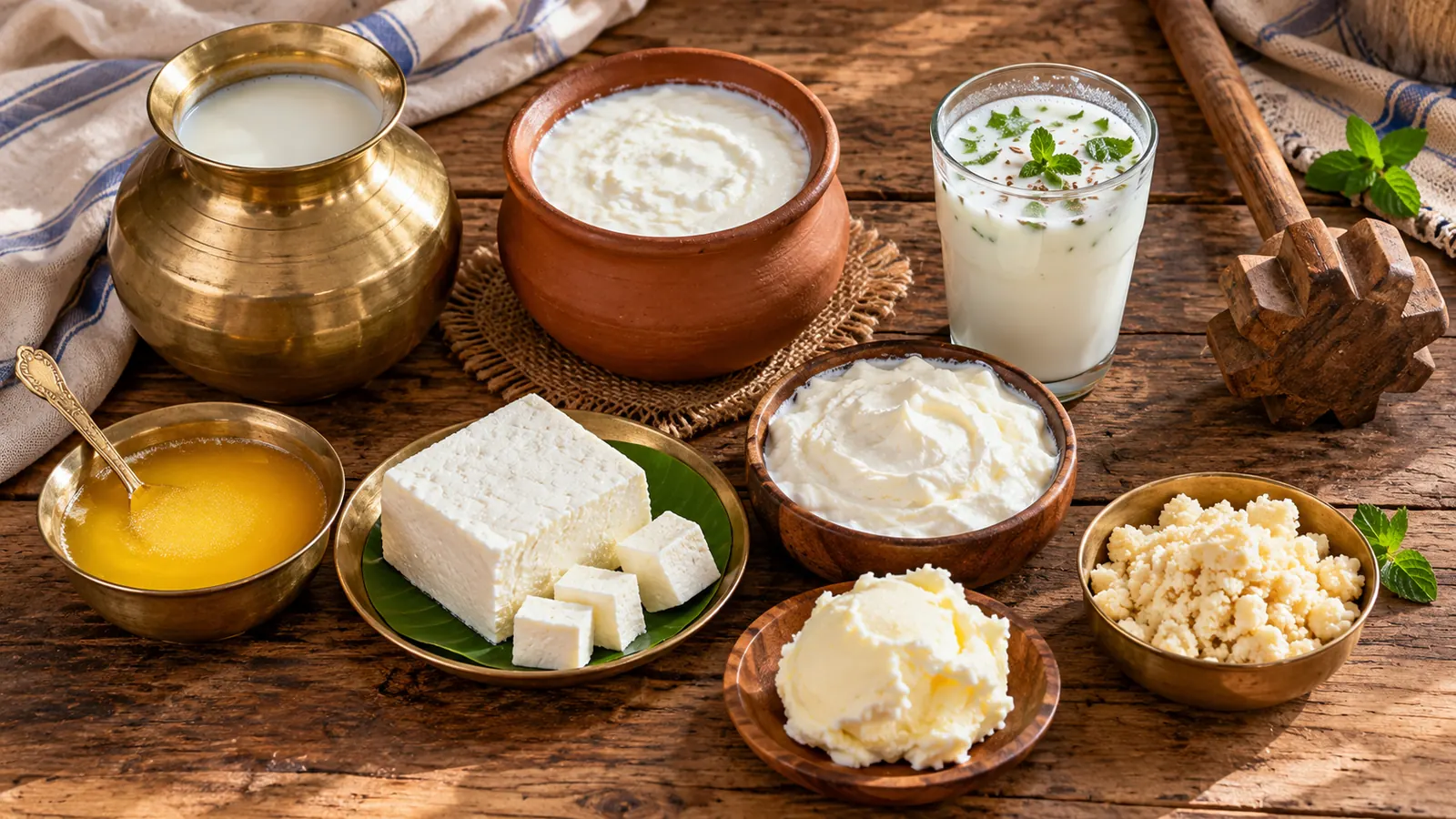
Malai, jamaan, chach, khurchan, nagaa, khees, raab - the dairy words Indian kitchens use daily, what each means in English, and where the two do not line up.
· 5 min read

Tradition
By Naresh Kumar · · Updated · 3 min read
What chach actually does for you in the heat, why it took hold in Rajasthan when it did not everywhere, and why it has to be drunk the same day it is made.
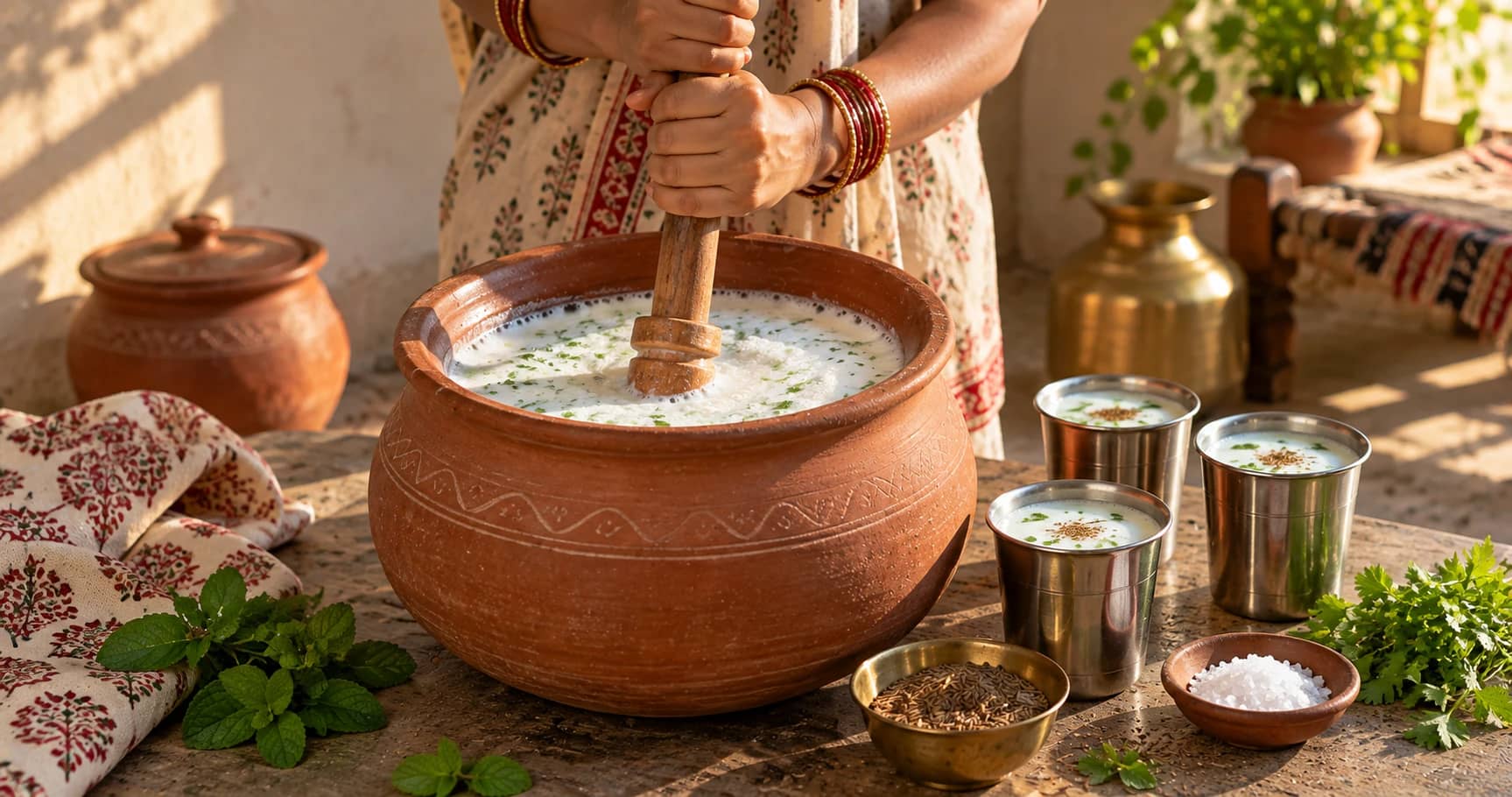
In most of India chach is a beverage. In western Rajasthan it is closer to a staple - something made in quantity every morning in summer and finished by afternoon, drunk by anyone who has been outside and offered to anyone who arrives.
Chach - buttermilk in English, chaas in Gujarat - is what is left when dahi is churned and thinned with water. It is lighter than lassi, more sour, and almost always salted rather than sweetened. The proportion of water is not fixed; every house has its own, and people are quietly firm about theirs being correct.
The practical answer is that it is mostly water, it is cold, it is salted, and it is made from something that was already in the house. In a region where the summer runs long and the work is outdoors, a salted cold drink made from the morning's milk is a sensible thing to have a jug of. It did not need to be invented so much as arrived at.
It also solves a problem at the other end. A dairy household has more milk in summer than it can drink and no good way to store it, and turning it into dahi and then chach is the oldest answer to that. The tradition and the logistics are the same thing.
Salt, always. Beyond that it varies: roasted jeera, a little black salt, sometimes green chilli or curry leaves, occasionally nothing else at all. There is no correct version, though you will meet people who disagree. A plain, step-by-step version is in how to make chach at home.
Most of what is good about chach is plain sense rather than anything mysterious:
You will find much bigger claims made for it online. Most of them run well ahead of the evidence, and we would rather not repeat them - a cold, salted, light drink that uses up the morning's milk is reason enough.
Chach does not keep. It sours quickly, and unlike dahi it does not become useful as it goes - sour dahi has a job in kadhi, sour chach has none. Make what will be drunk, and drink what was made.
We churn our chach from the dahi set that morning and send it out on the same round, for the same reason every house here does: it is not worth drinking the next day. If you are wondering how it differs from lassi, see lassi vs chach.
We describe what we do and what is in the product. Nothing here is medical or nutritional advice, and dairy is not a treatment for anything - if you have a health question, ask a doctor rather than a dairy.
Tradition
Malai, jamaan, chach, khurchan, nagaa, khees, raab - the dairy words Indian kitchens use daily, what each means in English, and where the two do not line up.
· 5 min read
Tradition
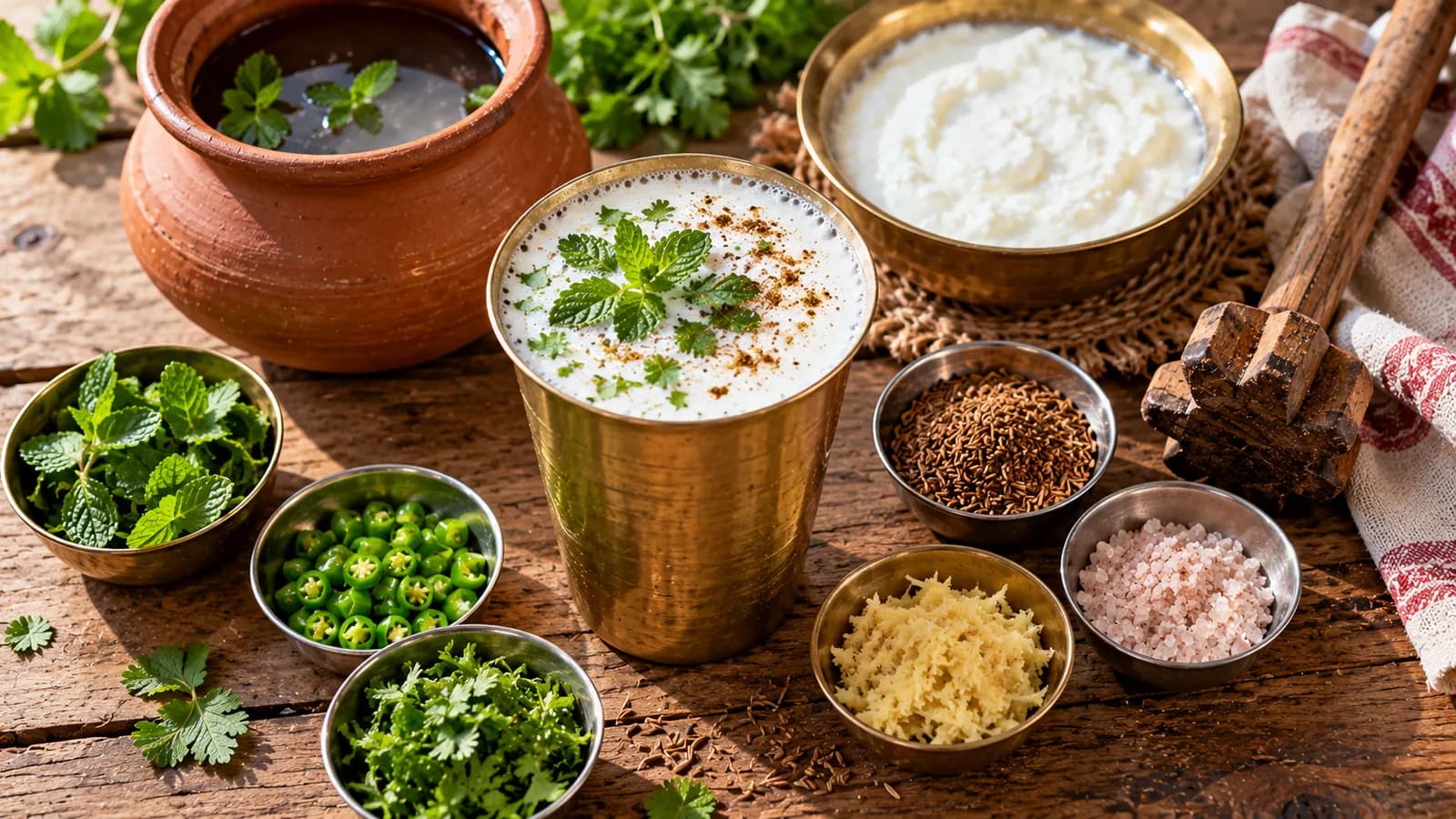
Chach the Rajasthani way: how much water to dahi, how to churn it, roasted jeera and kala namak, and the one thing you must never do to it.
· 3 min read
Tradition
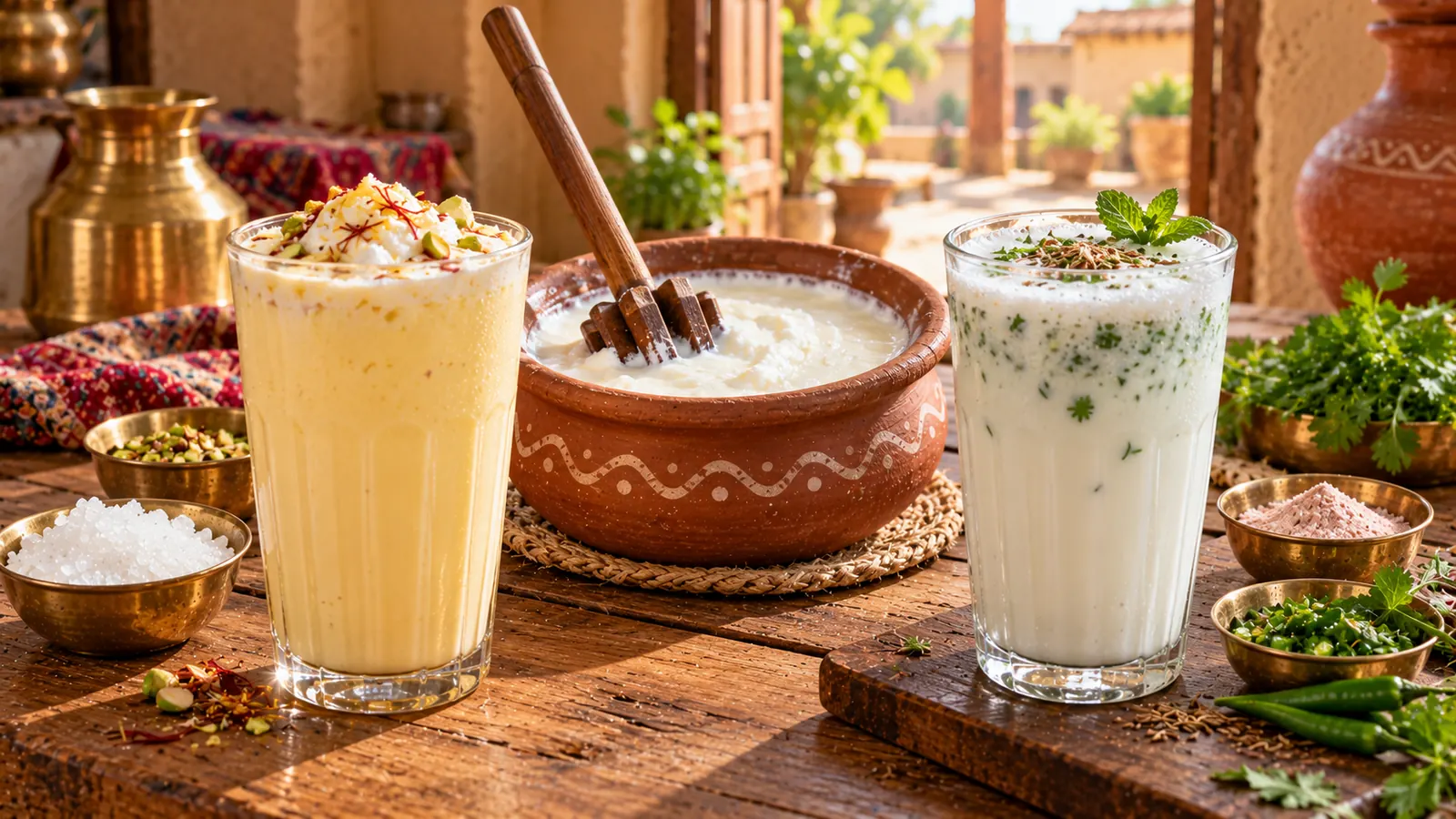
What is chach (chaas, or buttermilk in English), and how is it different from lassi? How each is made, how they differ, and when to drink which.
· 3 min read