In the kitchen
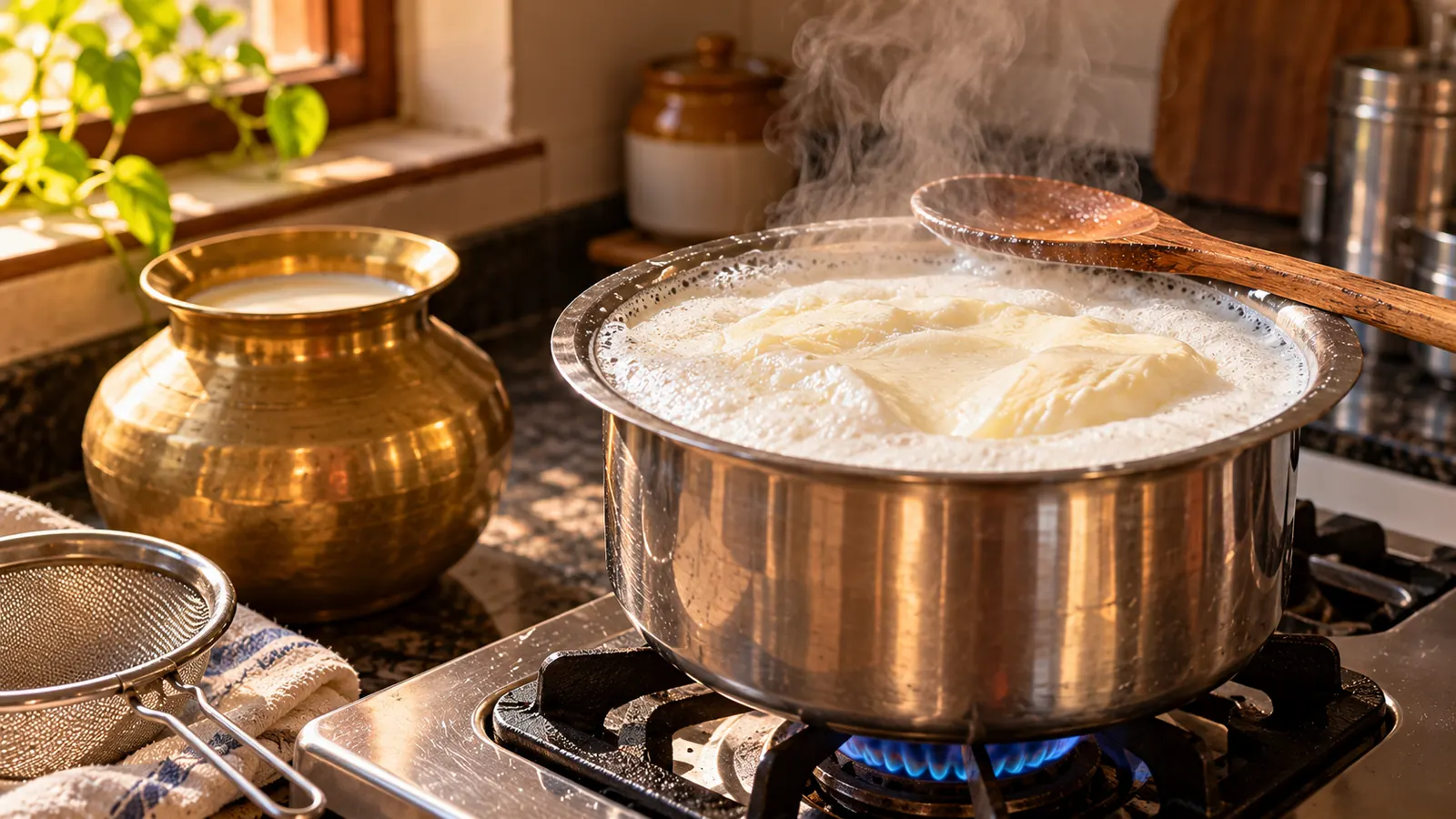
Is Raw Milk Safe to Drink? Why Fresh Milk Should Be Boiled
Dairy milk reaches you raw. Why boiling it once makes it safe, how long to boil it, and what boiling does - and does not - take away.
· 4 min read

In the kitchen
By Naresh Kumar · · 3 min read
Gaay ka ghee or bhains ka ghee? Why one is yellow and the other pale, why one sets harder, what the health claims actually amount to, and which to use for what.
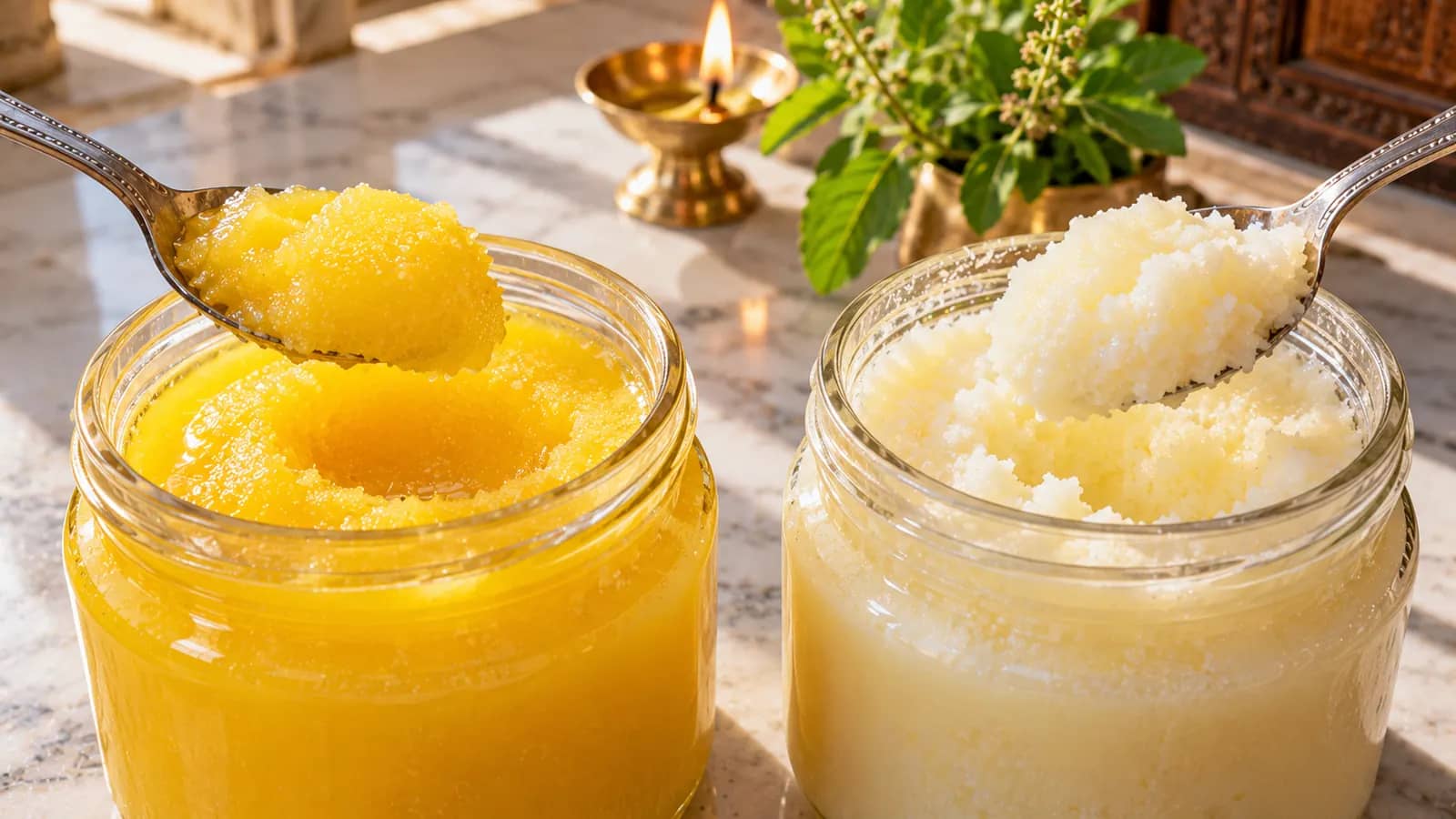
Gaay ka ghee ya bhains ka ghee - in most kitchens in Jalore the real question is not which one, but which one for what. They come from different milk, they look and behave differently in the pan, and most of what is said about one being healthier than the other is tradition rather than measurement. Here is what is actually different.
The colour comes from beta-carotene, the same pigment that makes carrots orange. Cows eat it in green fodder and pass much of it straight into their milk fat, so cow ghee comes out yellow. Buffaloes convert most of theirs into vitamin A before it reaches the milk, so buffalo ghee comes out off-white.
The colour of either one shifts with the season and with what the animals are eating, which is why colour on its own tells you very little about whether ghee is pure. We have written up how to check pure ghee at home, and which tests actually work.
Buffalo milk carries roughly twice the fat of cow milk, and a larger share of that fat is the kind that stays solid at room temperature. That is why a jar of buffalo ghee goes hard in a Jalore winter while cow ghee stays soft enough to spoon. Nothing is wrong with it - stand the jar in warm water for a few minutes and it loosens.
The extra fat in the milk is also why buffalo ghee is usually the cheaper of the two in most markets: each litre of buffalo milk gives noticeably more ghee than a litre of cow milk.
Less than the internet would have you think. Both are almost pure fat, and a spoonful of either carries about the same calories. Cow ghee carries a little more vitamin A in the form of carotene, buffalo ghee a little more in ready-made form, and neither difference matters much at the amounts anyone eats.
The old kitchen belief is that cow ghee is lighter on the stomach, which is why it is the one given to children and to anyone unwell. It is a reasonable rule of thumb that generations of cooks have stood behind, but it is tradition, not a measured result, and we would rather say so than dress it up. If a doctor has told you to cut down on fat, that applies to both.
We make both, each only from that animal's milk, in small batches on the farm, and jar them separately so the label tells you exactly which one you have. Both come in a 1 litre glass jar (905 g). See our desi cow ghee and our buffalo ghee - we deliver in Jalore City and ship ghee anywhere in India. For keeping a jar, see how to store ghee.
We describe what we do and what is in the product. Nothing here is medical or nutritional advice, and dairy is not a treatment for anything - if you have a health question, ask a doctor rather than a dairy.
In the kitchen
Dairy milk reaches you raw. Why boiling it once makes it safe, how long to boil it, and what boiling does - and does not - take away.
· 4 min read
In the kitchen
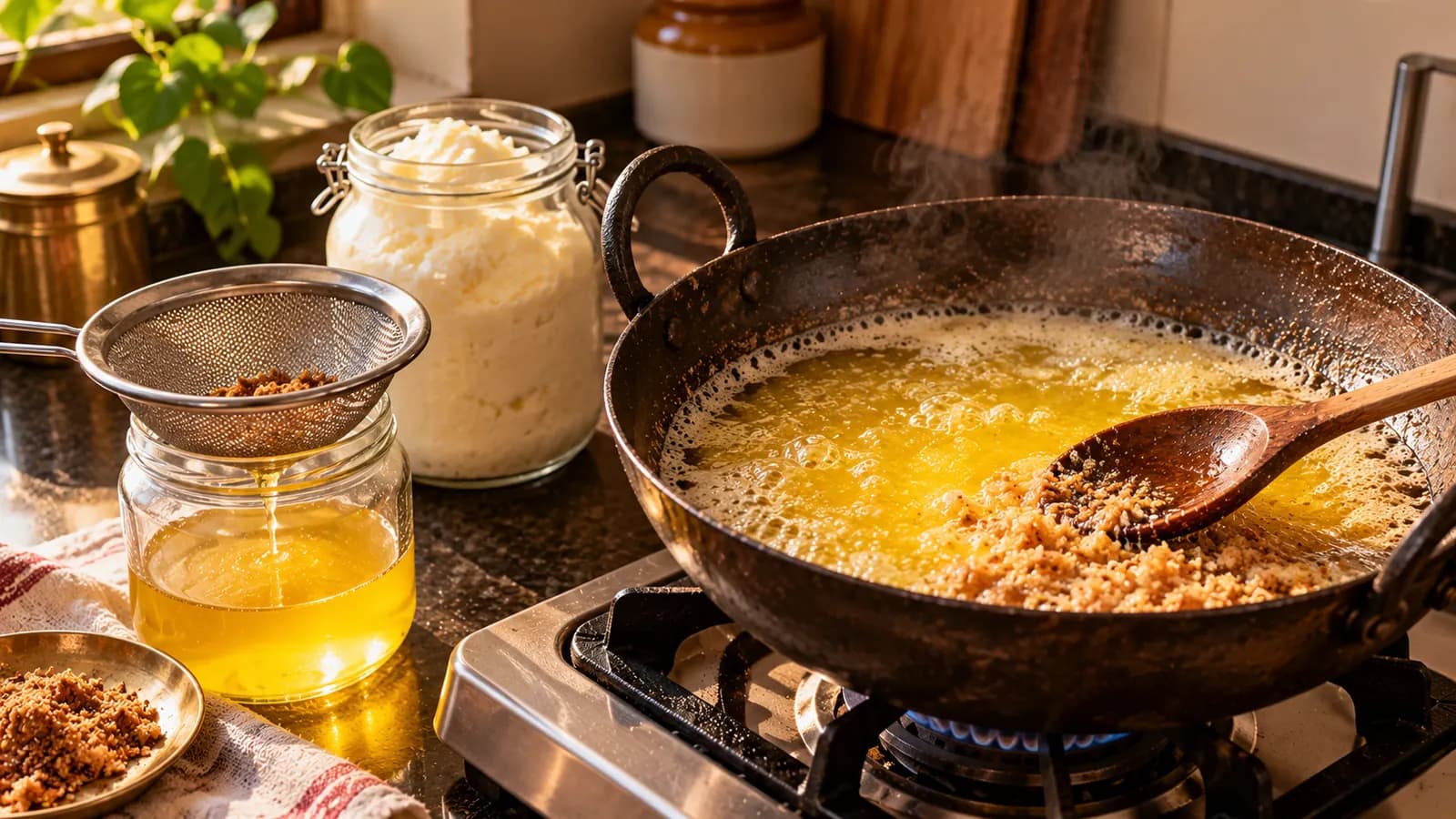
How to collect malai without it spoiling, turn it into butter, and cook that butter into clear, nutty ghee - with the signs that tell you when to stop.
· 4 min read
In the kitchen
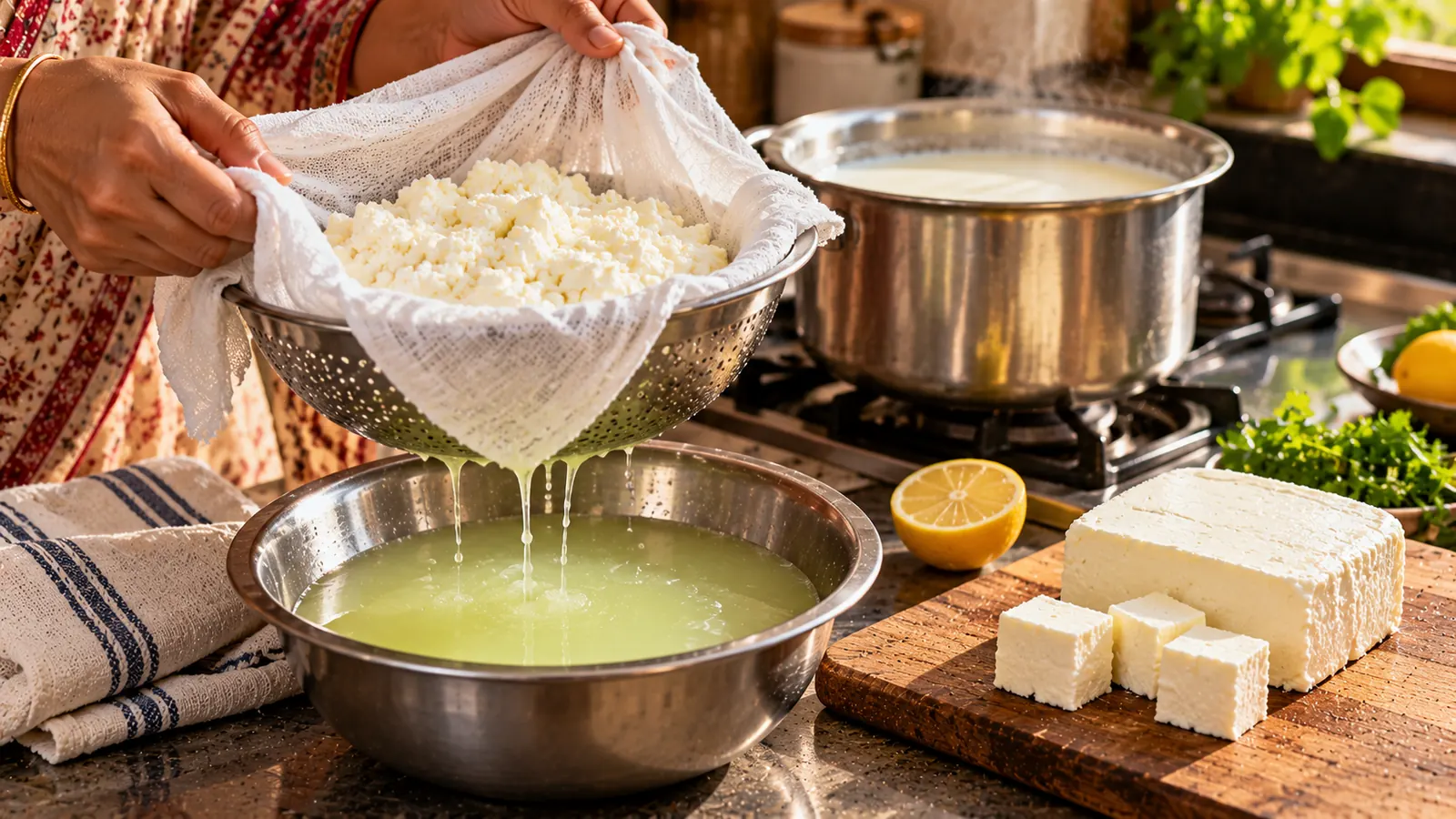
Soft paneer from a litre of full-cream milk in under an hour: which acid to use, how much paneer to expect, and why it turns rubbery or crumbly.
· 3 min read