In the kitchen
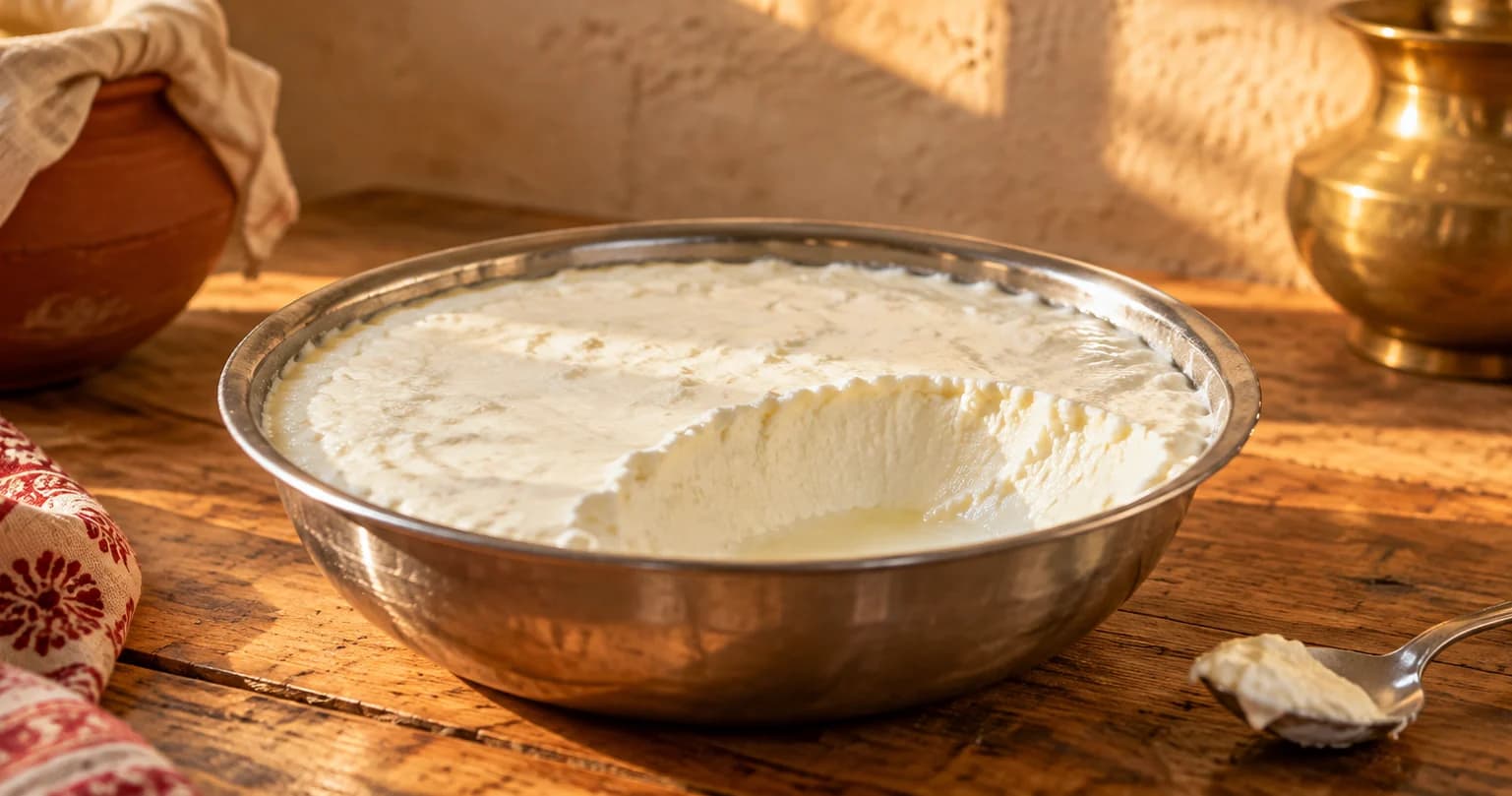
Why Your Dahi Will Not Set
Dahi that refuses to set is usually a temperature problem, not a milk problem. Here is how to tell which mistake you made, and what to do about it.
· 5 min read

In the kitchen
· 2 min read
Milk with nothing added to it will turn in a Jalore summer if you treat it like a carton from a shop. Here is what actually helps.
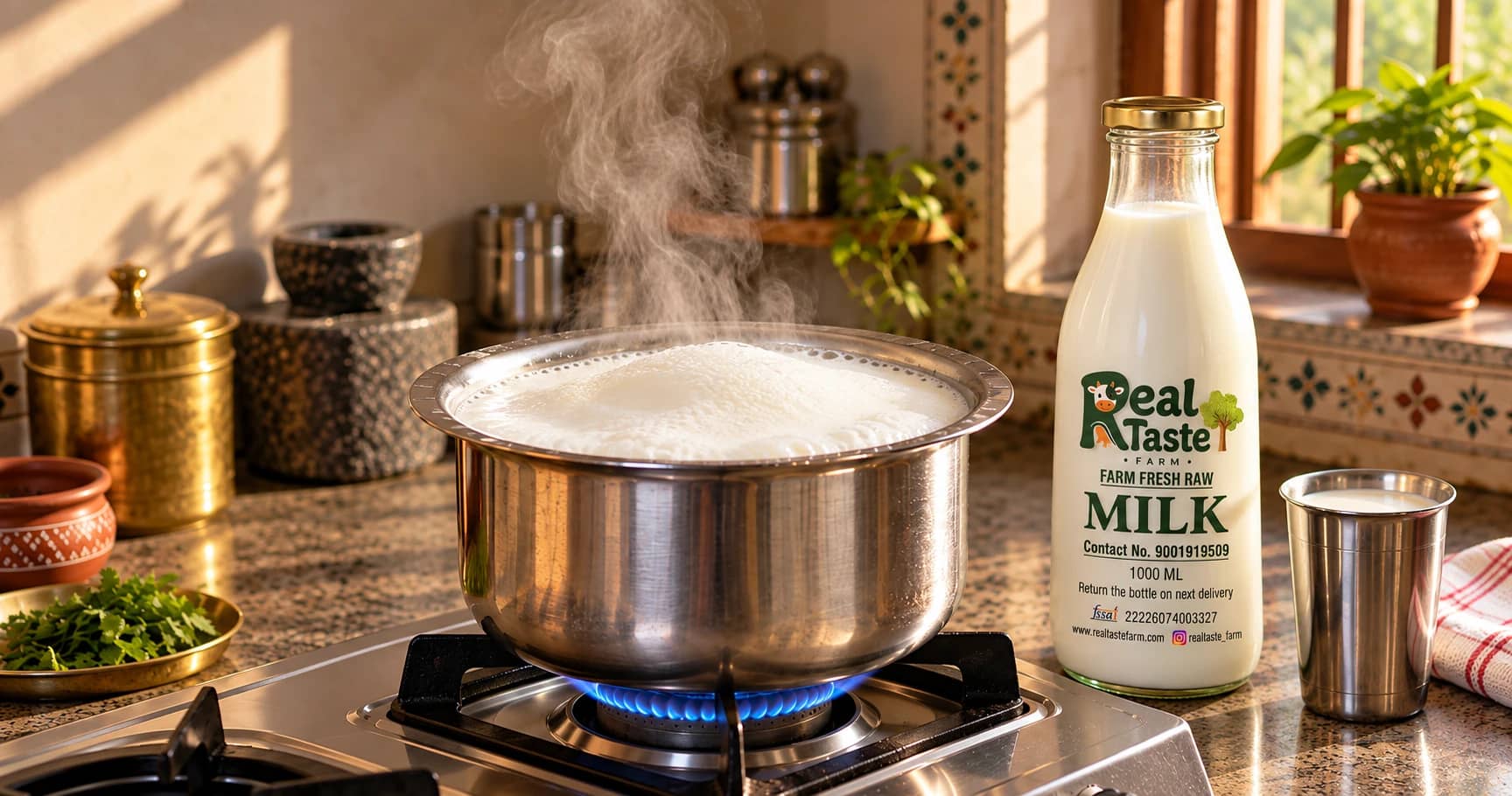
Fresh milk and packaged milk are not the same product, and they do not behave the same way in a kitchen. Packaged milk has usually been processed to last; fresh milk has not. If you have just switched to a local dairy, this is the adjustment that catches people out - and almost all of it comes down to the first hour after it arrives.
The single most useful habit is to boil the milk soon after it is delivered rather than leaving it until you want chai in the evening. Milk sitting at room temperature in a Rajasthan summer has been warm for hours by then, and no amount of boiling afterwards undoes what has already happened to the taste.
Bring it to a boil, let it cool with the lid slightly ajar so steam escapes, then refrigerate. Covering it while it is still hot traps condensation, and water dripping back in is what makes milk sour faster on the second day.
The door swings between warm and cold every time somebody opens it, and it is usually the warmest part of the fridge. Milk belongs on a shelf towards the back, where the temperature is steadiest. This one change does more than most people expect.
A fridge that has not been opened holds its cold for several hours. The instinct to check on the milk is exactly the wrong one - every time the door opens, the cold falls out. Leave it shut.
If the milk has been warm for a long stretch, boil it before deciding anything. Milk that is on its way out will separate slightly when it boils, and that is your answer. Milk that boils clean is fine.
The smell goes first, and it is subtle - faintly sour rather than obviously bad. Then the taste sharpens. Only after that does it curdle visibly. If you catch it at the smell stage, it is still perfectly good for making dahi or for kadhi, which is what most kitchens here have always done with it.
That is worth saying plainly: milk on the edge is not waste. It is an ingredient. Curdling it deliberately is how paneer and chena have been made for as long as anyone has kept animals.
We describe what we do and what is in the product. Nothing here is medical or nutritional advice, and dairy is not a treatment for anything - if you have a health question, ask a doctor rather than a dairy.
In the kitchen
Dahi that refuses to set is usually a temperature problem, not a milk problem. Here is how to tell which mistake you made, and what to do about it.
· 5 min read
Tradition
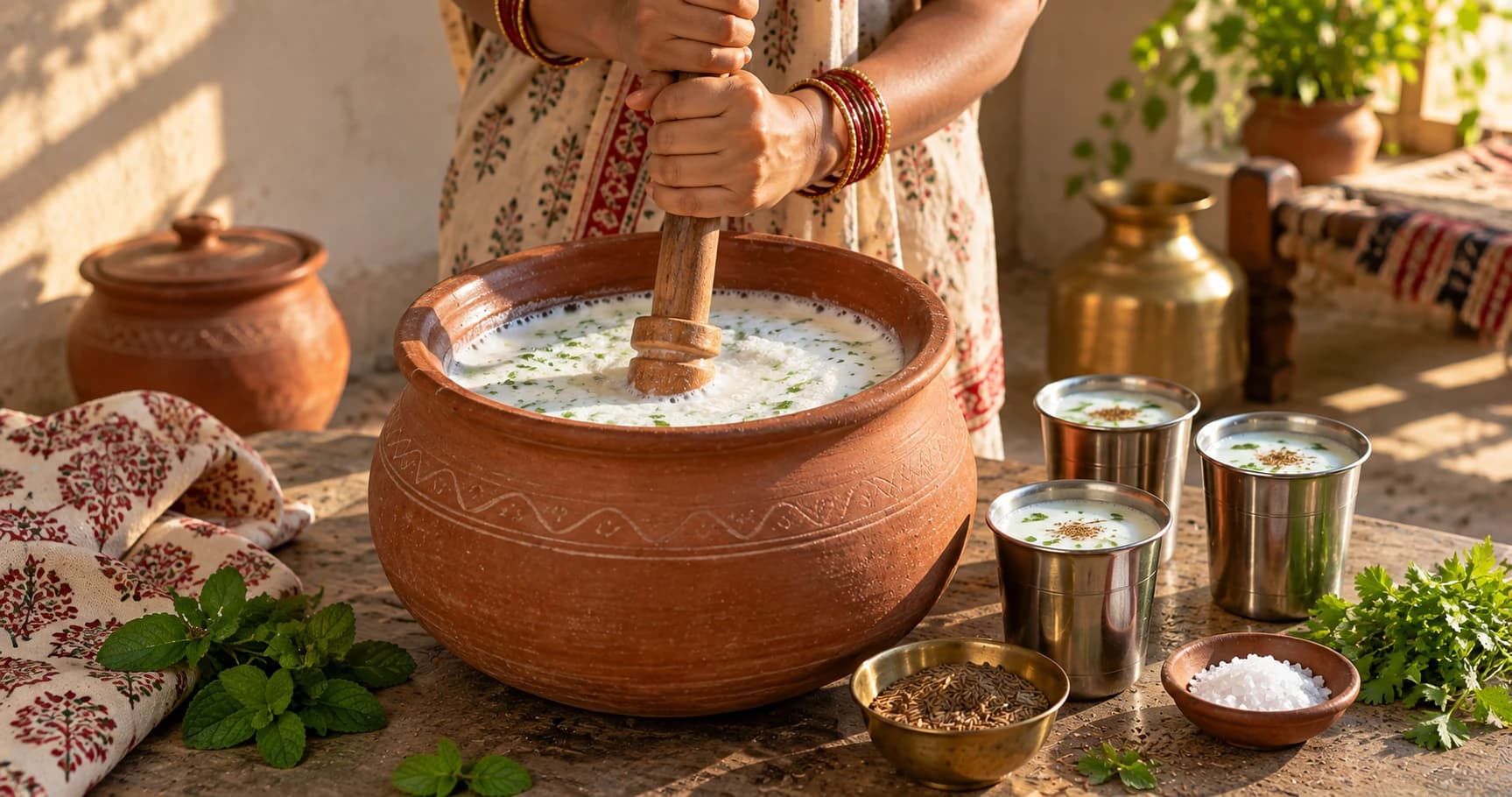
Chach is not really a drink here. It is what gets sent out to anyone working in the heat, and it has been for a very long time.
· 2 min read
How it is made
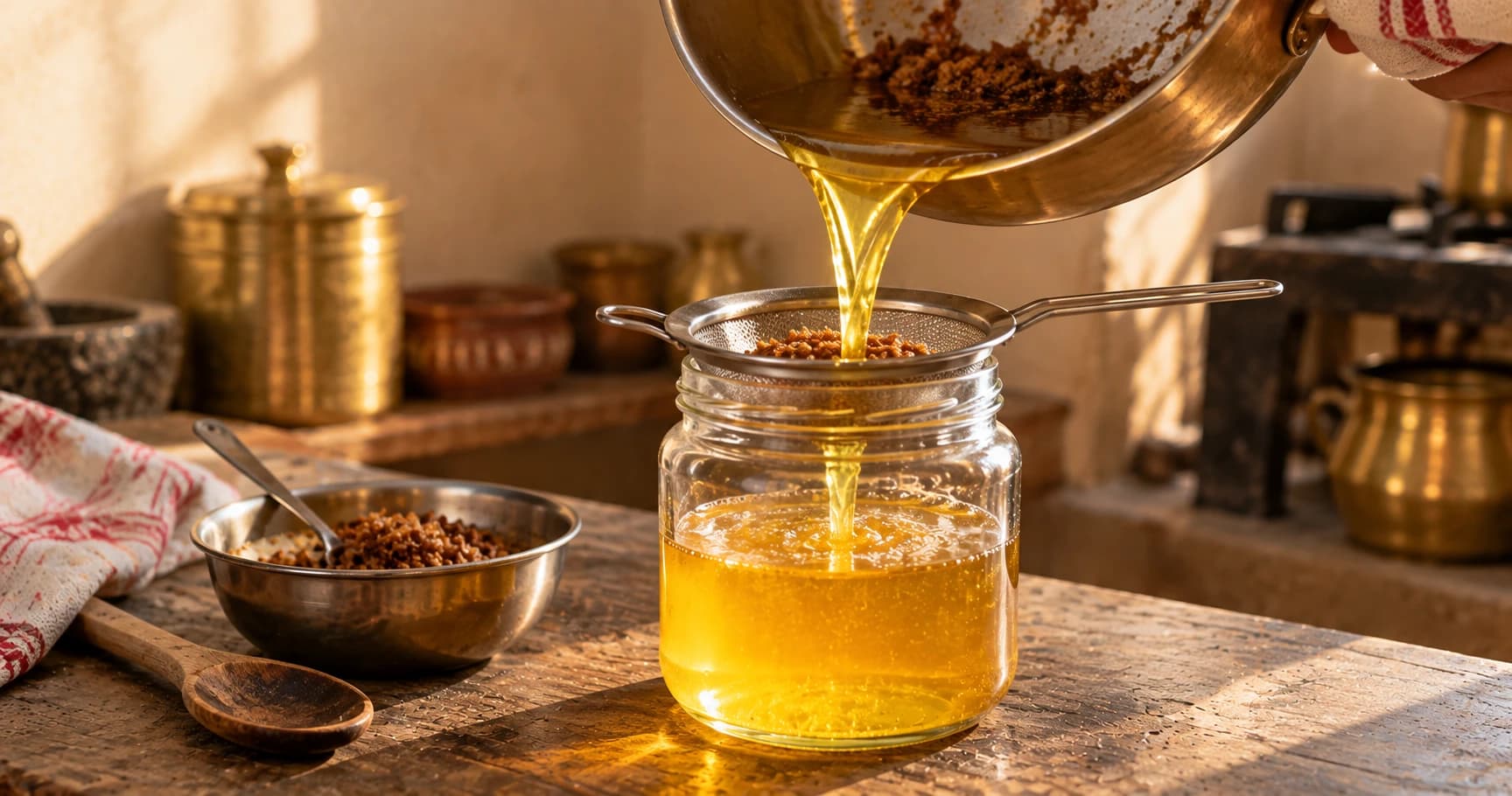
Ghee is one of the few foods where you can see the process in the finished jar. Here is what each step does, and what to look at.
· 2 min read