In the kitchen
How to Keep Fresh Milk From Turning in Rajasthan's Heat
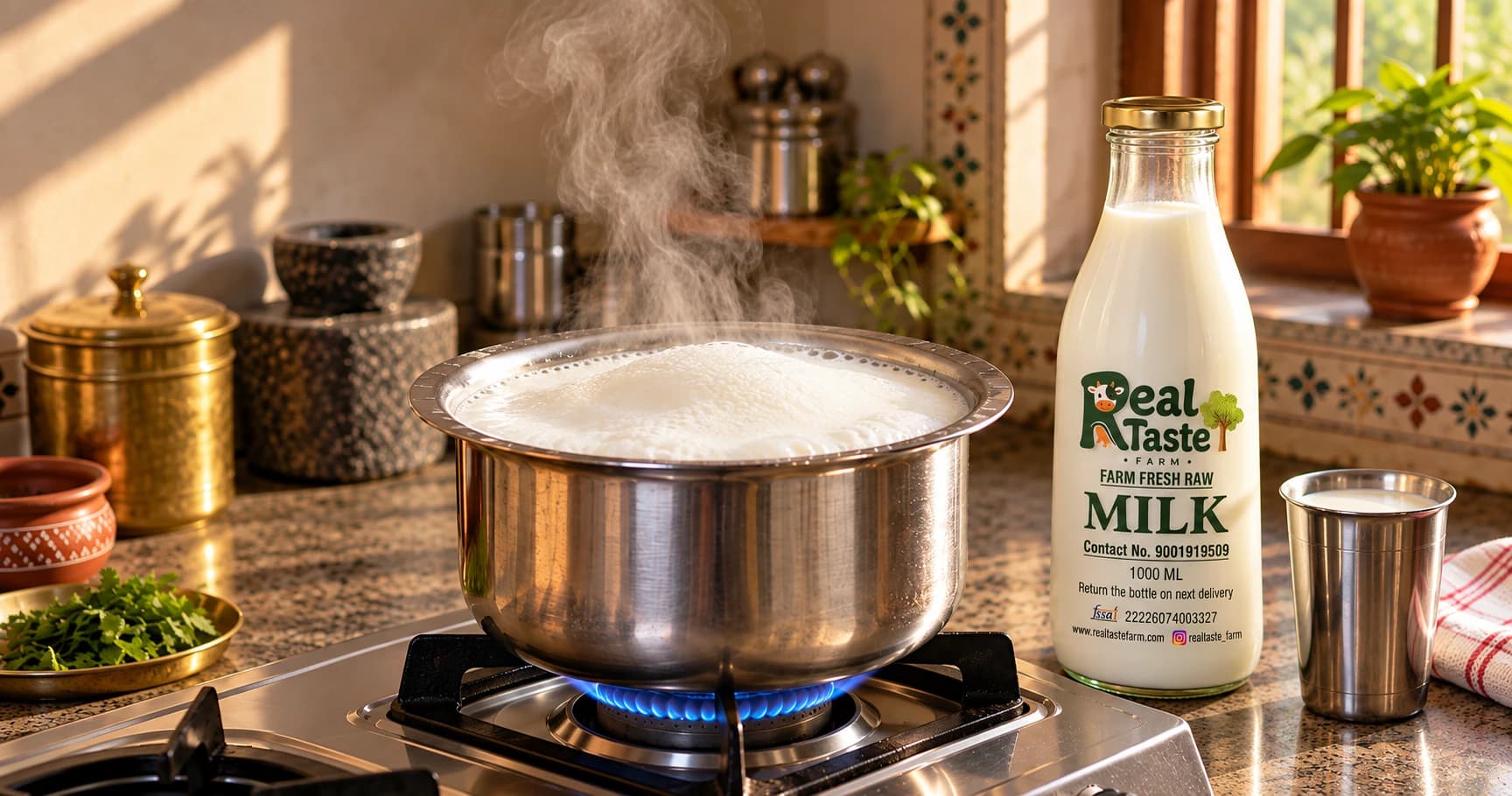
Milk with nothing added to it will turn in a Jalore summer if you treat it like a carton from a shop. Here is what actually helps.
· 2 min read

In the kitchen
· 5 min read
Dahi that refuses to set is usually a temperature problem, not a milk problem. Here is how to tell which mistake you made, and what to do about it.
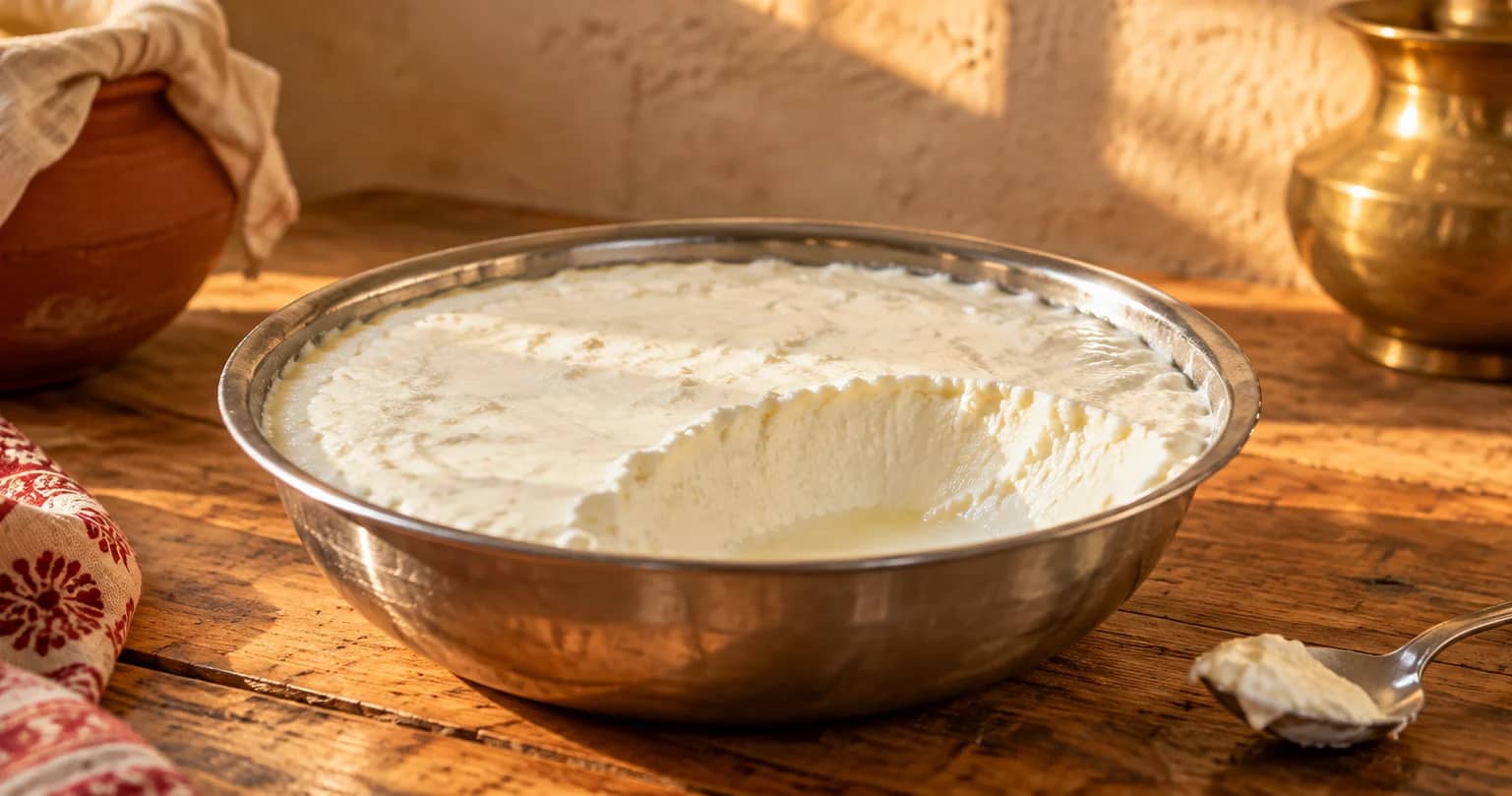
Dahi that will not set is the most common complaint in an Indian kitchen, and the milk is what usually gets blamed. Most of the time the milk is fine. What has gone wrong is temperature - either the milk was too hot when the starter went in, or the room was too cold afterwards. Those two failures look identical in the pot and have opposite fixes, which is why the advice people are given so often does not work.
Yogurt and dahi are set by different families of bacteria, and they want different conditions. A yogurt culture is thermophilic: it works fastest at around 40 to 45°C, which is why yogurt recipes tell you to keep the pot warm for a few hours. Traditional dahi is usually mesophilic - the lactococci in it work at ordinary room temperature, roughly 15 to 30°C, over a longer stretch.
This is why recipes contradict each other. A method written for yogurt tells you to find heat; a method written for dahi tells you to leave it on the counter. Both are correct for their own culture. If your starter came from a neighbour's kitchen it is almost certainly the mesophilic kind and does not need a warm oven at all.
Boiling kills off whatever else is in the milk, but that is not the main reason to do it. Heating milk past about 70°C unfolds the whey proteins, and the unfolded proteins then bond onto the casein. That bond is what gives set dahi its firmness and what stops it weeping water afterwards. The dairy literature puts the useful range at around 90°C held for five to ten minutes, which denatures almost all of the main whey protein.
In a kitchen that means bringing it to a boil and holding it at a gentle simmer for a few minutes rather than pulling it off the moment it rises. This single step does more for thickness than the starter does, and it is the step people skip.
The starter is alive, and milk hot enough to boil will kill it outright. Cool the milk until it is warm to a clean finger and not hot. Body temperature is the traditional mark and it is a good one.
Too hot and nothing happens, because the culture is dead. Too cold and nothing happens, because the culture is sluggish. Nearly every failed batch is one of these two, and people usually guess wrong about which one they are looking at.
A spoon or two of live dahi to a litre of milk is enough. More is not better - a heavy dose sours the batch fast and gives a sharper, grainier result rather than a firmer one.
The starter has to be genuinely live, which means fresh dahi rather than the last scrapings of a week-old cup. A tired starter is the second most common reason for a thin set. Stir it through properly but briefly, and then leave the pot alone. Moving it while the gel is forming breaks it, and a broken gel weeps.
Somewhere still, out of a draught, at a steady temperature. Through a Jalore summer a kitchen shelf is entirely adequate and it will be set by morning. In December it will not be, because the house drops below the range the culture can work in and the pot simply sits there.
Winter is the season this question gets asked. The fix is only to find a warmer, steadier spot - a closed oven with the light left on, a casserole, a towel wrapped round the pot in whichever room people are sitting in. It does not want heat so much as insulation and time. Expect it to take longer than it does in summer, and resist looking, because every check lets the warmth out.
Five ways a batch goes wrong, and what each one is telling you:
Technique gets you a clean set. What decides how thick that set can be is what you started from. Dahi is milk with its water still in it, so the more solid matter the milk carries, the firmer the result can be.
Buffalo milk runs to roughly 16 to 17 per cent total solids against 12 to 13 per cent for cow milk, and carries close to twice the fat along with more casein. That is why buffalo milk sets noticeably firmer, and why a good many households here keep it specifically for dahi. Packaged toned milk sits at the other end of that range - it has been standardised down, and no amount of careful work will make it behave like whole milk.
So if your dahi is technically correct and still thinner than you want it, the milk is the thing to change, not the method.
We set ours from the morning's whole milk and send it out on the next round. There is no trick in it beyond the milk and the waiting, which is the honest answer to why dahi set at home from good milk is usually every bit as good.
We describe what we do and what is in the product. Nothing here is medical or nutritional advice, and dairy is not a treatment for anything - if you have a health question, ask a doctor rather than a dairy.
In the kitchen
Milk with nothing added to it will turn in a Jalore summer if you treat it like a carton from a shop. Here is what actually helps.
· 2 min read
Tradition
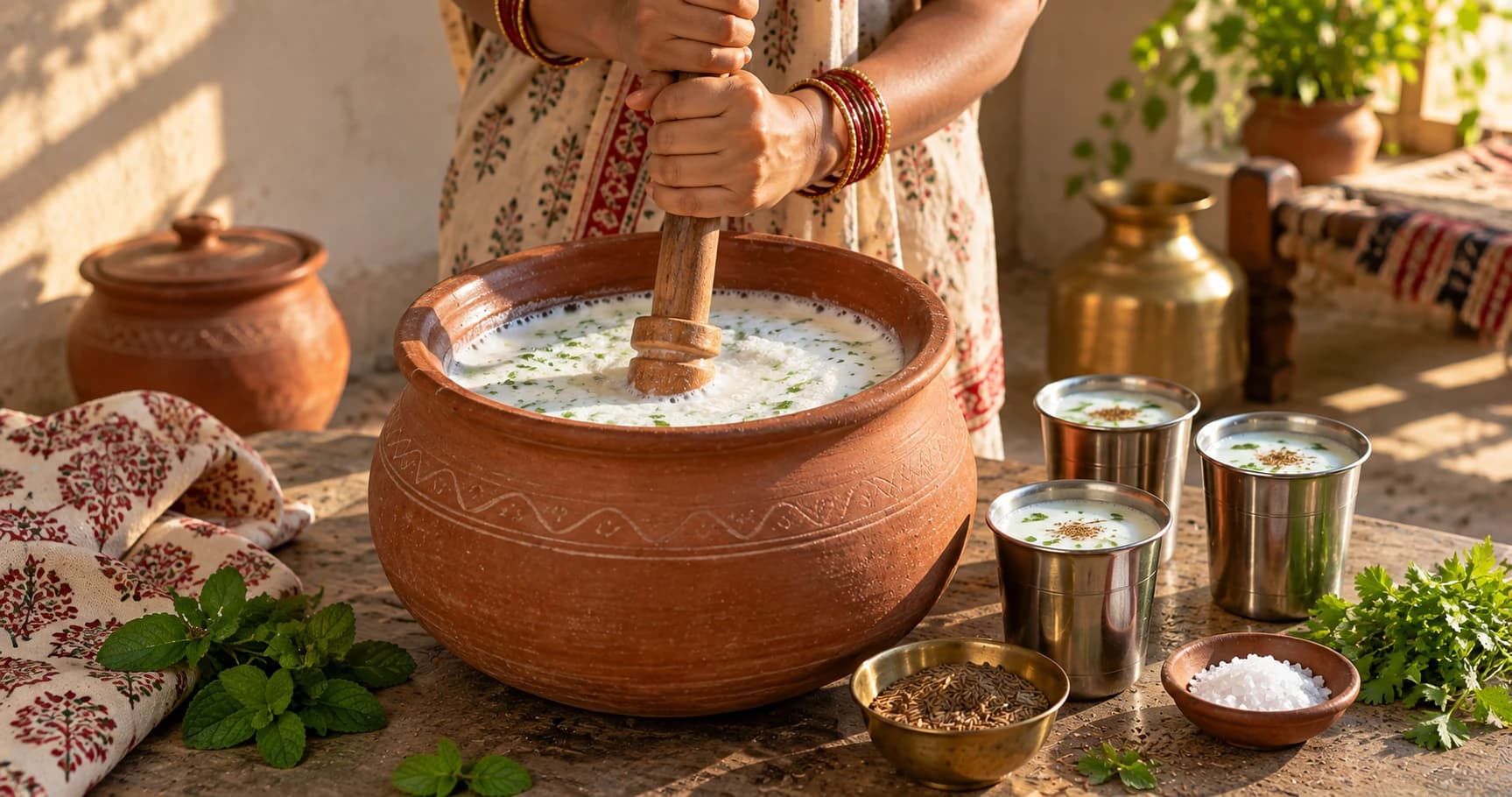
Chach is not really a drink here. It is what gets sent out to anyone working in the heat, and it has been for a very long time.
· 2 min read
How it is made
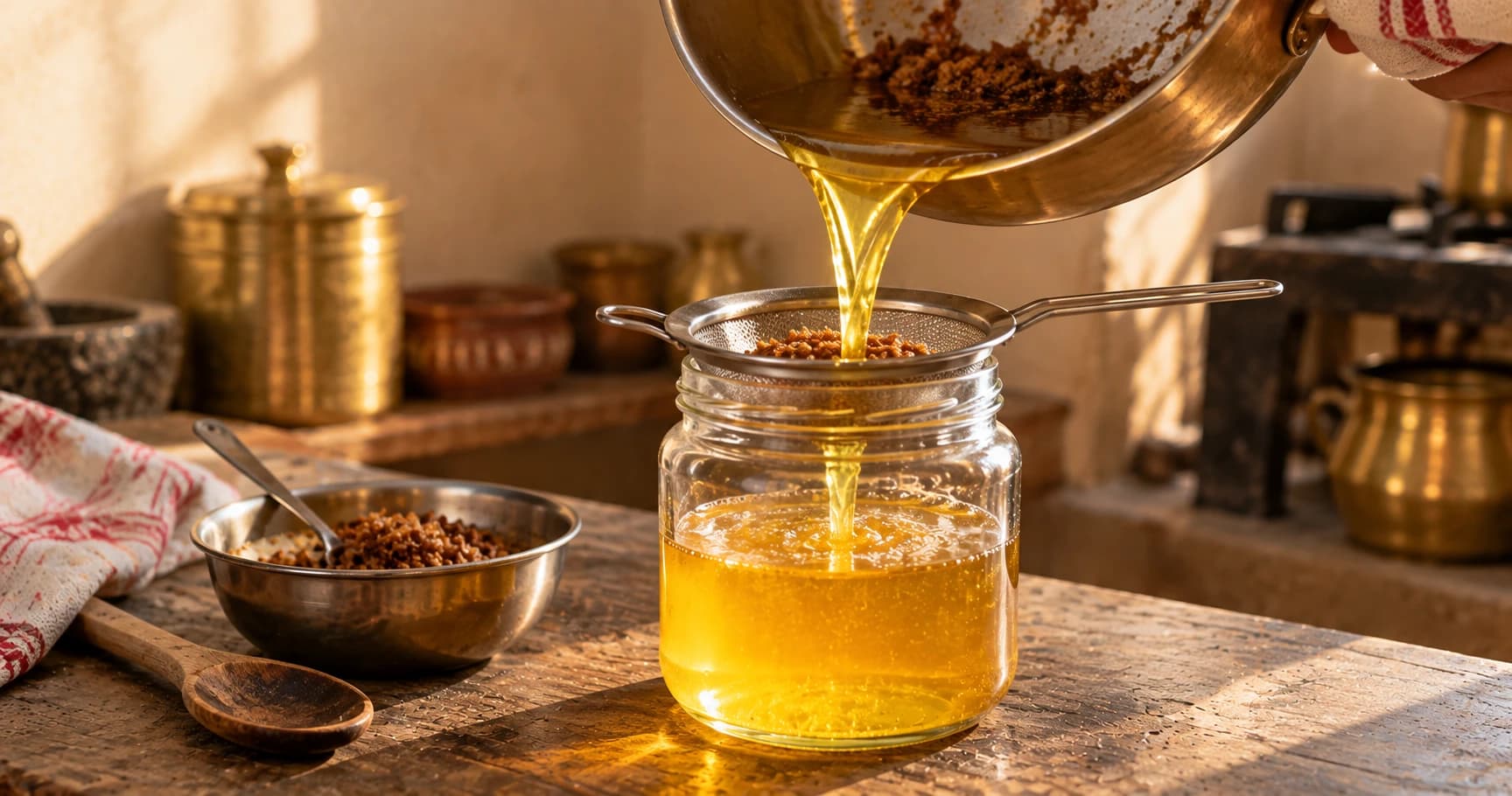
Ghee is one of the few foods where you can see the process in the finished jar. Here is what each step does, and what to look at.
· 2 min read