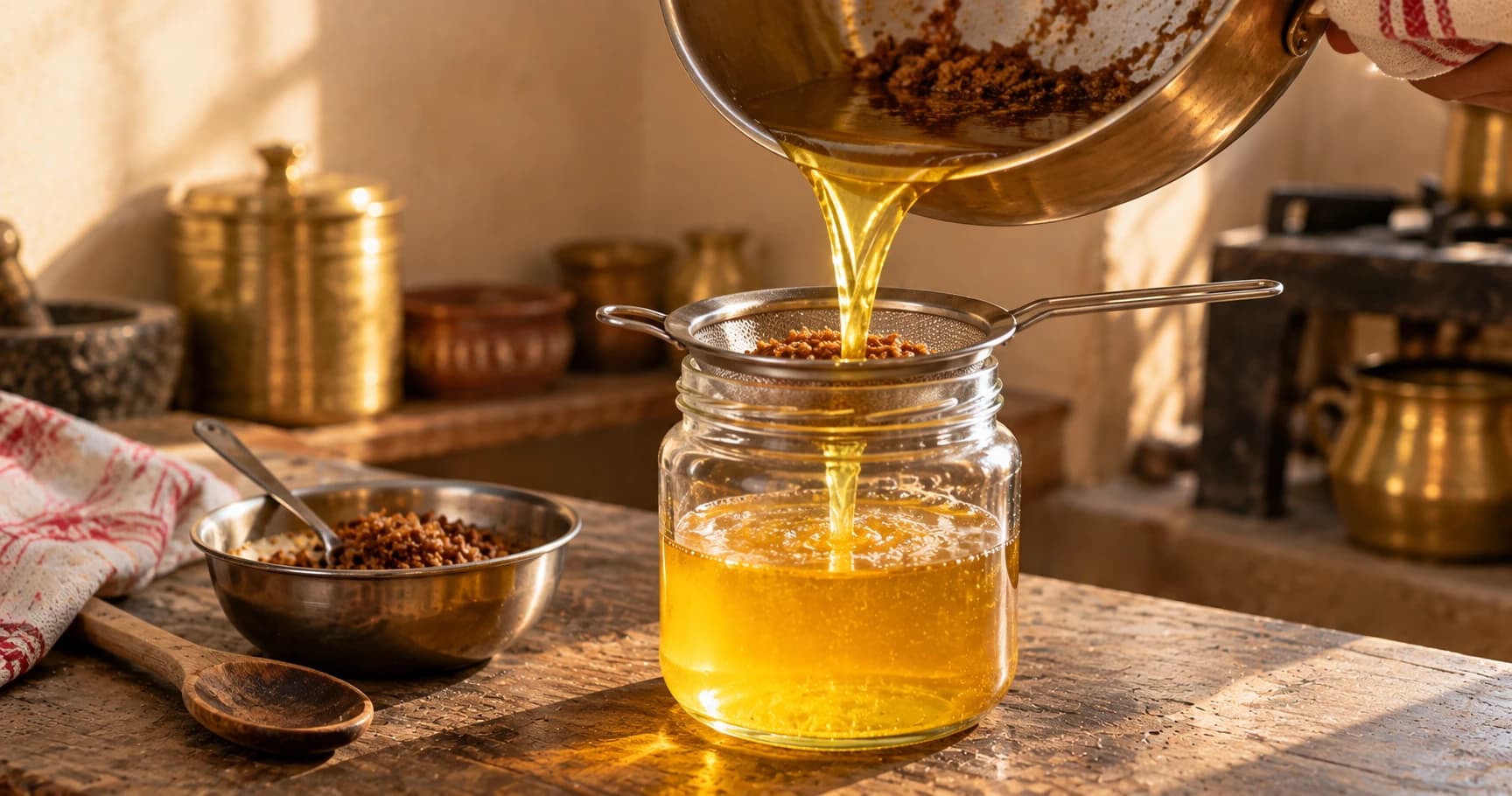
How it is made
How Desi Ghee Is Made: What Actually Happens From Milk to Jar
Ghee is one of the few foods where you can see the process in the finished jar. Here is what each step does, and what to look at.
· 3 min read

How it is made
By Naresh Kumar · · Updated · 5 min read
How many grams of ghee 1, 5 or 10 litres of buffalo or cow milk give, a calculator for your own amount, what a litre of ghee weighs, and why the answer varies.
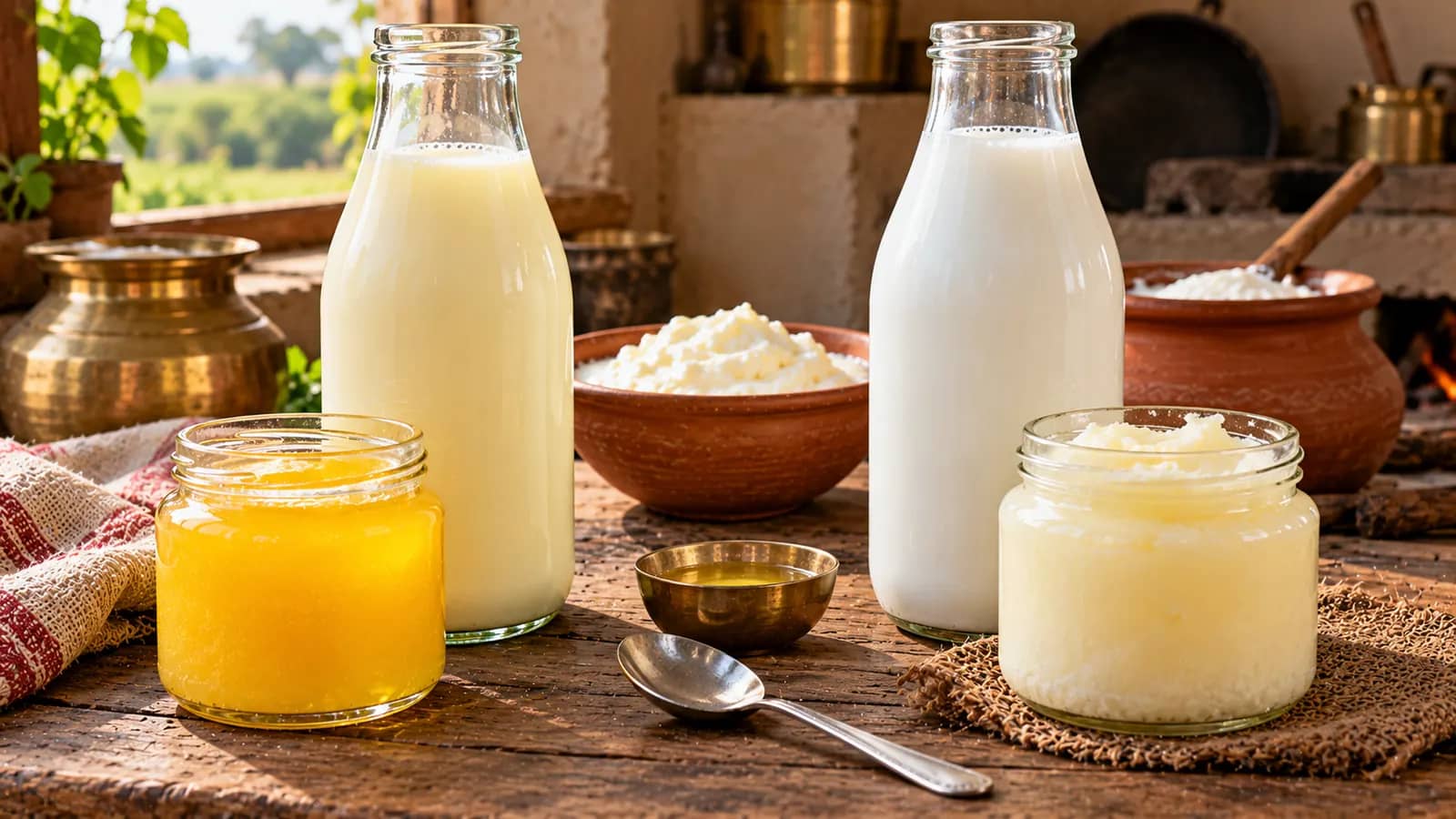
Ask how much ghee a litre of milk gives and most answers offer a single number. There isn't one. The answer depends mostly on how much fat is in the milk, and that changes with the animal, the season and even the time of day. But it can be worked out, and the working is more useful than the number.
58 g – 65 g
from 1 litre of buffalo milk at 7% fat
An estimate: it assumes 80 to 90 per cent of the fat is recovered, as in the working below. Ghee from malai lifted off boiled milk will come out lower.
Rather buy it than make it? Our buffalo ghee is made only from our own animals' milk and ships across India.
Ghee is almost pure milk fat, so the question is really how much fat a litre carries and how much of it you manage to get out.
A litre of milk weighs a little over a kilo. Buffalo milk usually carries around 6 to 8 per cent fat - call it 60 to 80 grams in a litre. Cow milk carries around 3.5 to 5 per cent, or 35 to 50 grams. We go into why the two differ so much in cow milk vs buffalo milk.
No method recovers all of it. Some fat always stays behind - in the skimmed milk, in the chach after churning, and in the browned solids at the bottom of the pan. Separating cream by machine gets most of it out; churning dahi by hand leaves more behind in the chach. Recover somewhere around 80 to 90 per cent of the fat and you arrive at the ranges above.
Multiply the per-litre range by the litres. The same arithmetic, already done:
Turn the same figures round: divide the ghee you want by what one litre gives.
Cow milk carries less fat, so the same kilo of ghee takes roughly one and a half times as much of it.
Ghee is lighter than water, so a litre of it weighs less than a kilo: about 900 to 915 grams, depending on how warm it is. That is why a 1 litre jar of ghee is labelled around 905 to 910 g rather than 1 kg. The other way round, 1 kg of ghee fills a little over 1.1 litres. If a recipe or a price is in litres and you think in kilos, take off about a tenth.
This is the useful part. Take the litres it takes to make a kilo, multiply by what milk costs in your town, and you have a floor under the price of honest ghee - before anyone has paid for fuel, jars, labour or delivery. Ghee selling below that floor is not a bargain; it is a question. Our ghee price calculator does the sum with your own milk rate. We follow that thought further in how to check pure ghee at home.
Our buffalo ghee and desi cow ghee are made only from our own animals' milk, kept apart so each jar is one or the other. Each 1 litre jar holds 905 grams, which by the arithmetic above is somewhere around 13 to 18 litres of buffalo milk or 20 to 30 litres of cow milk. We deliver in Jalore and ship across India.
We describe what we do and what is in the product. Nothing here is medical or nutritional advice, and dairy is not a treatment for anything - if you have a health question, ask a doctor rather than a dairy.
How it is made
Ghee is one of the few foods where you can see the process in the finished jar. Here is what each step does, and what to look at.
· 3 min read
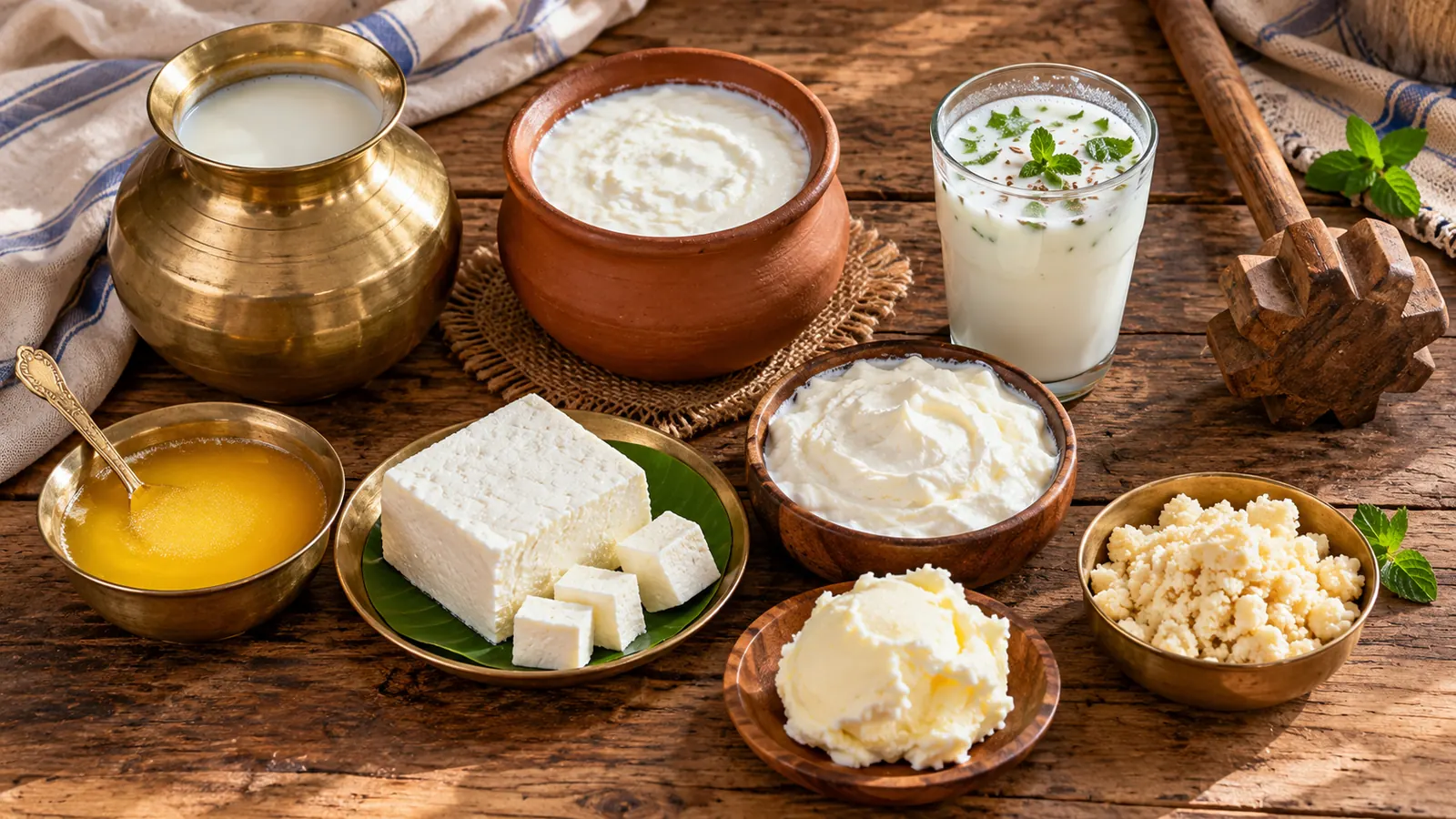
Tradition
Malai, jamaan, chach, khurchan, nagaa, khees, raab - the dairy words Indian kitchens use daily, what each means in English, and where the two do not line up.
· 5 min read
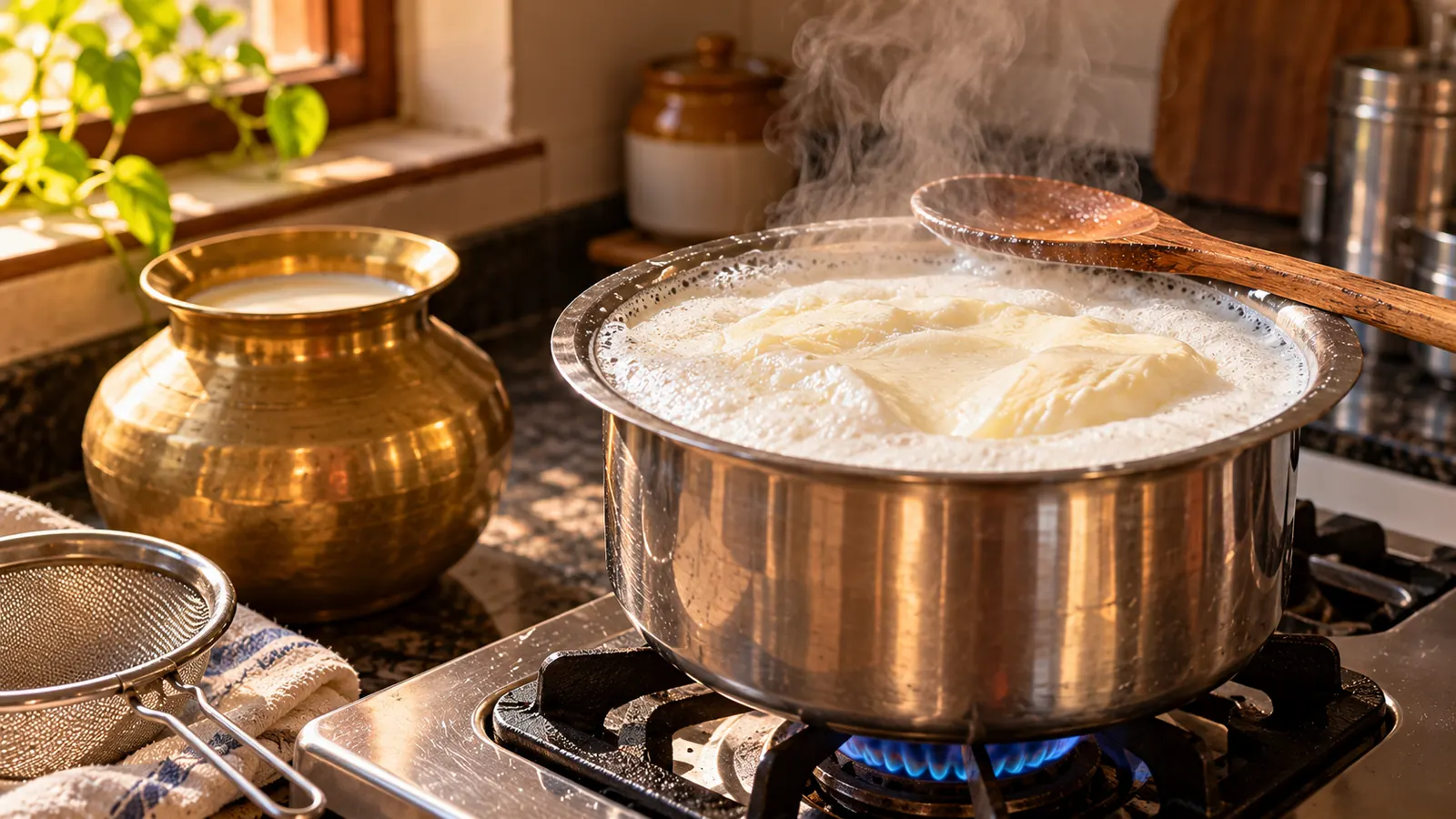
In the kitchen
Dairy milk reaches you raw. Why boiling it once makes it safe, how long to boil it, and what boiling does - and does not - take away.
· 4 min read