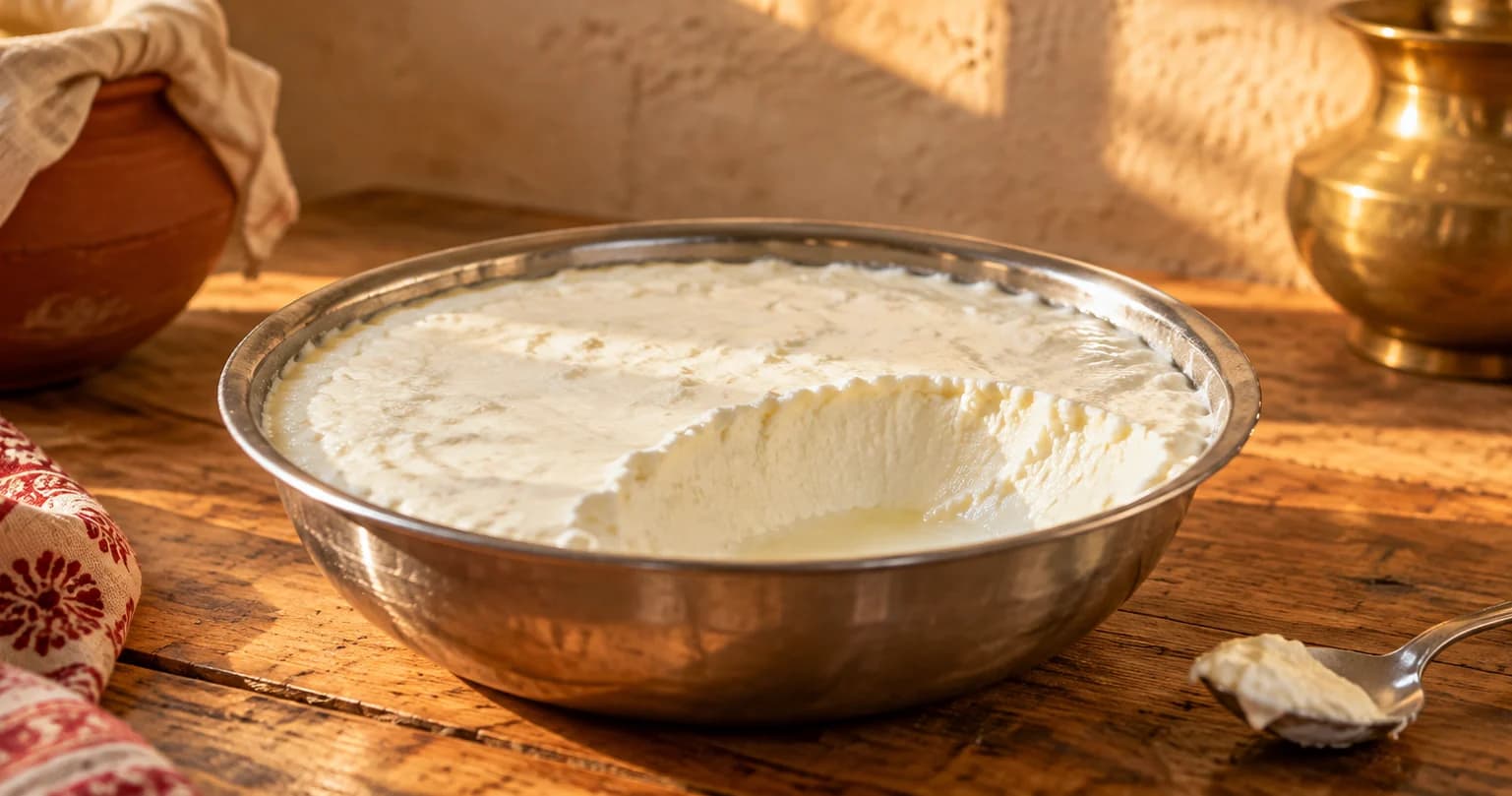
In the kitchen
Why Your Dahi Will Not Set
Dahi that refuses to set is usually a temperature problem, not a milk problem. Here is how to tell which mistake you made, and what to do about it.
· 5 min read

How it is made
· 2 min read
Ghee is one of the few foods where you can see the process in the finished jar. Here is what each step does, and what to look at.
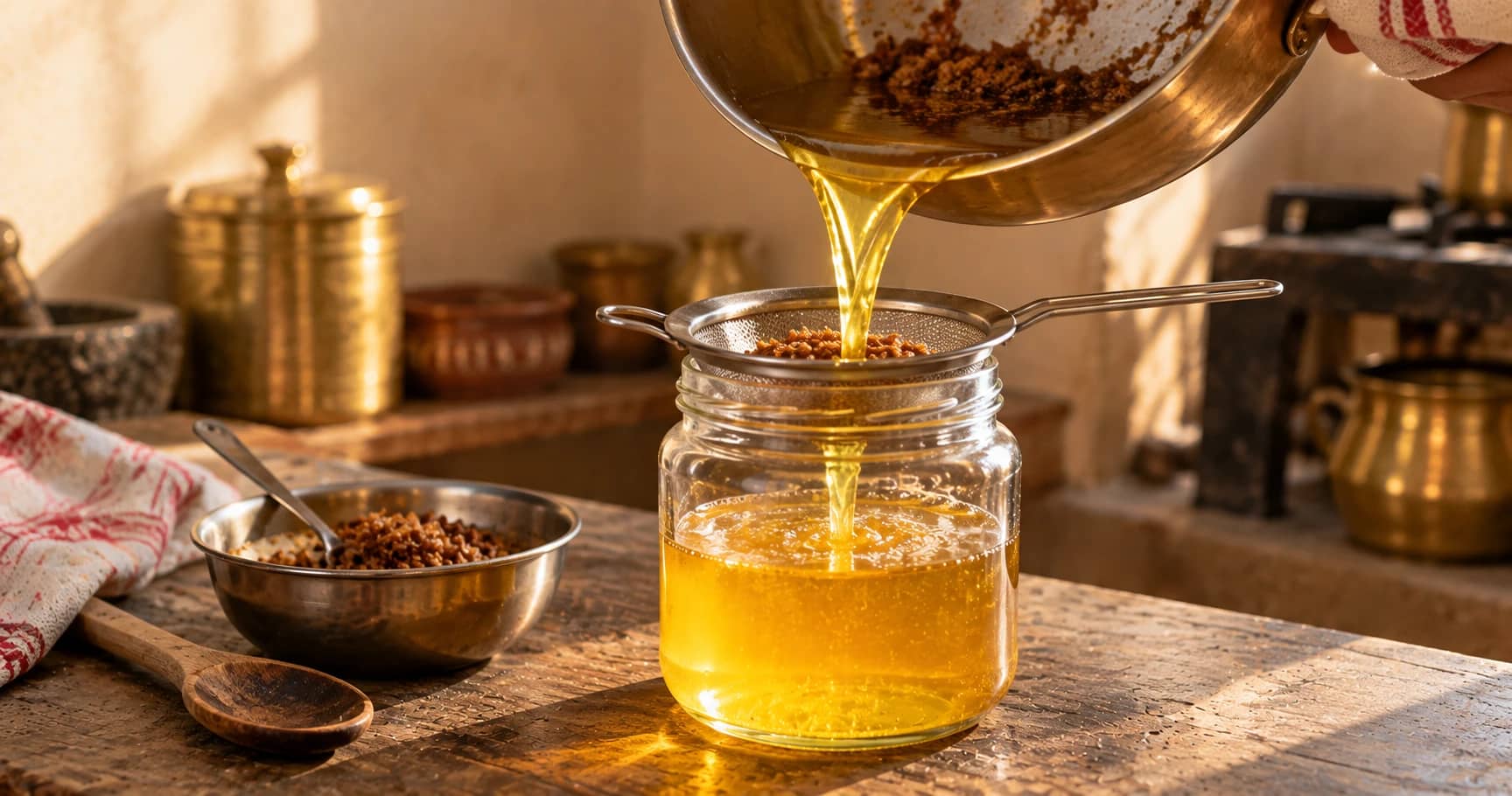
Ghee is butter with the water and the milk solids taken out. That is the whole of it. But there are two quite different routes to the butter you start from, and they produce noticeably different ghee - which is why two jars on the same shelf can taste so unlike each other.
The quicker route separates cream from milk, churns the cream to butter, and clarifies it. It is efficient and entirely legitimate, and most ghee sold in India is made this way.
The older route starts a step earlier. Whole milk is cultured into dahi first, and the dahi is churned. The butter that comes out of cultured dahi has already been through fermentation, and that changes both the aroma and the way the fat crystallises when it sets.
Either way, the butter is then heated slowly. Water boils off first, which is the noisy stage. Then the milk solids sink and begin to brown, and this is where the flavour is made - too little and the ghee tastes flat, too much and it tastes burnt. It cannot be hurried, and the difference between good and scorched is a few minutes of inattention.
The solids are strained out at the end. What is left is nearly pure fat, which is why ghee keeps on a shelf without refrigeration when butter does not.
Let a jar sit and then look at the bottom. Ghee made from cultured butter tends to set with a visible grain - distinct crystals rather than a uniform paste. It is not a certificate of anything, but it is a real physical difference and you can check it yourself, which is more than can be said for most of what is printed on a label.
Smell is the other tell. Cultured ghee reads nutty and slightly sour-sweet; cream ghee reads cleaner and flatter. Neither is wrong. They are just different, and knowing which you prefer is worth more than any claim on the tin.
A cool dry shelf, and a dry spoon every single time. Water is the one thing that will spoil ghee, and a wet spoon is how water gets in. That is genuinely the entire storage advice.
We describe what we do and what is in the product. Nothing here is medical or nutritional advice, and dairy is not a treatment for anything - if you have a health question, ask a doctor rather than a dairy.
In the kitchen
Dahi that refuses to set is usually a temperature problem, not a milk problem. Here is how to tell which mistake you made, and what to do about it.
· 5 min read
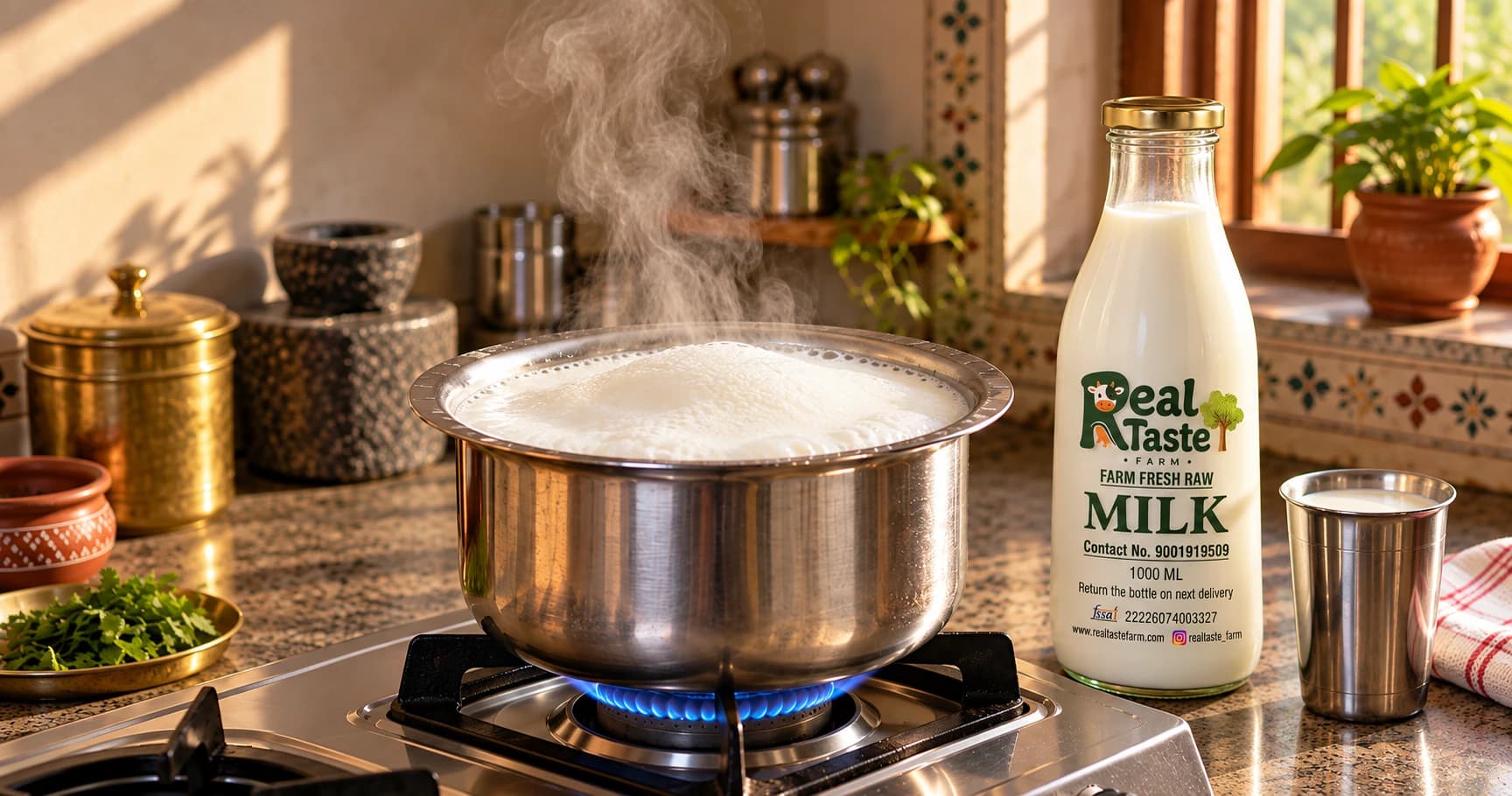
In the kitchen
Milk with nothing added to it will turn in a Jalore summer if you treat it like a carton from a shop. Here is what actually helps.
· 2 min read
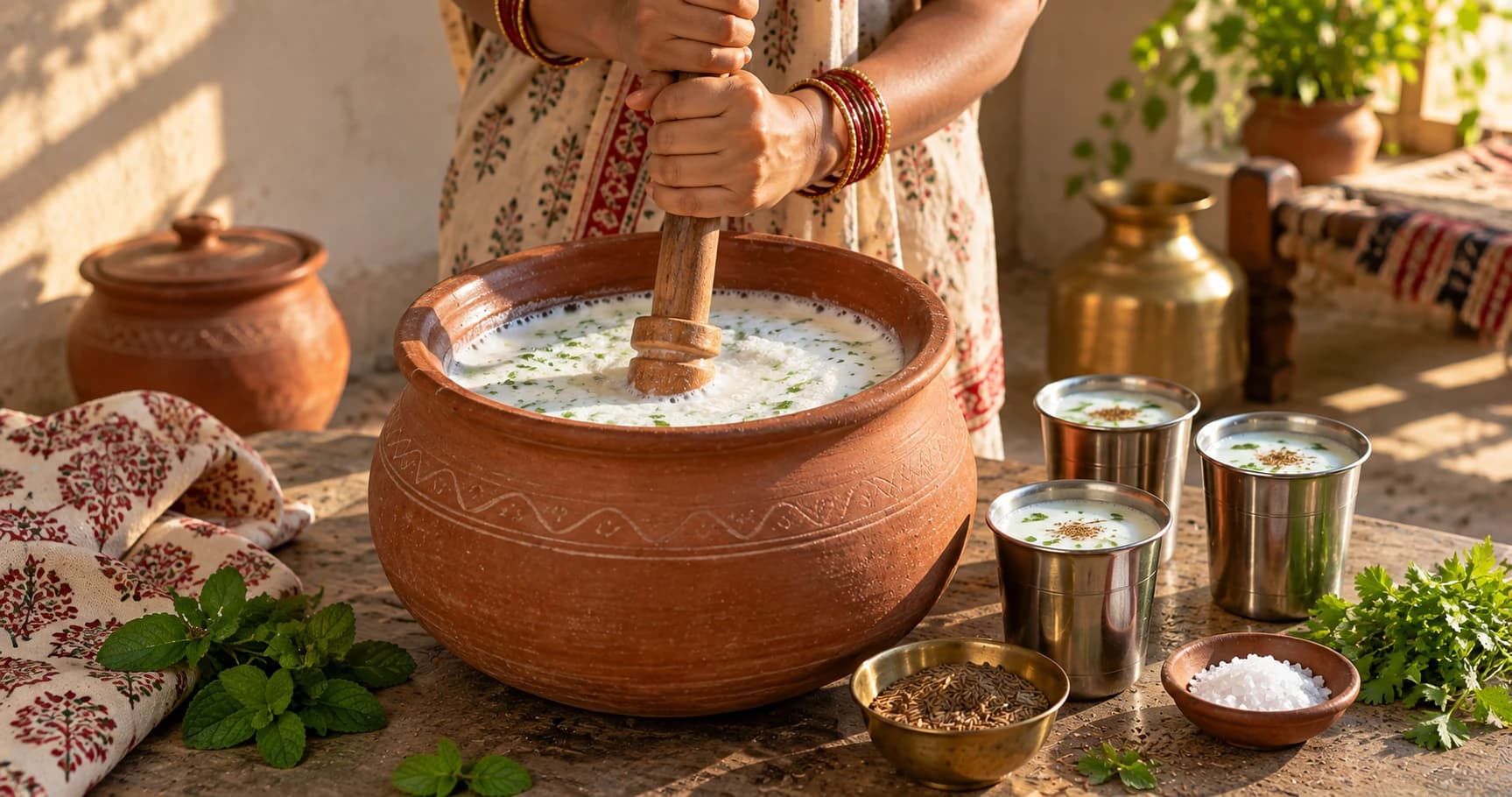
Tradition
Chach is not really a drink here. It is what gets sent out to anyone working in the heat, and it has been for a very long time.
· 2 min read