In the kitchen
Is Raw Milk Safe to Drink? Why Fresh Milk Should Be Boiled
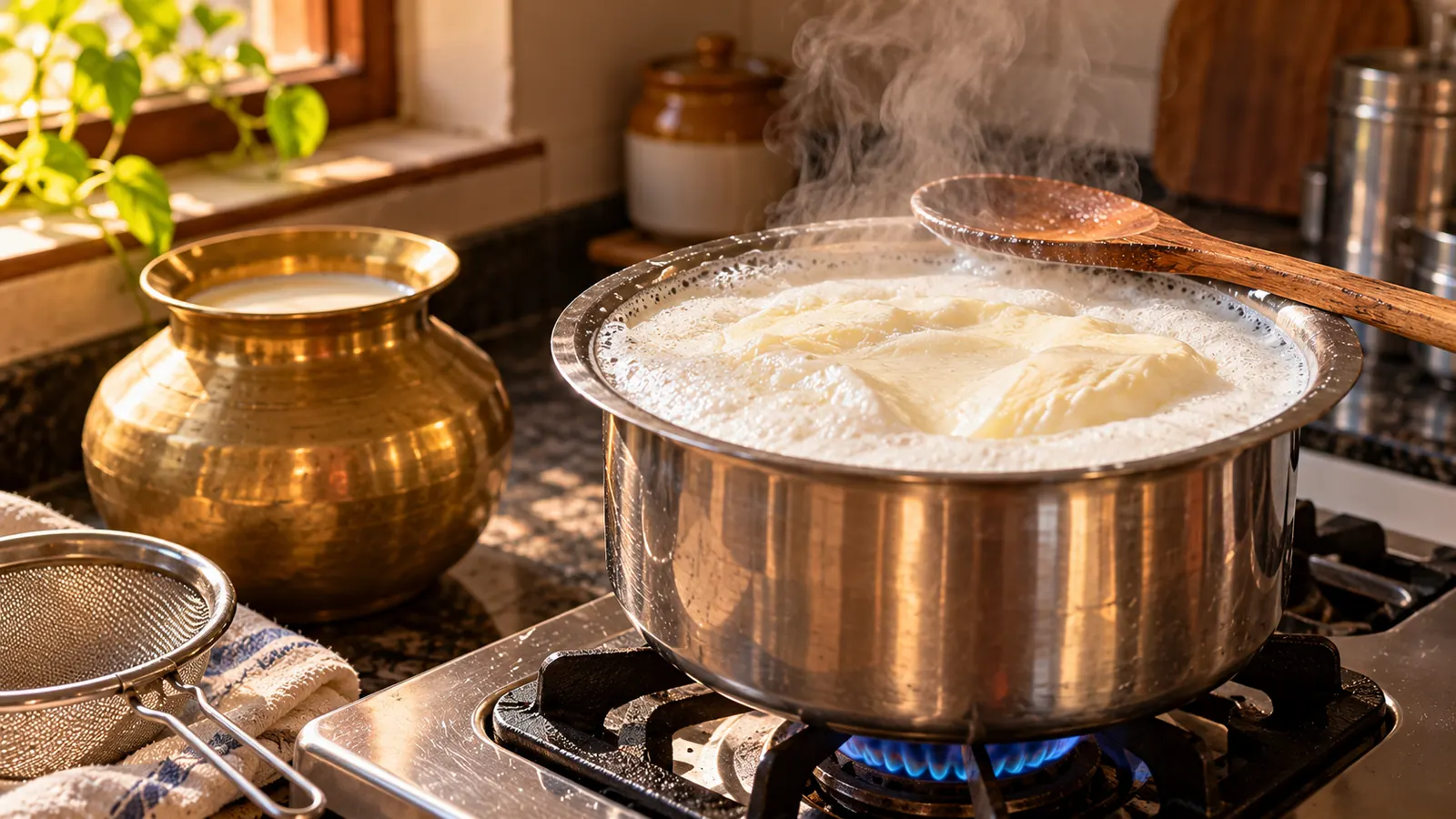
Dairy milk reaches you raw. Why boiling it once makes it safe, how long to boil it, and what boiling does - and does not - take away.
· 4 min read
In the kitchen
By Naresh Kumar · · Updated · 3 min read
Three home tests from FSSAI's own guide - for water, starch and detergent - the popular checks that prove nothing, and what only a lab can tell you.
Milk is the most commonly adulterated food in India, and the most common adulterant is the least dramatic one: water. Some of what gets added to milk you can catch in your own kitchen in a minute. Some of it you cannot, whatever a video says. Here is which is which.
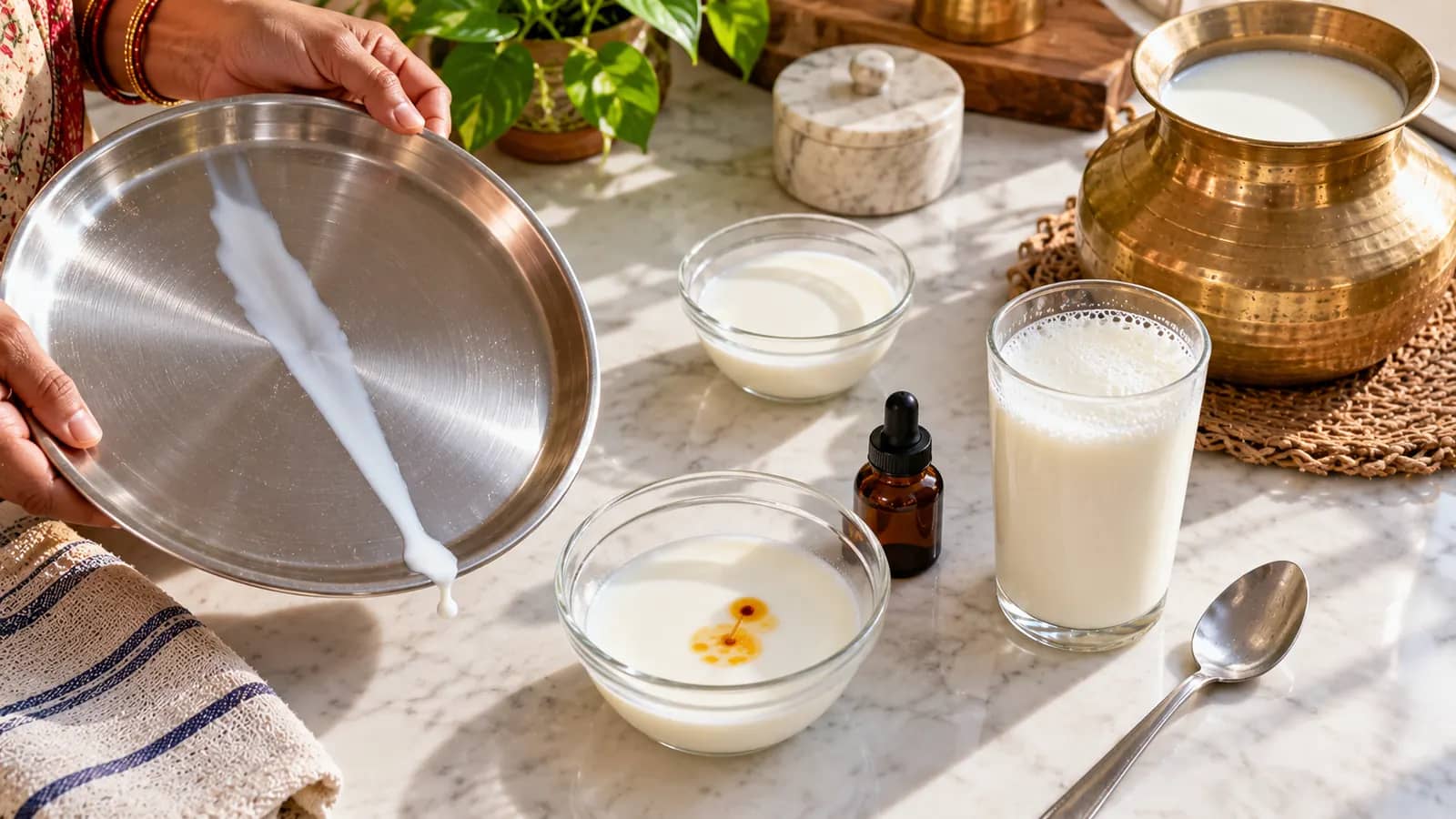
The Food Safety and Standards Authority of India publishes a guide to detecting adulteration at home. These three checks from it need nothing you do not already have, apart from a bottle of tincture of iodine from a chemist.
The slip test, for water. Put a drop of milk on a clean, polished surface held at a slant - a steel plate works. Pure milk runs slowly and leaves a white trail behind it. Milk with water added runs off quickly and leaves little or no trace.
The iodine test, for starch. Boil a little milk, let it cool, and add two or three drops of tincture of iodine. If it turns blue, there is starch in it. Pure milk does not change colour.
The shake test, for detergent. Shake a few spoonfuls of milk with an equal amount of water in a closed bottle. Milk with detergent in it forms a thick, lasting lather. Pure milk forms only a thin layer of froth that soon settles.
Urea, neutralisers, formalin and synthetic milk need chemical reagents to detect reliably, and some of them are hazardous to handle. If you have a real doubt about a milk, send a sample to a food testing lab or report it to FSSAI rather than trying to prove it at home.
Ask your dairy where the milk comes from. Milk from a dairy's own animals has been through one pair of hands. Milk gathered from many small suppliers through a collection centre has been through many, and every handover is a chance for water to be added. A dairy that keeps its own animals should be glad to tell you about them - and to let you come and see them.
If you are looking for pure milk in Jalore, ours comes only from the buffaloes and cows on our own farm - never bought in from a collection centre, never made up from powder - and reaches you in a glass bottle the same day. See our fresh buffalo and cow milk, or visit the farm and see for yourself. For ghee, the same idea applies: how to check pure ghee at home.
We describe what we do and what is in the product. Nothing here is medical or nutritional advice, and dairy is not a treatment for anything - if you have a health question, ask a doctor rather than a dairy.
In the kitchen
Dairy milk reaches you raw. Why boiling it once makes it safe, how long to boil it, and what boiling does - and does not - take away.
· 4 min read
In the kitchen
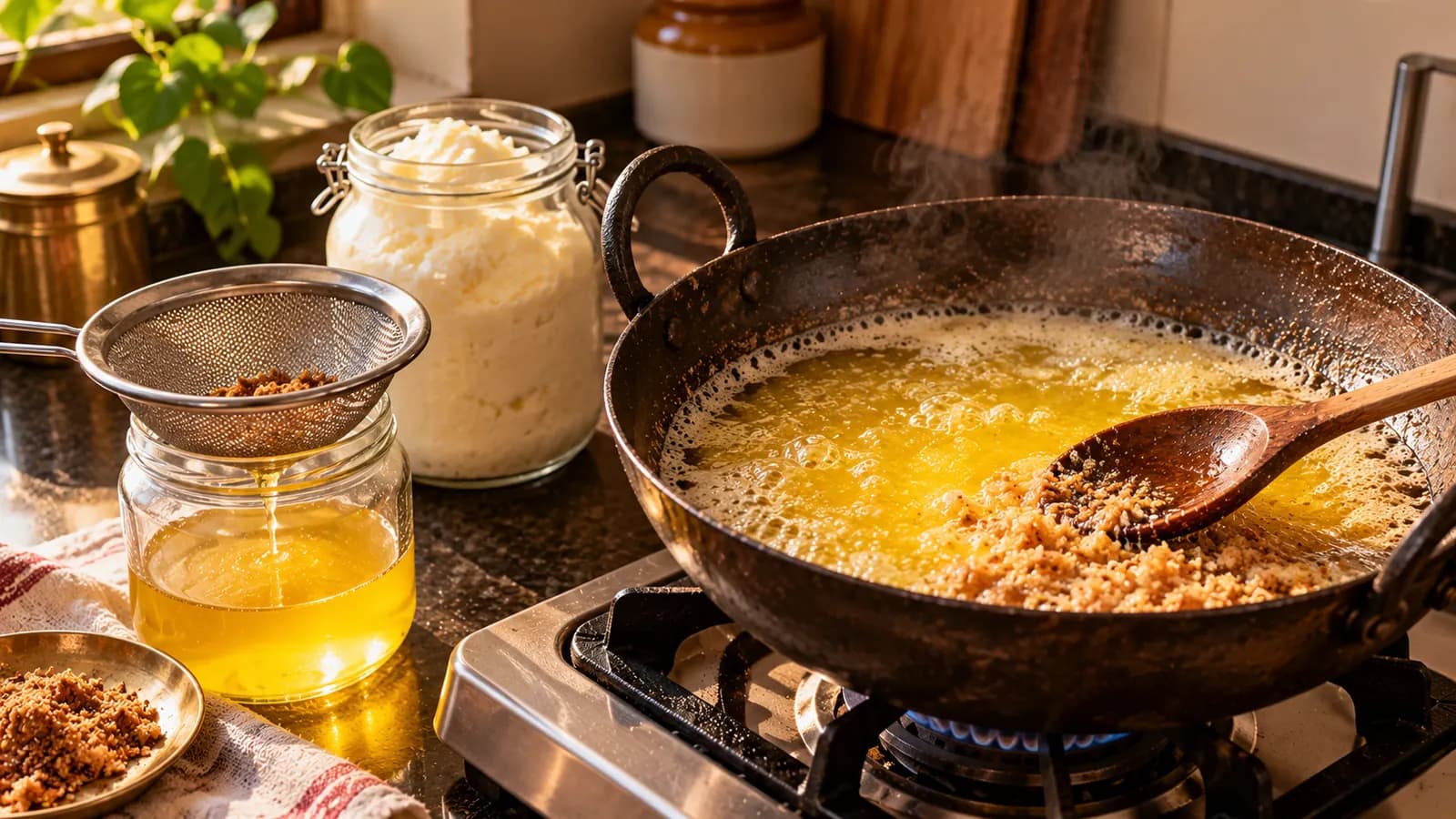
How to collect malai without it spoiling, turn it into butter, and cook that butter into clear, nutty ghee - with the signs that tell you when to stop.
· 4 min read
In the kitchen
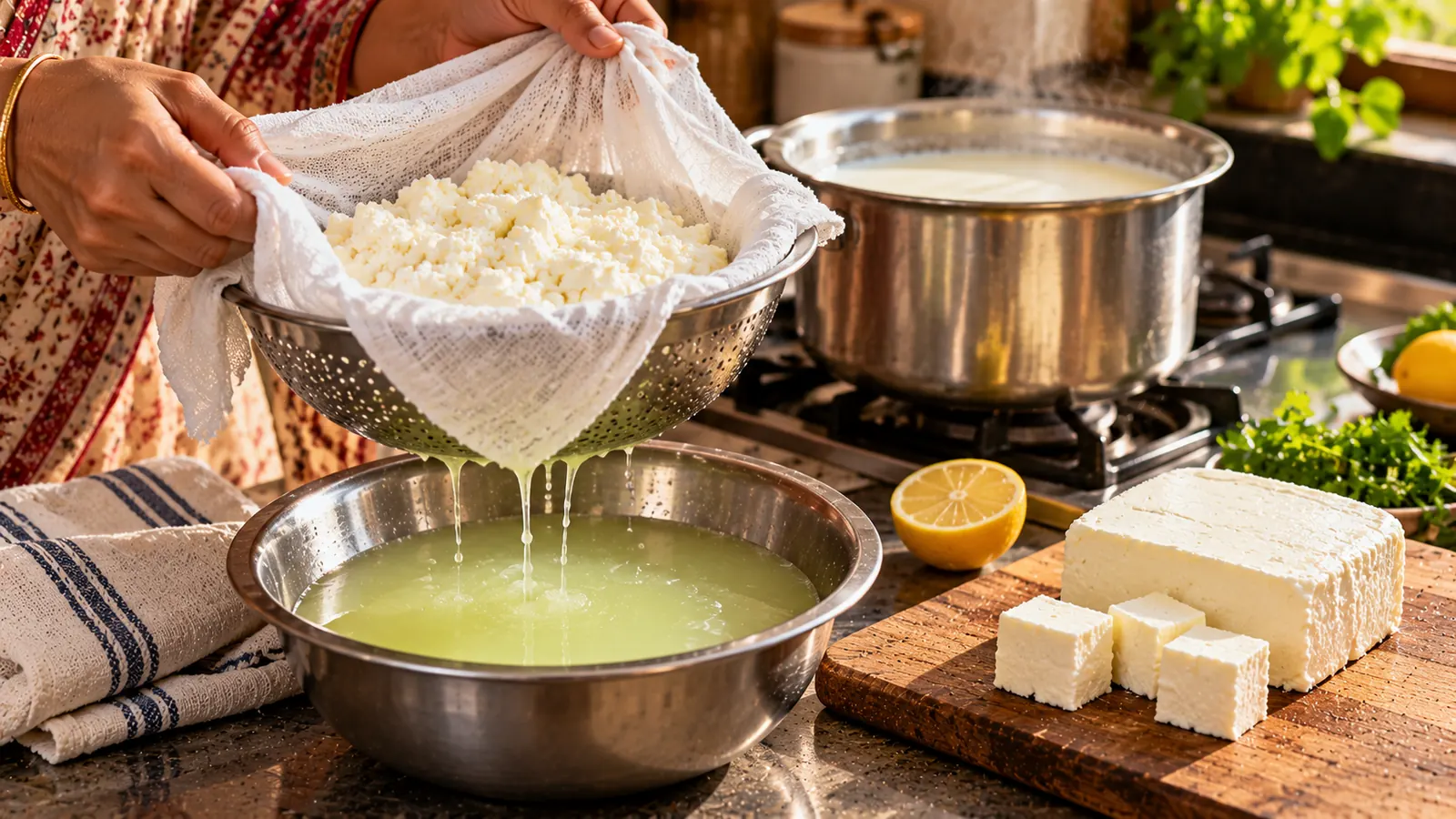
Soft paneer from a litre of full-cream milk in under an hour: which acid to use, how much paneer to expect, and why it turns rubbery or crumbly.
· 3 min read